How to Run a D&D Campaign in 2026: A DM's Guide to the Long Game
Your campaign does not die in a blaze of glory. It dies on a Tuesday, in a group chat, when nobody answers the "are we still on for Saturday?" message for the third week in a row.
I have started more campaigns than I can count. Starting was never the hard part. Anyone can run a great session 1. The premise is fresh, the players are excited, and you prepped for two weeks straight. The hard part is session 14, when the plot has sprawled in four directions, you cannot remember which noble the party insulted, and opening your prep doc feels like opening a tax return. That is where most campaigns end, and almost never because the story was bad. They fall apart because the DM lost the thread.
Running a campaign is a different skill from starting one. Starting is a burst of energy. Running is a rhythm you keep for months. This guide is about that rhythm: the repeatable loop that carries you from session 2 to session 50 without burning out or losing track of your own world. If you have not actually launched yet, read how to start a D&D campaign first, then come back. Everything below assumes session 1 is behind you.
The short version: to run a D&D campaign, you repeat one loop every week or two. Prep light, run the session, capture what happened, and keep your continuity straight between games. Campaigns survive on that last step, not on elaborate prep. The DMs who reach session 50 are the ones who stopped trying to hold the entire world in their head by session 5.
What does it actually mean to "run" a campaign?
Starting a campaign is a project with an end date. You pick a premise, run a session zero, build an opening, and launch. Running a campaign has no end date. It is the ongoing job of keeping a living story coherent while four chaotic players rewrite it every week.
The job has four recurring duties, and they repeat for the life of the campaign:
- Prepare enough for the next session to feel confident, and no more.
- Run the session well, which mostly means pacing and sharing the spotlight.
- Capture what actually happened before you forget it.
- Maintain the web of NPCs, locations, and plot threads so your world stays consistent.
Notice that only one of those four is the thing people picture when they imagine "DMing." The other three happen away from the table, and they are the ones that decide whether your campaign reaches its ending.
The campaign loop: the only system you really need
Forget the 40-page DM guides for a minute. Running a campaign is one loop, repeated:
Prep → Play → Capture → Maintain → Prep again.
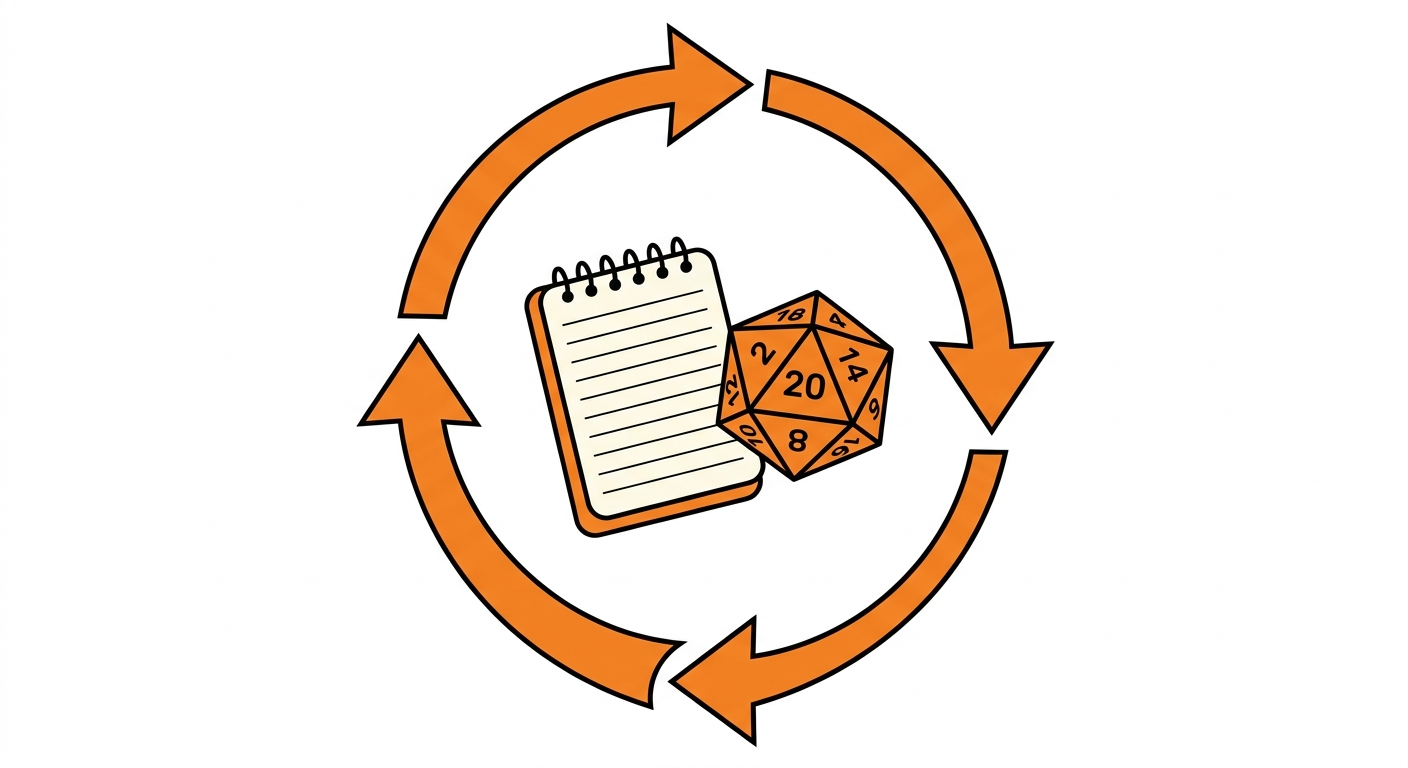
That is the whole machine. Every famous piece of DM advice you have ever heard is just a detail inside one of those four beats. Get the loop turning smoothly and the campaign runs itself. Let any beat break down, especially capture and maintain, and the whole thing seizes up a few sessions later.
If you want the full picture in video form before we go deeper, this breakdown from Pointy Hat is one of the best on running an entire campaign:
Now let me walk each beat the way I actually run them.
Prep light, and prep only the right things
The single biggest mistake experienced DMs still make is over-prepping. You spend four hours writing a branching flowchart, the players walk left instead of right in the first ten minutes, and most of your work never sees the table.
Prep the next session, not the campaign. For a normal week I bring four things: a strong opening scene, two or three encounters I can move anywhere, a few NPCs with a voice ready to go, and a clear sense of what the party is chasing right now. That is it. Everything else I improvise, because I know the world well enough to riff.
This is a craft worth getting fast at. I wrote a full method for it in the 30-minute D&D session prep guide, and the short version is this: build toolboxes, not scripts. A script is something the players ruin. A toolbox is something you reach into when they surprise you. The best modern voices on this, from Matt Colville's Running the Game series to Michael Shea's Lazy Dungeon Master approach, all land on the same truth: less prep, better placed, beats more prep every time.
Run the table: pace it, and give everyone a moment
How do you keep players engaged session after session? Two things matter more than anything else, and neither is on a character sheet.
The first is pacing. Start every session already in motion. Skip the part where the party shops for rations and buys rope. If a scene stalls, cut to the next interesting thing. Your players will never complain that you moved too fast toward the fun. They will absolutely check their phones if you linger too long on logistics.
The second is the spotlight. In the first thirty minutes, make sure every player gets a moment that is theirs. Ask the brooding ranger what they notice in the treeline. Let the bard's contact show up. A table of four does not need four equal scenes every night, but over a session everyone should feel the game turned toward them at least once. Say yes to player ideas far more than you say no. The campaign is more theirs than yours, and the sessions you remember in five years will be the ones a player improvised, not the ones you scripted.
End on a hook. Not a cheap cliffhanger, but a question the party wants answered next time. I broke down the specific techniques in how to end a session on a cliffhanger, because a good ending is what makes people clear their Saturday again.
Capture what happened while it is still fresh
Here is the beat that saves campaigns, and the one almost every new DM skips.
Within a day of the session, get down what changed. Which NPCs showed up. What the party decided. Which threads opened and which closed. If you wait a week, you will forget the name you invented for the dock master on the spot, and so will the version of you that sits down to prep next session. The "Wait, who is that?" moment happens from the DM's chair too, and from that side it stings worse.
You have two honest ways to handle this, and the first one costs nothing.
Capture five things after every session, while they are still fresh:
- New NPCs. Name plus one detail. "The dock master, gravel voice, owes the party a favor."
- New locations. Anywhere the party went or heard about that you might reuse.
- Promises and decisions. What the party committed to, refused, or swore revenge over.
- Threads opened. The questions this session raised that are not answered yet.
- Threads closed. What got resolved, so you stop dangling it next time.
That is a five-minute job, and it is the highest-value five minutes in the whole loop. Do it by hand if you like. Keep a campaign wiki with a page per NPC and location, and update it after each game. It works, as long as you actually keep it up. Most DMs manage about six weeks before the backlog wins. I wrote a full method for recaps that do not feel like a chore if you want to go that way.
The other option is to stop writing it yourself and let the session write it for you. That is the whole reason I run my current campaign on Saga20. It listens to the game, then turns those same five things into a running wiki and a finished recap by the time we have packed up the dice. I made the switch because I was tired of being the single point of failure for my own world's memory, reconstructing last week from three scribbled lines every Saturday morning. Now I open a session summary that already has the names, the decisions, and the loose ends waiting for me, and I spend that time on the story instead of the archaeology.
If being your table's archivist is wearing you down, it is worth trying on a single game. The free plan summarizes a full session with no credit card, which is enough to tell whether it solves the problem for you.
Keep your campaign memory between games
Capturing the session is the snapshot. Maintaining your world is the ongoing record those snapshots build into.
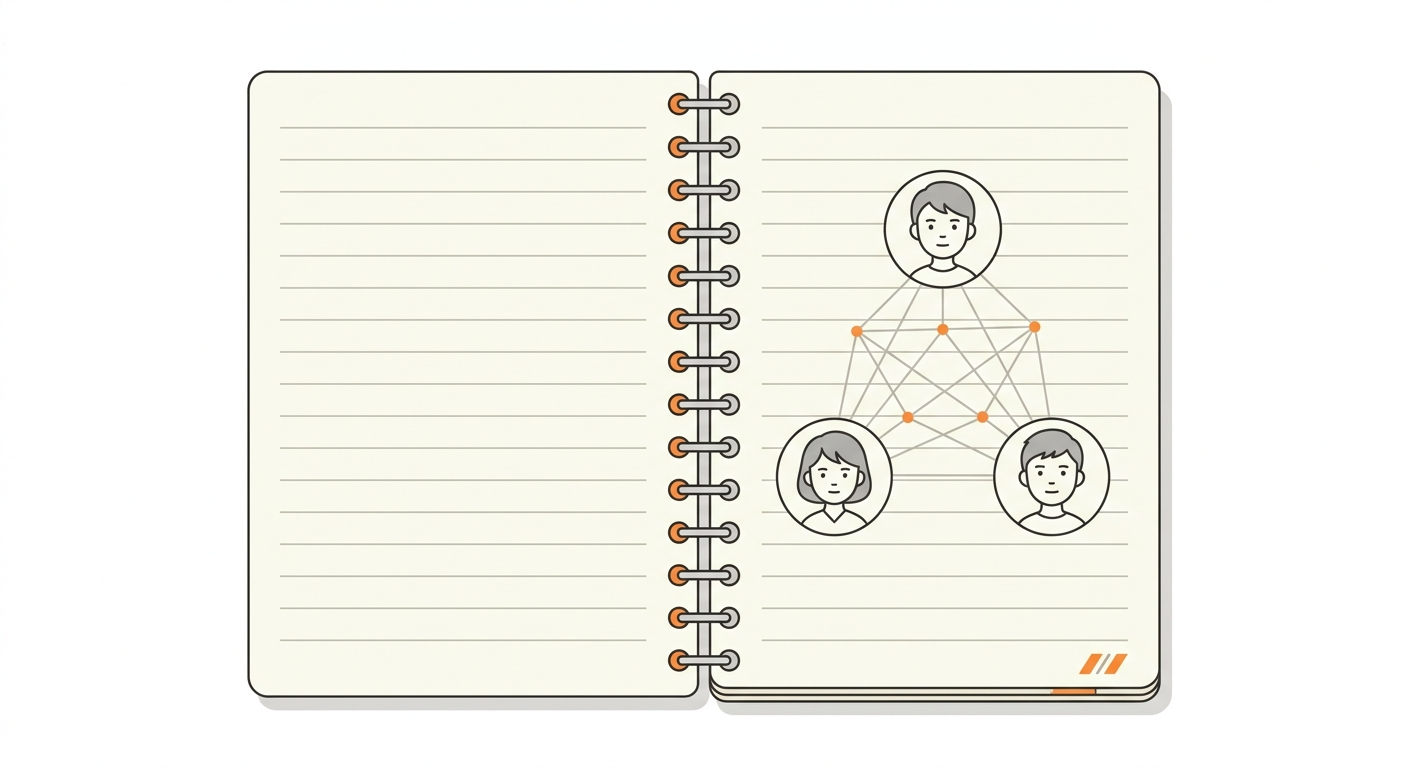
A living campaign is a web. The bandit the party spared in session 3 comes back as an ally in session 20. The throwaway prophecy you mumbled in session 5 becomes the spine of the finale. None of that lands if you cannot find it. The difference between a campaign that feels planned and one that feels like a string of disconnected dungeons is almost entirely continuity, and continuity is a memory problem, not a creativity problem.
The discipline that separates campaigns reaching session 50 from campaigns dying at session 12 is covered in depth in the art of campaign continuity and how to keep track of a D&D campaign. Both come down to one rule: stop holding your world in your head. Put it somewhere you and your players can both point to, and keep it current.
This is especially true when the party gets time between arcs. Use a simple downtime activity framework so those skipped weeks create contacts, debts, rumors, and consequences instead of vanishing into the calendar.
The long game: escalate, and beat the mid-campaign sag
Why do so many campaigns sag around session 8 to 12? Because the novelty wears off and nothing has grown to replace it. The opening mystery is solved, but the stakes never climbed, so the table is running the same kind of session it ran in month one.
The fix is deliberate escalation. Treat your campaign as a series of arcs, not an endless sandbox. Each arc should raise the stakes, pay off a thread you planted earlier, and change the world in a way the party caused. The duke they ignored seizes power. The cult they half-stopped finishes its ritual. When players see that their past choices reshape the present, prep gets easier too, because the next session writes itself out of the last one. That feedback loop only works if you have a clean record of what the party actually did, which loops you right back to capture and maintain.
Published adventure or homebrew?
This is the fork every DM hits, usually around the time they want to run something bigger. The honest answer: for your first long campaign, a published adventure is the easier road. The maps, NPCs, and structure are written for you, so you spend your energy learning to run a table instead of building a world from scratch.
Homebrew is best when you have a specific tone or premise no published book gives you. If you go that way, build only what the next few sessions need and grow outward, which is the whole argument of my D&D world building guide. Either way, the running discipline is identical. Published or homebrew, you still pace sessions, share the spotlight, capture what happened, and keep your continuity straight.
When life happens: scheduling and missing players
The undefeated final boss of every campaign is the calendar. Four working adults will never have a clean schedule, so stop waiting for one.
Set a fixed cadence and protect it. Every two weeks that you keep beats every week that you cancel. Adopt an N-1 rule: if all but one player can make it, you play. Cancelling for a single absence trains your table to treat the game as optional, and optional games die. I wrote the full protocol for running short-handed in don't cancel your D&D session over one missing player. Almost no campaign that reaches its finale had perfect attendance. They got there by playing anyway.
If your group is large and the calendar is genuinely hopeless, there is a structural answer rather than a scheduling one. Running a West Marches campaign puts a pool of players in charge of booking their own sessions, so a missing person is never a cancelled game.
Run the campaign you will actually remember
Running a D&D campaign is not about being the most creative person at the table. It is about keeping one loop turning, week after week, long after the opening-night excitement fades. Prep light. Run with pace and generosity. Capture what happened. Keep your world straight. Do that, and you will be one of the rare DMs who actually reaches an ending.
The part that breaks most often is memory, and that is the part you can hand off. Let your sessions build your wiki for you, and you get to spend your prep time on the story instead of on archaeology. You stay present at the table because you are not the bottleneck anymore.
Start your campaign wiki free. Record one session, let Saga20 build the world record for you, and judge it on your own table. No credit card required.
I have run Curse of Strahd to its end, limped a homebrew campaign through two years and forty sessions, and I am currently keeping three groups alive across different systems. I am a far better DM now than I was on my first session, and almost none of that improvement was about rules. It was about building a rhythm I could actually sustain. Build yours, protect it, and your campaign will outlast the ones that started with twice the prep.
Questions
Common questions
Free Tools
Helpful for This Topic
Session Recap Generator
Capture each session in minutes. Create shareable highlight cards your players keep, so your campaign never loses the thread.
Session Recap Architect
Design and print the perfect session note template. Capturing what happened takes five minutes, not an hour.
Session Time Manager
Plan your session pacing and finish on time. Estimate combat duration and keep every game moving.
Drop the notebook
Try Saga20 for free
Record your session. We'll write the notes and build your wiki.
Get started freeNo card needed