How to Master the "Session Recap" (And Why You Shouldn't Write It Yourself)
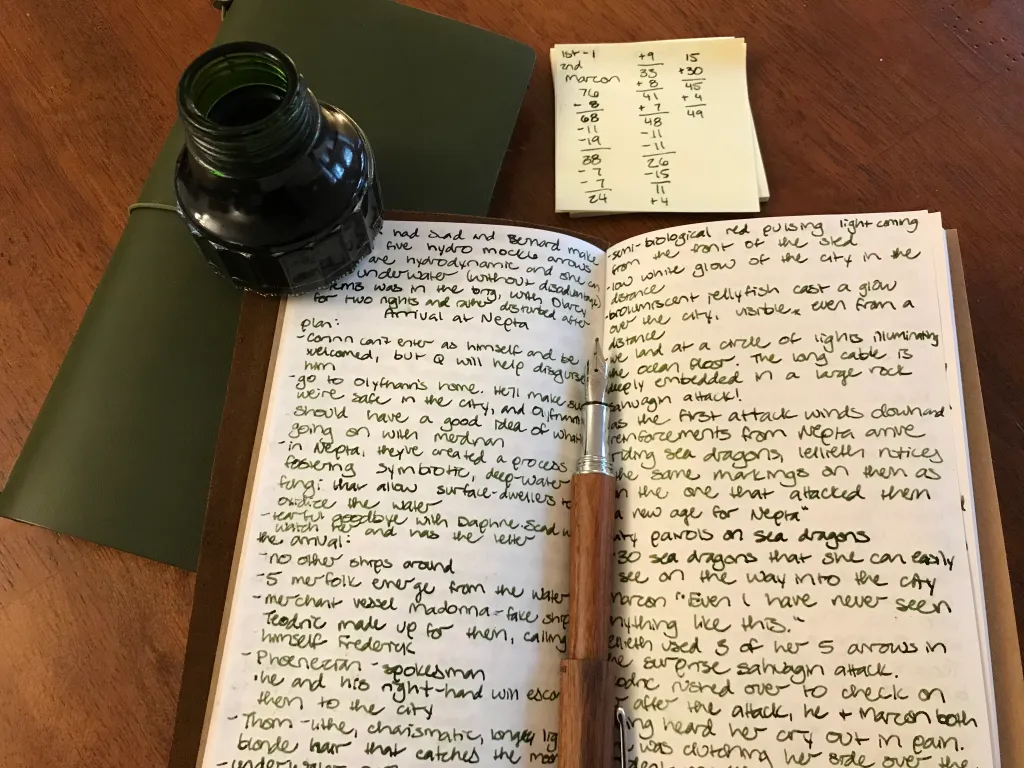
The "Wait, who is that?" Problem
We have all been there. It is the start of the session. You have spent all week prepping a shocking reveal involving the Baron's lost son. You lean forward, cleared throat ready, and ask: "So, where did we leave off?"
Silence.
Then, your players start guessing. "I think we were in a tavern?" "Didn't we kill that guy?" "Wait, who is the Baron?"
Your dramatic tension evaporates. Instead of starting with a bang, you start with a 15-minute history lesson. This is the Session Recap Gap, and it kills campaigns. When players forget the context, they stop caring about the stakes. They become "murder hobos" not because they want to, but because they have forgotten why they shouldn't be.
Why writing recaps is a trap
To fix this, many DMs (myself included) try to become court stenographers. We spend hours after the game typing up detailed journals. We convince ourselves that if we just write down everything, the players will remember everything.
But here is the hard truth: You shouldn't be writing the recap.
The recap is downstream of your D&D session notes anyway. Get those right and the recap mostly writes itself.
1. It is backward-looking
Your limited prep time is a currency. Every hour you spend documenting what happened last week is an hour you aren't spending on cool encounters for next week. You are essentially working as a historian for a world that needs a director.
2. The "Notebook Bias"
When you DM, your brain is firing on all cylinders. You are tracking initiative, roleplaying NPCs, and checking rules. When you take notes, you naturally write down what you think is important (e.g., "The statue radiates necromancy"). But you often miss what the players cared about (e.g., "The rogue promised to buy the goblin a hat"). When you read your recap back, it feels sterile because it lacks the table's chaotic energy.
By session 10, that enthusiasm for writing three-page summaries usually burns out. You skip one week. Then two. Suddenly, your campaign history has a three-month gap, and nobody remembers why they are in the Underdark.
The 3-Act Structure of a Good Recap
If you are going to write them yourself, do not write a novel. Write a movie trailer. A good recap follows a simple three-part structure that gets players back in the mindset immediately.
Act 1: The Cliffhanger Resolution
Start exactly where you left off.
- "We ended with the rogue holding the cursed ruby."
- "The door to the crypt had just slammed shut."
Act 2: The Major Beats
List only the 3-5 things that actually moved the needle.
- "You managed to convince the guard to let you pass."
- "The bard found out the King is actually a doppelganger."
- "You long rested in the safety of the inn."
Act 3: The Immediate Goal (The "Call to Action")
End with the problem right in front of their faces.
- "Now, you are standing before the King, and he is waiting for your answer."
- "The goblins are banging on the door. What do you do?"
This structure works because it ignores the fluff and focuses on the game. It gives the players their agency back.
The Anatomy of a Perfect Recap
Before we talk about automation, we need to define what actually matters. A 10-page transcript isn't a recap; it's a court document. A useful recap needs to filter the noise and highlight the signal.
Effective D&D campaign tracking should answer three questions:
- Immediate Context: Where are we physically standing right now? (e.g., "In the dripping cave, ankle-deep in water.")
- Open Loops: What immediate threads are dangling? (e.g., "The door is locked, and the Paladin is at 3 HP.")
- The "MacGuffin" Status: Who is holding the plot coupon? (e.g., "Who actually picked up the Baron's signet ring?")
If your current notes (or memory) can't answer these instantly, you have a problem.
Common Pitfalls (Why Recaps Fail)
I have read hundreds of session summaries. The bad ones always make the same mistakes.
- The "And Then" Syndrome: "He went to the shop, and then he bought a sword, and then he asked about rumors." This is boring. Cut the travel time. Cut the shopping. get to the conflict.
- Focusing on Mechanics: "The fighter rolled a 17 to hit." No one cares. Say "The fighter severed the orc's hand."
- Inside Jokes: "Bob made a joke about pizza." It was funny at the time. It is confusing three weeks later. Keep the vibe, cut the table talk.
The creative solution: Let the app listen
The "Lazy Dungeon Master" way is to automate the boring stuff. We built Saga20 to handle this exact burden. It acts as an objective session recorder and historian that sits at your table.
Using Automatic Summaries, the app listens to your session and constructs the recap for you. It captures the big plot beats, the combat outcomes, and even the small jokes you made in character.
But... how does it know who is talking?
This is where Campaign Continuity comes in. It uses advanced voice embeddings to identify speakers.
- The Setup: You manually tag a speaker once (e.g., "This voice is Doran the Dwarf").
- The Magic: From then on, the app recognizes Doran automatically.
It is a hybrid system. It remembers what happened last week, and it respects the "World Context" you provide yourself. That is how it knows Phandalin is a town and not a person.
Using Recaps for "Lazy" Prep
Here is a secret: The best way to prep for your next session is to read the summary of the last one.
Instead of staring at a blank page, open your Saga20 summary. Look for the "Key Events" bullet points.
- "Players insulted the shopkeeper." -> Prep: The shopkeeper has hired thugs for tonight.
- "Rogue found a mysterious key." -> Prep: That key now opens the chest they are about to find.
You are using the players' own actions to generate your content. It makes the world feel responsive and alive, and it takes five minutes instead of two hours.
The Recap Ritual
Once you stop writing recaps yourself, you can start using them as a tool. Here is how to master the start of your session:
- The Pre-Game Email: If your players follow the campaign on Saga20 and log in, they get the summary emailed to them automatically. This nudges their memory before they sit down.
- The "Previously On..." Reading: Don't read it yourself. Assign a player to read the Saga20 summary aloud at the start of the session. Award inspiration for a dramatic reading.
- The Correction: Let players correct the record. "Actually, I didn't steal the pie, I liberated it." This gets them back into character instantly.
How long should a session recap be?
The rule of thumb I use: if you cannot read it aloud in 90 seconds, it is too long. A recap is not an archive. It is a prime-time opening scene. Its only job is to get your players back into the headspace they were in when they stopped playing last week.
That means:
- One paragraph of context (where we are, who we are with).
- Three to five bullet points of what actually happened.
- One sentence of tension (what is about to go wrong).
Anything more and players stop reading. Anything less and they will not remember the stakes. If you want the full archive, keep it in a separate campaign wiki that players can reference when they want the detail. The recap is the trailer. The wiki is the director's cut.
What about the players who were absent?
This is the hidden killer of campaign momentum. One player misses a session, comes back the next week, and spends 20 minutes getting caught up while everyone else waits. By the time they are ready to play, the energy is gone.
A well-written recap closes that gap before the session starts. If the absent player gets the recap in their inbox Monday morning, they arrive Tuesday already caught up. They feel included, not behind. And they usually come back with questions about the cliffhanger, which is exactly the engagement you want.
This is one of the quiet reasons automated recaps matter more than most DMs realize. Manually writing one within 24 hours of a session is a nice idea. Doing it every week for a year is a habit almost nobody sustains. The app does not get tired by session 40.
Conclusion
Your job is to be the Director, not the Secretary. Master the session recap by delegating it. When everyone knows what happened last week, you are free to find out what happens next.
Stop typing. Start playing.
Questions
Common questions
Free Tools
Helpful for This Topic
Drop the notebook
Try Saga20 for free
Record your session. We'll write the notes and build your wiki.
Get started freeNo card needed