The D&D Session Zero Checklist: Everything to Cover Before Session 1 (2026)
Three years ago I ran what should have been a great campaign. Custom setting, interesting faction politics, players who had been chomping at the bit for months. By session 7 it was falling apart. Two players kept missing games and nobody had agreed on what that meant for the plot. One player had built a brooding loner with no connection to anyone in the party. Another had written a backstory that assumed a horror-free game, and I had a whole dungeon arc planned with body-horror elements I thought were "just standard D&D."
None of this came from bad players or bad DMing. It came from skipping the pre-work.
That campaign was the last one I started without a proper session zero.
What a session zero actually is
Session zero is a dedicated pre-campaign meeting where you cover everything that would cause problems mid-campaign if left unaddressed. No adventure happens. Nobody rolls dice to see if the rogue picks a lock. You sit at the table (or around a video call) and build agreements.
Session 1 is about play. Session zero is about alignment. By the time you reach session 1, everyone should already know the tone of the game, who their character is, how their character connects to the rest of the party, and what will and will not appear in the story.
If you want the full picture of how session zero fits into the broader process of launching a campaign, the how to start a D&D campaign guide covers all seven steps from concept to first adventure. This post goes deep on session zero itself.
Is a session zero necessary?
Yes, and I say that having skipped it enough times to know what the other side looks like.
The counterargument I hear most often is "we just jump in and figure it out." Sometimes that works, usually for one-shots or tables of people who have played together for years. For a new group, or a new campaign with established players, skipping session zero is a gamble on alignment that you will almost certainly lose.
The DMAcademy community on Reddit is full of threads where DMs are mid-campaign and suddenly dealing with something a session zero would have prevented: a player who thought the game would be more casual, a scheduling fight that's fracturing the group, characters with no reason to work together. These problems are not unique. They show up in almost every campaign that skipped the pre-work.
Session zero is the cheapest insurance in the hobby. Two hours of alignment now saves you from a campaign that dies at session 8.
How long should a session zero take?
For a standard campaign, plan for one and a half to three hours. That is one game night. You need enough time to get through the pitch, expectations, safety tools, scheduling, and character creation guidelines without anyone feeling rushed.
If your group is experienced, ninety minutes is often enough. If you have new players, run toward two and a half hours and use the extra time to answer questions.
For a one-shot or a two-session mini-campaign, you can condense session zero into the first thirty to forty-five minutes of play. Keep it tight: pitch, one safety-tool check-in, and character tie setup. That is enough.
The complete session zero checklist
Seven items. Here's the quick version, then each one gets its own section below.
| Topic | Why it matters |
|---|---|
| Campaign pitch and tone | Sets the shared fiction everyone is signing up for |
| Expectations and content | Prevents the "I thought this was a comedy game" moment |
| Safety tools | Protects players and gives the DM permission to write boldly |
| Schedule and attendance | Prevents the single most common campaign killer |
| House rules | No surprises mid-session on rules you changed |
| Character creation and party ties | Characters who know each other before scene one |
| Campaign tracking | Keeps the agreements, names, and threads from evaporating |
1. The campaign pitch
Start here. The DM describes the premise, the genre, the tone, the expected campaign length, and the world's core truths. What kind of story is this? High fantasy with a clear hero arc? Political intrigue with no guaranteed safety net? A survival horror crawl where death is real?
Sly Flourish's guide to running session zeros recommends being explicit about the "truths" of the setting: things players can assume are always true. Magic is rare. Dragons are myths that might not exist. The gods are distant. These truths let players build characters that fit the world.
Players should leave the pitch knowing what they signed up for, not discovering it at session 5.
2. Expectations and tone
This is where you get specific. Ask the table directly:
- How much combat versus roleplay do you want?
- Are character deaths permanent?
- Is player-versus-player conflict allowed?
- How rules-heavy do you want to be at the table?
- Do the players want to keep character knowledge and player knowledge separate?
Write the answers down. Verbal agreements evaporate. Written agreements become something you can return to when there's a dispute six sessions in.
3. Safety tools
Most checklists either skip this section or write it in a way that makes the whole conversation feel like a HR compliance training. Neither helps.
Safety tools exist for one reason: to give everyone at the table a way to signal when something stops working, so the game can keep going instead of grinding to an awkward halt.
Four things to introduce:
Lines are hard stops. Topics that will not appear in this campaign at all. If a player has a genuine aversion to something, it goes on the list and you write around it entirely.
Veils are softer. The content can exist in the fiction but stays off-camera. Violence might be in the game; a detailed torture scene is veiled. The event happens, we just don't narrate it.
The X-card is a physical card or a verbal signal any player can use to skip or edit a scene. No explanation required, no questions asked. The scene shifts. It is not a veto on the campaign. It is a circuit breaker for a single moment.
The open-door rule means any player can step away from the table at any time for any reason. That's it. The table doesn't make it weird.
Sly Flourish's breakdown of D&D safety tools is the best short reference I know for running this conversation without it feeling clinical.
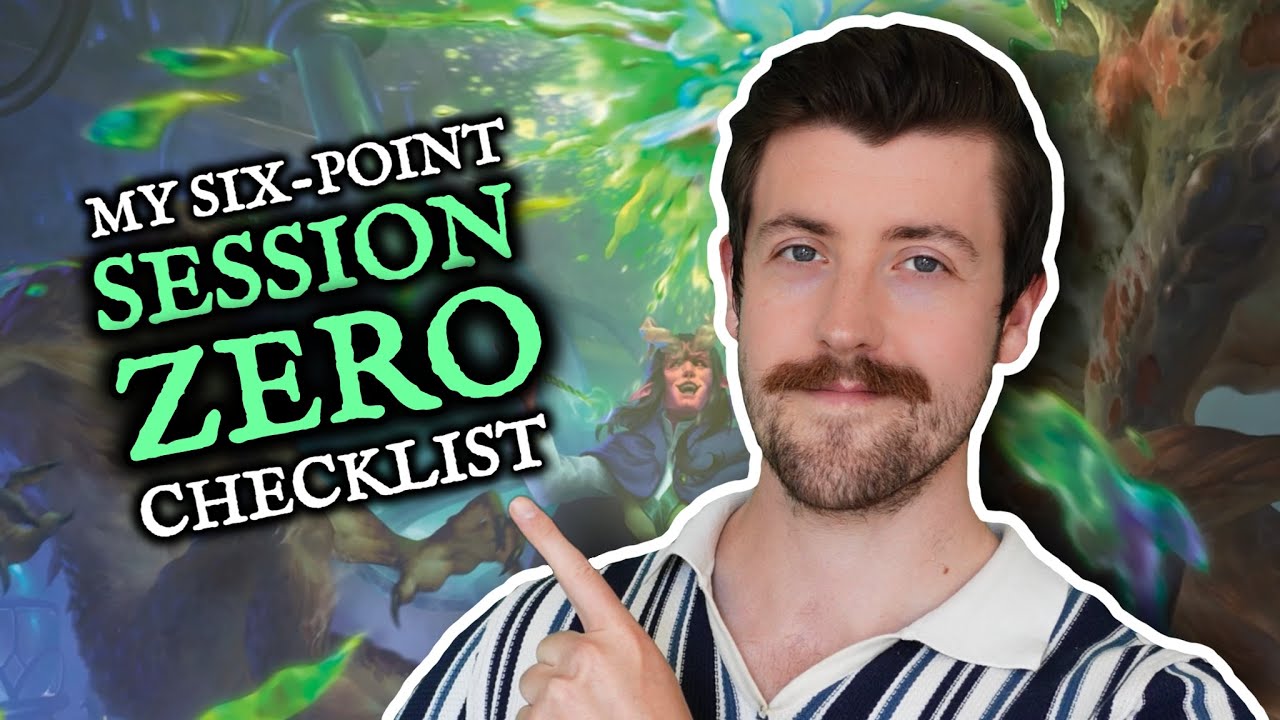
Ginny Di's video on running session zero handles the safety tools conversation better than most written guides. Her framing is practical rather than formal, which is exactly what you need when half the table has never heard of the X-card:
4. Schedule and attendance
This is the item most groups skip. It is also the one that kills the most campaigns.
Agree on the following before session 1:
- What day and time does the group meet?
- How long is a session? What time do you stop?
- What is the minimum notice for canceling?
- What happens to the campaign when one player can't make it? Do you play? Do you wait? Does the missing character exist in-world?
Writing this down and sharing it prevents the two most common failure modes: the "we forgot" cancel that becomes a habit, and the fractured group that falls apart over an attendance fight.
For practical guidance on what to do when players miss games, the don't cancel the session post covers the options in detail.
5. House rules
Every DM runs the game slightly differently. At session zero, write down every rule you have changed from the base game and share it with the players. Surprise rulings mid-session feel arbitrary. Agreed-on house rules feel like shared design.
Common things to document: how death saving throws work at your table, whether critical failures have narrative consequences, how you handle flanking, what the policy is on metagaming.
6. Character creation and party ties
Give players the technical parameters: starting level, hit points at level 1, allowed sourcebooks, any forbidden subclasses or races for this setting. Then go further.
Talk about backstory. How detailed does each character's history need to be? Can players have dark pasts, or does the tone of the campaign call for relatively fresh-faced adventurers?
Most importantly: how do the characters know each other? Nothing deflates a first session faster than four characters who walk into a tavern as strangers and have to awkwardly introduce themselves for forty-five minutes. Decide the connection before you sit down to play.
The character backstory guide is a good resource to share with players who want structured help on this. For the party ties specifically, the party connection generator gives you a quick working framework for figuring out how characters are already linked before session 1.
7. How you will track the campaign
This is the item almost every session zero checklist misses, and I have watched it destroy more campaigns than any of the others.
You are about to invent forty to sixty NPCs, a dozen locations, five active plot threads, and a handful of secrets that players won't uncover until session 15. The question is not whether you should track them. You should. The question is: where does all of that live, and who can see it?
Decide this at session zero, before it becomes a problem.
Some DMs keep a shared document. Some use physical notebooks. Some use a tool that builds the campaign wiki from the session recording automatically, so the names and decisions and locations from session zero forward get captured without anyone having to type them up after each game. If that kind of automatic tracking appeals to you, Saga20's world-builder handles exactly that.
Whatever you choose, choose it now. Handshake agreements about NPCs that live nowhere are the agreements that vanish.

The session zero question bank
Below are the questions I return to most often, loosely grouped by what you're trying to figure out.
About the table:
- What kind of game are you hoping to play? (Genre, tone, vibes)
- How much time do you actually have each session? (Real answer, not aspirational)
- What does "fun" look like for you at the table?
- Is there anything you definitely do not want to see in this campaign?
- How do you feel about character death?
About the characters: 6. What kind of character are you drawn to, and why? 7. How does your character know at least one other person in the party? 8. What does your character want by the end of the campaign? 9. Are there any backstory elements you want me to know but keep off-stage?
About the end: 10. How long do you want this campaign to run? 11. Do you want a defined ending, or are you happy for it to evolve? 12. What would make this campaign feel finished and satisfying to you?
You don't have to run through these as a formal list. Some work better as an open group conversation. The point is to get at the things players are usually thinking but don't say until session 6 when it's already a problem.
The one thing most checklists skip
Every session zero checklist I have read treats the session zero as a one-time event: you have the meeting, you check the boxes, you never revisit it.
That is wrong.
Session zero is the start of a living agreement. Tone shifts as campaigns progress. A player's comfort level with dark content might change after a difficult session. The schedule that worked in January might not work in June. The character who died in session 12 needs to be replaced, and the new character needs a tie to the party.
Write the agreements somewhere everyone can see them, and get into the habit of checking in every few sessions with a quick "is anything not working?" at the end of the night. Revisiting session zero agreements isn't a sign of dysfunction. Most tables that do it run longer and smoother than the ones that don't.
This is also why recording sessions and keeping a running wiki matters more than it seems. When new players join mid-campaign, or when the table picks up after a six-week break, the accumulated history, names, and decisions need to be somewhere findable. The campaign wiki guide covers how to build that record without it becoming a second job.
After session zero: connecting to the campaign
Your first real session should make good on what you pitched. If you described a political intrigue campaign, start them in a situation with a real political problem. If you promised a dungeon crawl with permanent death, put them in a dungeon. Tone set at session zero gets confirmed or undermined at session 1. Players notice.
The broader process of building a campaign from concept through launch is covered in the how to start a D&D campaign guide, which puts session zero in context with the other six steps.
Skip the blank-page problem
Building a session zero agreement from scratch takes longer than you think. Most DMs forget something. A few skip sections because they do not know how to phrase the safety tools conversation.
The free session zero generator at Saga20 walks you through all seven checklist items and exports a complete agreement in about ten minutes. You can share it with players before the meeting so they come in with their answers already started.
Session zero is two hours of honest conversation. Saga20 keeps the campaign those two hours kick off from slipping out of memory. The world-builder captures every NPC, location, and decision from session 1 forward, so the name of that NPC you introduced in session 3 is still findable at session 20.
Run the meeting. Write it down. Then actually start the campaign.
Questions
Common questions
Free Tools
Helpful for This Topic
Session Zero Checklist Generator
Generate a complete Session Zero agreement for your table in minutes. Covers safety tools, schedule, house rules, and character creation.
Party Connection Generator
Wire your party together before session 1. Generate shared backstory ties in under a minute, perfect for the character-creation part of Session Zero.
Session Recap Generator
Once the campaign your Session Zero kicked off is running, capture each session highlight on a shareable card.
Drop the notebook
Try Saga20 for free
Record your session. We'll write the notes and build your wiki.
Get started freeNo card needed