How to Run a West Marches Campaign (Without It Collapsing by Month Three)
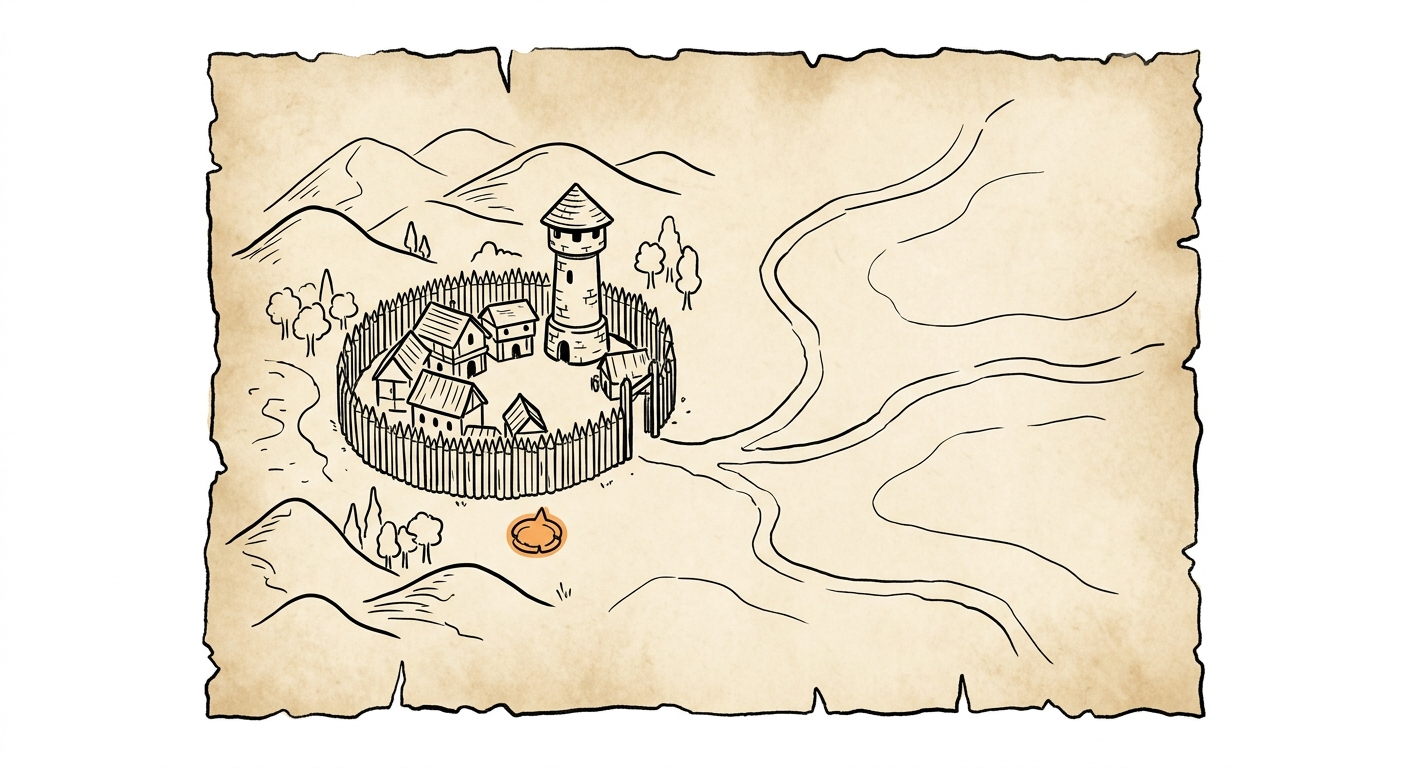
Ben Robbins ran the original in 2007, wrote it up on his blog, and accidentally created the most-copied campaign structure in the hobby. Almost twenty years later people are still starting West Marches games, and a lot of them are dead within three months.
They do not fail for the reasons you would guess. The map is usually fine. The rules are usually fine. What kills them is that around session twelve, with four different groups having gone four different directions, nobody can remember what actually happened out there. Including the GM.
That is the problem this guide is mostly about. The setup takes an afternoon. Keeping the thing coherent is the actual job.
The four rules that define the format
Strip away the folklore and a West Marches campaign is four commitments:
Sessions start and end at the home base. A frontier town, a guild hall, a fort. Nobody is ever left stranded mid-dungeon, because the next expedition might not include them.
Players schedule the games. Somebody posts "heading to the sunken shrine on Thursday, need three more" and a party forms. You do not chase people. If nobody organises, nobody plays that week, and that is allowed.
The party changes every session. There is no fixed cast. A pool of players draws from itself.
There is no plot waiting for them. The map is the content. Danger scales with distance from town, and the players decide how far they are willing to go.
That fourth one is the hardest for experienced GMs. You are not writing a story. You are stocking a region and letting people loot it. Matthew Colville's episode on the format is still the best video explanation of why that shift is harder than it sounds:

If you want the primary source, Ben Robbins' original write-up on Ars Ludi is short and worth the twenty minutes. It is more candid about what went wrong than most of the guides that copied it.
Start much smaller than you want to
The instinct is to build a continent. Do not.
You need a home base and roughly a dozen points of interest within one to three days of travel. Not fully written. A name, a one-line hook, and a rough sense of how dangerous it is. "Collapsed watchtower, something is nesting in it, moderate" is enough to run a session from.
Everything past that ring is blank. Genuinely blank, in your notes as well as on the player-facing map. You will fill it in when someone walks that way, and you will do it a week before they arrive rather than eight months in advance.
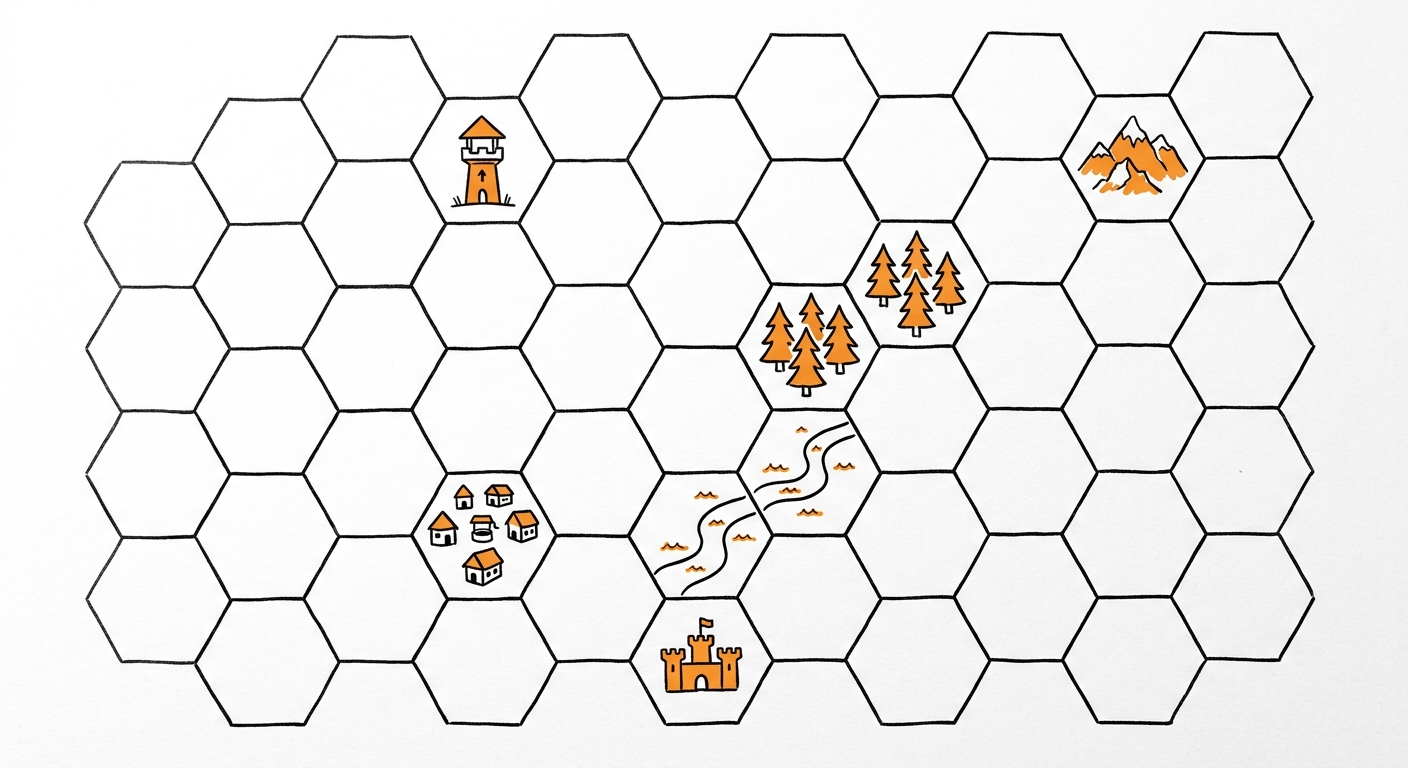
Two practical notes. Distance should correlate with danger, and the players need to be able to feel that correlation, so tell them plainly in session zero: the further you go, the worse it gets, and nothing out there is level-appropriate. Second, give the map edges. A mountain range, a coast, a wall of dead forest. Infinite maps make people wander; bounded maps make people choose.
If you have never built a region from scratch, the eight-step approach in our D&D world building guide works well here, with the caveat that you should stop after step three and start playing.
The roster is the part that surprises people

Eight to fifteen players in the pool. Three to five per session. That ratio matters more than any other number in this guide.
With six players total you have not built an open table, you have built a normal campaign where two people are always missing. The pool needs enough slack that a Thursday game can fill without the same three names every time. Fifteen is roughly where a single GM stops being able to hold the world in their head.
Then there is levelling, which is the first thing to break. If Priya has played nine expeditions and Tom has played two, they cannot adventure together without you doing arithmetic all night. Most West Marches tables abandon individual experience points and switch to something blunter: characters level after every third expedition, or the entire roster levels together at set milestones. It is less granular and it is much less work. The discussion on what defines a West Marches campaign over on RPG Stack Exchange has a good thread on the variants people have tried.
One more thing nobody mentions. A rotating roster quietly fixes the biggest scheduling headache in the hobby, because a missing player is no longer a cancelled session. If your current game keeps collapsing when one person drops out, that problem is worth solving directly whether or not you go open table.
The part that actually kills campaigns
Here is the failure mode, in order.
Month one is euphoric. Sign-ups are heavy, three expeditions run in a fortnight, the map grows fast. Month two, a player asks whether the smith is still alive, and you cannot remember whether the group that went north killed him or just threatened him. You improvise. Month three, two different parties have contradictory information about the same ruin because you told them different things, and the fix requires you to retcon something. Sign-ups thin. By month four you are the only one who still posts in the server.
Nothing about the content caused that. The campaign died of bookkeeping.
A normal campaign hides this problem because the same five people are in every scene, so the table remembers collectively. Strip that out and the shared memory has to live somewhere outside your head, because no two players were at the same set of sessions. In a West Marches game the world state is not admin. It is the thing that makes the format work at all.
What you need to keep current, at minimum:
- Which locations have been found, cleared, or half-explored, and by whom
- Every NPC the players have met, with the state of that relationship
- Standing debts, promises and grudges in both directions
- What each faction knows and wants right now
- Rumours already handed out, and which ones turned out to be false
That is more than a session log. Organised chronologically it is useless, because in month five nobody scrolls back to session 9 to check on the smith. It has to be organised by entity, so you look up the smith and read his history. That distinction is the whole point of a campaign wiki, and West Marches is the format where it stops being optional.
You can maintain that by hand. Plenty of people do. The other option is to record your sessions and let a world builder keep every NPC, location and faction page current for you, which is what I use now, mostly because I ran a West Marches game that died exactly the way described above and I did not want to repeat it.
Make the session report a rule, not a favour
The single highest-leverage habit: after every expedition, someone writes up what happened and posts it where the whole pool can read it.
Not for you. For the eleven people who were not there. The report is how a player who missed three weeks knows the bridge is out and the shrine is hostile now. It is also, quietly, marketing for your own game, because reading about someone else's disastrous trip north is what makes people sign up for the next one.
Keep it short. Where they went, what they found, what they changed, what is still open. Five sentences beats five paragraphs, and a report that actually gets written beats a beautiful one that does not. Our guide to D&D notes covers the short list that transfers directly, and if you would rather not assign the job to a person at all, the practical route is recording the session and posting the summary.
Rotate who writes it, or attach it to a small reward. Do not leave it to whoever feels like it, because that is nobody by week six.
Your server is load-bearing
In a normal campaign the server is a convenience. Here it is the scheduling system, the noticeboard and the archive, so it deserves twenty minutes of thought.
Four channels do most of the work: one where players propose expeditions and sign up, one where session reports get posted, one holding the current map and the standing rules, and one for general chatter. Pin the map. Pin the rules. Everything else can be messy.
The scheduling channel is the one to protect. It only works if players genuinely believe they are allowed to propose games without asking you first, and the fastest way to kill that belief is to say no a few times. If you cannot run on a proposed date, say so quickly and let them repost. Our D&D Discord server setup guide covers the channel structure in more depth, including which channels reliably go quiet.
The r/westmarches subreddit is also worth a browse before you launch, mostly to see how existing games word their rules posts.
When not to run one
I would skip the format if you want a story with an ending, if your group is fewer than eight people, or if you are new to running games. It is a genuinely harder job than a linear campaign, because improvisation is the default state rather than the emergency plan.
It is a very good fit if you have a large loose group with mismatched schedules, if you like building places more than plots, or if your last campaign died because you could never get five people in a room on the same night. The American Library Association's write-up on running West Marches for library groups makes the case for drop-in play better than most hobby blogs, and is worth reading even if you are running at home.
The first month, roughly
Week one, draw the region and write the standing rules. Week two, recruit and run a session zero for the whole pool at once so everyone hears the same rules. Week three, run the first expedition and write the first report yourself to set the standard. Week four, hand the report job to a player and see whether the machine turns over without you pushing it.
If it does, you have something that can run for years. The West Marches games that last are not the ones with the best maps. They are the ones where a player who has not played in a month can open the server, read what happened, and know exactly where they want to go next.
Questions
Common questions
Free Tools
Helpful for This Topic
Session Recap Generator
Every expedition needs a report the other eleven players can read. Turn the session into a shareable card in a minute.
Session Zero Tool
Run one session zero for the whole player pool so everyone hears the same standing rules before the first expedition.
Session Time Manager
Open table sessions have to start and end at the home base. Plan the trip out and back so nobody gets stranded.
Drop the notebook
Try Saga20 for free
Record your session. We'll write the notes and build your wiki.
Get started freeNo card needed