D&D Campaign Ideas: 20 Original Premises That Run for Years (2026)

The best campaign I ever ran started as one sentence on a napkin: the gods are dead and nobody has noticed yet. That was it. No map, no villain, no plot. Just a pressure. For the next two years, across something like fifty sessions, my players generated their own problems out of that one idea. A priest whose prayers stopped working. A paladin slowly losing her powers and lying about it. A cult that figured out the truth before the party did and decided to profit. I barely had to push. The premise did the work.
The worst campaign I ever ran started with forty pages of lore. A full pantheon, a thousand-year history, six kingdoms with named rulers. It died in five sessions. The players nodded politely at my world and then went looking for something to actually do, and there was nothing, because I had built a museum instead of a machine.
That is the thing nobody tells you about D&D campaign ideas. A great premise is not a setting. It is an engine. The question is never "is this world cool." The question is "will this idea keep handing me new problems for a year without me forcing it." Below are twenty premises built to do exactly that, plus the method for turning any of them into a campaign your players stay for. Steal one. Change the part that feels predictable. Run it.
What makes a D&D campaign idea actually last?
A one-shot needs a single dramatic question and a finale that flips. We covered that in our guide to D&D one-shot ideas, and the rules there are different on purpose. A campaign needs something a one-shot does not: a conflict that refuses to stay solved.
Here is the test I run on every premise before I commit a year to it. Four questions.
- Is the conflict renewable? Can the central tension keep producing new situations after the obvious one is resolved? A stolen crown is a one-shot. A succession crisis with five claimants is a campaign, because removing one claimant just shifts the board.
- Does the world push back on its own? Are there factions and forces that move while the party sleeps? If the situation only changes when the players poke it, the campaign stalls the moment they hesitate.
- Do the stakes escalate naturally? Is there a built-in reason things get worse over time? A rising sea, a waking god, a debt that compounds. Escalation you have to invent every week is exhausting. Escalation baked into the premise runs itself.
- Can the players matter? Is there room for the party to change the outcome in ways you did not script? If the ending is fixed, your players will feel it, and they will check out.
If a premise answers yes to all four, it will run. If it misses one, you can usually fix it by adjusting the engine, not the dressing. The published campaigns people re-run for years pass this test too. Curse of Strahd endures because Strahd keeps adapting and the valley itself pushes back, not because of any single dungeon. The twenty premises below are homebrew rather than published modules, but each one is built on the same kind of engine, and I will name the conflict every time.

Power and politics
1. The Slow Coup
The pitch. The party are minor agents of an aging queen whose realm is being taken from her, not by an army, but by paperwork. Marriages, loans, quiet murders, a forged will here and a bought magistrate there. The usurper is winning legally, one institution at a time.
The hook. Your first job is small and deniable: recover a single document before it reaches the wrong hands. You succeed, and you realize that one document was a single thread in a plan that runs under the whole kingdom.
The long game. Each arc, another pillar of the old order falls. The party fight a clock, not a dungeon. They can slow the coup, expose a player, protect an ally, but the usurper adapts every time.
Why it lasts. The renewable conflict is a rival who keeps making legitimate moves. There is always a next institution to defend or sabotage, and the villain is never just sitting in a final room waiting to be stabbed.
2. The Five Banners
The pitch. A king dies without an heir. Five factions move on the vacuum at once: the merchant league, the old nobility, the temple, the general, and the mob. The party cannot beat all five. They can only tip the balance.
The hook. All five factions try to hire the party in the first session, because a competent, unaffiliated crew is exactly what a power struggle needs.
The long game. Track reputation with each banner. Every choice makes one an ally and another an enemy. The war is written by the players, not by you.
Why it lasts. Factions are the cleanest renewable conflict in the game. They want incompatible things, they move on their own, and they remember. This premise pairs beautifully with a campaign wiki, because by session twenty you will be tracking dozens of named NPCs across five agendas.
Survival and frontier
3. The Last Caravan
The pitch. A cataclysm ended the age of cities. The only safe place left is a moving caravan-town, a few hundred survivors and their wagons, that never stops because stopping is death. The party are its outriders and its sword.
The hook. The caravan's previous guard detail did not come back from a water run. The party are the replacements, and the elders are not optimistic about them either.
The long game. The road always offers a new threat and a new settlement to absorb, raid, or refuse. The home base moves, so the map is effectively infinite.
Why it lasts. The renewable conflict is the journey itself. There is always a next horizon, and the caravan is a permanent stake the players are personally responsible for keeping alive.
4. The Tide Line
The pitch. The sea is rising a foot every month and it never goes back down. Whole towns are weeks from drowning. The party evacuate, salvage, and slowly uncover why the water is climbing.
The hook. A coastal village hires the party to move its people inland before the next tide. Halfway through, they find a shrine the water reached first, and something inside it is the reason for all of it.
The long game. The map literally shrinks each arc. Places the players knew go under. The stakes escalate because the geography forces them to.
Why it lasts. Escalation is built into the world. You never have to manufacture urgency. The clock is the ocean.
Mystery and the cosmic
5. The God in the Mountain
The pitch. A prosperous town sits at the foot of a mountain where a god sleeps. Its dreams leak out and grant the townsfolk small wishes. The party arrive just as the wishes start coming true too literally.
The hook. The party are passing through and witness a man wish his wife back from the dead. It works. She is not quite right.
The long game. Each arc, the god stirs a little more, and the dreams get stronger and stranger. The town will not leave the source of its fortune, even as the fortune curdles.
Why it lasts. A slow countdown to an event nobody fully understands is one of the most renewable engines there is. Every session can answer one question and raise two.
6. The Borrowed Years
The pitch. Generations ago, the duchy struck a bargain with a fey lender: prosperity now, paid back in years of life later. Everyone owes a debt of time. When your years run out, you simply stop existing, and the world quietly forgets you were ever there.
The hook. The party discover they owe the most of anyone, because someone signed their names to the ledger without asking.
The long game. Each character carries a personal doomsday clock. Arcs revolve around buying time, renegotiating the debt, or hunting the lender across a realm that does not want the deal undone.
Why it lasts. The stakes are personal, literal, and individual. Every player has their own reason to push, and the lender is a villain who never has to lift a sword.
Horror and folk dread
7. The Town That Remembers
The pitch. A village bound by an ancient pact where nobody can lie and nobody can forget. Every promise is kept, every grudge is eternal, every secret eventually surfaces. The party are outsiders, which means they are the only people who can still deceive.
The hook. The party are asked to do one dishonest thing the townsfolk cannot do themselves. It seems harmless. It is not.
The long game. The pact frays a little more each arc, and buried secrets surface on a schedule. The pressure only ever builds.
Why it lasts. It is a pressure cooker with the heat already on. The renewable conflict is the slow collapse of a rule everyone depends on, and the party are the crack it spreads from.
8. The Long Night
The pitch. Three years ago the sun set and never rose. Society reorganized around permanent dark: lantern-cities, cold-adapted crops, monsters that own the roads now. The party hunt the cause across a frozen continent.
The hook. A dying astronomer hands the party the only map to where the sun was last seen, then begs them not to go.
The long game. A journey with a moving destination. The dark evolves, the monsters in it change, and every settlement has a different theory about what happened and a different price for shelter.
Why it lasts. A quest premise with escalating threats and an unknown end. The destination can shift as your players learn more, which keeps the road alive for a year.
Heist and the underworld
9. The Heist Against Heaven
The pitch. The gods locked away something the world needs and will not give it back. Rain. Death. True names. The party are the crew assembling to steal it out of a divine vault that was never meant to be robbed.
The hook. A disgraced cleric recruits them for a job that is technically blasphemy and definitely fatal, with a payout that could save a continent.
The long game. Heist structure gives you arcs for free: recruit the crew, case the vault, gather the impossible tools, survive the betrayal, pull the job. Then live with what you took.
Why it lasts. The heist is a renewable conflict by design. Each phase is its own arc, and a vault belonging to a god gives you escalation that tops out at the literal divine.
10. The Debt
The pitch. The party owe a crime guild a sum they cannot possibly repay. Every arc is a job to pay it down, and every job somehow digs the hole deeper.
The hook. The campaign opens at the meeting where the number is read aloud. The party either took the loan or inherited it. Either way, the guild does not care.
The long game. Keep a ledger the players can see and update it after every job. The number is the plot. Pay it down, watch it climb, and slowly learn who actually holds the note.
Why it lasts. Money is the most renewable conflict in fiction. There is always another job, and the guild always has another lever.
War and legacy
11. The War You Already Lost
The pitch. The campaign opens after the final battle. The good guys lost. The dark lord won, the kingdom fell, and the party are the ragged resistance in an occupied world.
The hook. Session one is an escape, not a quest. The party flee the fall of the last free city and wake up as the only organized thing left.
The long game. Liberate regions, build the rebellion, and decide what victory even means now that the war is technically over. The whole conquered map is yours to take back, one province at a time.
Why it lasts. An entire occupied world is a renewable conflict you could run for years. Every region is an arc, and the enemy is already winning, so the escalation is built in from minute one.
12. The Inheritance
The pitch. The party inherit a derelict keep, a dusty title, and every enemy that came with both. The previous owner left debts, rivals, and at least one very good reason they are no longer around.
The hook. A solicitor finds the party to read them a will none of them expected to be in.
The long game. This is domain play. The keep attracts threats and opportunities, and the 2024 bastion rules give you a ready-made framework for running it between adventures. The party build, defend, and expand a home the campaign can revolve around.
Why it lasts. A domain the players own is a permanent stake. It generates problems forever, because owning something valuable means somebody always wants to take it.
8 more campaign sparks
Short on time? Here are eight one-line premises with the engine already built in. Take one, run it through the four-question test, and flesh it out.
- The party are the monsters the kingdom has hired heroes to hunt, and they have to clear their names before the bounty hunters arrive.
- A traveling carnival that is secretly a mobile prison for old gods, and the party are the new wardens who do not know it yet.
- The map is a living creature the size of a continent, and everyone lives on its back. It is starting to wake up.
- Everyone shares the same recurring dream of a city that does not exist yet, and it is being built brick by brick in the waking world.
- Magic is dying one school at a time. The party choose which spells survive and which are lost forever as the wells run dry.
- The afterlife is overcrowded and souls are leaking back into the world. The party are hired to fix death itself.
- A library where every book is a real place you can enter, and something is editing the stories from the inside.
- The party are time-loop veterans waking up the day after the loop finally broke, remembering a hundred years that no longer happened.
How do you come up with your own D&D campaign idea?
Steal the shape, change the twist. That is the whole craft, and every premise above is built from it.
Most of the campaigns I have loved were a familiar story with one thing changed. The Heist Against Heaven is a caper film with a divine vault swapped in. The War You Already Lost is every fantasy epic, opened at the page where the heroes fail. You do not need to invent a premise no one has ever seen. You need a shape your players recognize and a twist they do not.
A generator can hand you a premise in five seconds. What it cannot hand you is the engine, the renewable conflict, or the reason your specific table cares. That part is yours.
Here is the method I use, and it takes about ten minutes:
- Pick a story you love from any medium. A heist, a war, a haunting, a frontier western.
- Change the one predictable thing. The part your players would guess. Make the vault a god, the war already lost, the haunted house a whole honest town.
- Name the renewable conflict out loud. If you cannot, the premise is a one-shot wearing a campaign's coat.
- Write the one-sentence promise. The gods are dead and nobody has noticed. The sea is rising and will not stop. If the sentence lands, you have a campaign.
From there, do not build the whole world. Build the first situation and the pressure behind it, then let the table do the rest. Our full guide to D&D world building goes deep on building just enough world to start, which is the trap most new DMs fall into when a premise excites them.
Which campaign idea is right for your table?
The best premise on paper is the wrong one if it does not fit your group. A few honest matches.
New DMs and beginner groups should run something with a small map and a concrete goal. The Last Caravan, The Debt, and The Inheritance all start tight and stay legible. You can run the first three sessions off a single page. Skip the cosmic mysteries until you have a campaign or two behind the screen.
Groups who want a short campaign of ten or fewer sessions should pick a premise with a natural finish line. The Tide Line ends when the water is explained or the coast is lost. The Heist Against Heaven ends when the job is pulled. Built-in endings are a feature, not a limitation.
Experienced tables hungry for something weird should reach for the high-concept sparks. The living map, the borrowed years, the broken time loop. These reward players who lean into a strange premise instead of testing it.
Tables who want a funny campaign should lean toward the traveling carnival or the party-are-the-monsters premise. Both take a comedic tone well without falling apart the moment the players decide to get serious.
Whatever you pick, the premise is only half the job. The other half is keeping the campaign coherent once it is running, which is a different skill entirely. If you have not launched yet, start with how to start a D&D campaign. Once session one is behind you, how to run a D&D campaign covers the weekly loop that carries a premise from session two to session fifty.
Where to find more D&D campaign ideas
If you want to hear another DM riff on full-campaign premises, Enter the Dungeon's breakdown is one of the better ones online, and a few of these ideas pair well with the engines above.
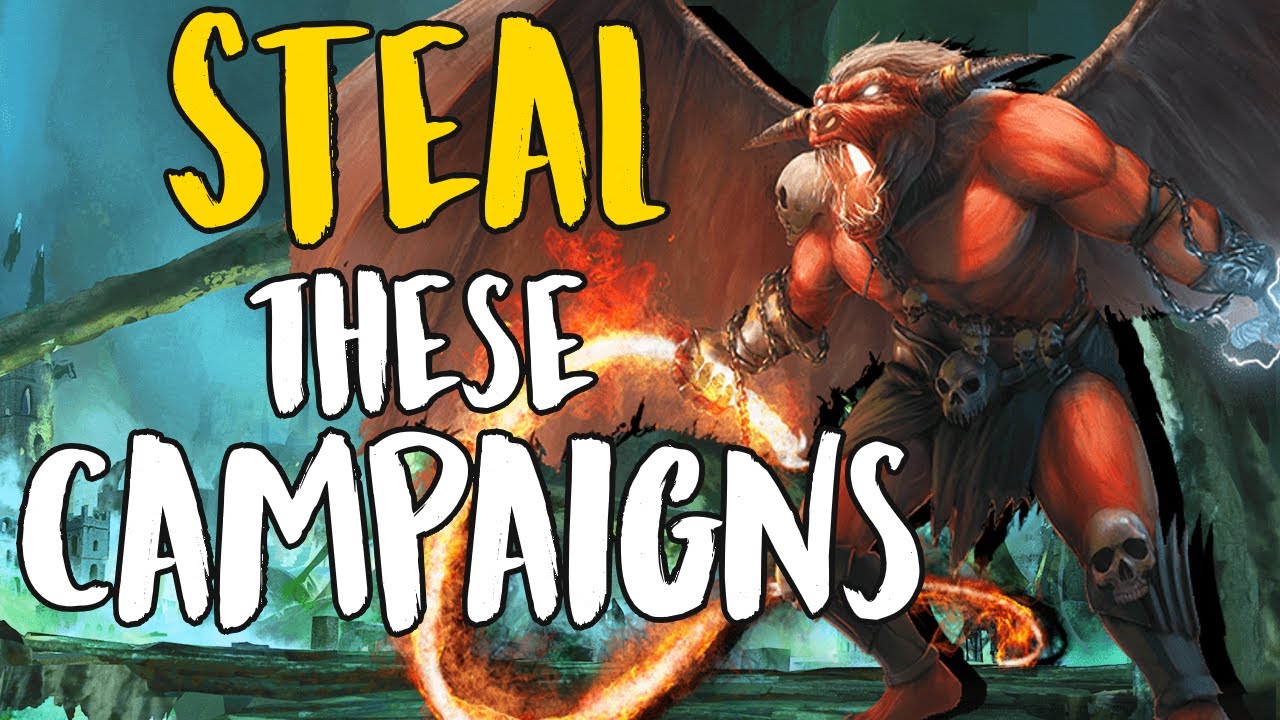
For more premises and prep philosophy, Sly Flourish has been the gold standard for lazy, sustainable campaign prep for over a decade, and Matt Colville's Running the Game series is the single best free course on building a campaign from a premise. The r/DMAcademy community is also a reliable place to pressure-test an idea before you commit a year to it.
Turning a campaign idea into a campaign that survives
A premise gets your players to session one. Continuity is what gets them to session twenty.
Every campaign on this list generates NPCs, factions, locations, and open threads faster than you can hold them in your head. The DMs who reach the end of a campaign are not the ones with the best ideas. They are the ones who stopped trusting their memory around session five and started keeping a record.
Lock the premise in before session one with a proper Session Zero, so every player wires their character into the central conflict instead of standing next to it. Our Session Zero Generator builds a full agreement, including tone and safety tools, in about ten minutes. The Party Connection Generator ties your party to each other and to your premise before the first die is rolled, which is the fastest way to make a campaign idea feel like it belongs to the whole table.
Then, once you are running, capture each session while it is fresh. A premise this good deserves to be remembered accurately. The Session Recap Generator turns each game into a shareable record your players actually read between sessions, so the world you started with one sentence keeps growing into something none of you could have planned.
Pick an idea. Name the engine. Write the sentence. Run it Friday.
Questions
Common questions
Free Tools
Helpful for This Topic
Session Zero Checklist Generator
Picked your premise? Lock in tone, safety tools, and house rules before session 1. Print or share a full Session Zero agreement in minutes.
Party Connection Generator
Wire your party into your campaign premise before the first die is rolled. Generate shared backstory ties in under a minute.
Session Recap Generator
Once your campaign is running, capture each session on a shareable highlight card your players actually read between games.
Drop the notebook
Try Saga20 for free
Record your session. We'll write the notes and build your wiki.
Get started freeNo card needed