10 D&D One-Shot Ideas Your Players Will Talk About For Years (2026)
The first one-shot I ever ran was about a haunted lighthouse. The party arrived expecting ghosts. What they found was the lighthouse keeper had been dead for three weeks, the light had been on the entire time, and the thing pretending to be the lighthouse was very politely asking them for tea.
That session is the only thing those four players still text me about, eight years later.
Compare that to my other one-shots from the same year. The dragon hunt. The dungeon under the mountain. The heist on the duke's vault. They were fine. Nobody remembers them. Not even me, not really. The lighthouse stuck because something the players thought was true at minute one turned out to be false at minute one hundred and eighty.
That is the entire job of a one-shot. Not encounters. Not maps. One question the table wants the answer to, a clock that loudly ticks, and a finale that flips. If you have that, you can run a memorable session in 45 minutes of prep. If you do not have that, you can spend a month building your dungeon and the players will leave saying "yeah it was fun" in the tone they reserve for fine.
I have run more than fifty one-shots over twenty years behind the screen. Convention games, beer-and-pretzel nights, recovery sessions when the main campaign needed a break. The ten below are the ones that have actually worked. I have stolen, modified, and run all of them. A few have been requested as full campaigns afterward.
Pick one. Run it Friday. Tell your players you wrote it.
What makes a one-shot stick
Three things, in this order:
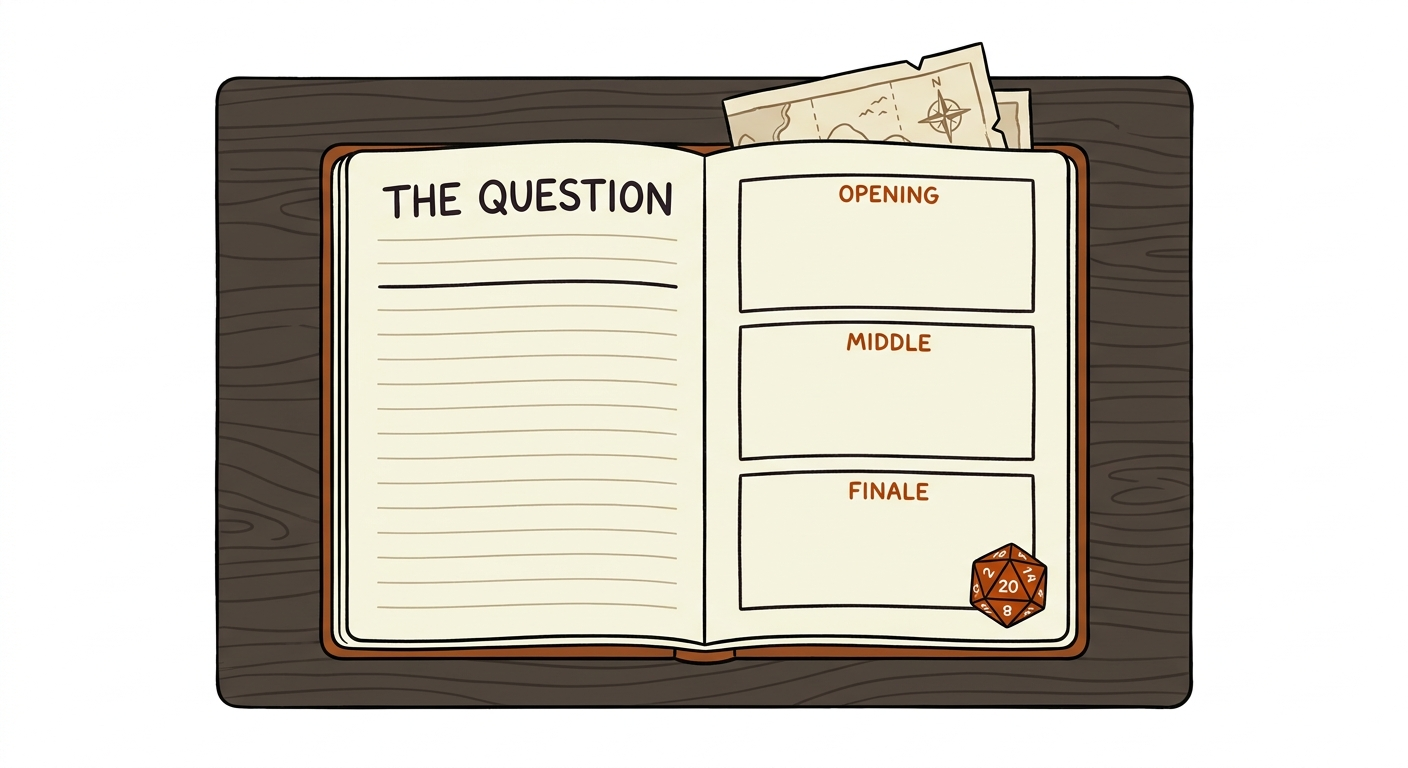
- A single dramatic question. Will the wedding survive? Who is haunting the lighthouse? Can the party get out before the gate closes? If you cannot say it in one clean sentence, the session is not ready.
- A ticking clock. Three turns until the ritual completes. One hour until the tide comes in. Sundown before the curse takes hold. A clock turns "the players make decisions" into "the players make decisions now."
- A finale that flips. The ally is the villain. The macguffin is cursed. The win condition was secretly a lose condition. Players forgive almost any prep mistake if you give them one moment they did not see coming.
That is the entire framework. Memorize it. Most of the rest is decoration.
10 one-shots that have worked at my actual table
I have grouped these loosely by tone, but the order is roughly ascending in weirdness. Number one is a starter. Number ten is what you run after the main campaign survived a TPK and your players want to do something stupid.
Each entry has the pitch (what the players see), the hook (how they get into it), the twist (what flips at the finale), and a short play note from when I ran it.
1. The Six Yesterdays
Levels 4-7. Mystery, three to four hours. The cleanest time-loop one-shot I know.
The pitch. The party rides into a small farming village to deliver a routine letter. Everyone in town is acting strange. The miller insists today is his funeral. The blacksmith won't enter her own forge because "that's where it happens." The children have stopped going outside. As the party investigates, every villager they speak to, in passing, casually says: "It's been six yesterdays now."
The hook. They cannot leave. The road out of town loops back to the gate. The river at the edge of the woods runs the wrong direction past sundown. Whatever is happening here, the party is now part of it.
The twist. The village died yesterday. All of them. Six times. Each yesterday, the loop resets at dawn, and only the villagers remember. They have been trying to warn travelers for almost a week. The party is the first group that arrived early enough to do something. The thing causing the loop is in the well, and it is afraid of being seen.
Play note. Run this one slow. The horror is in the casualness. The miller does not panic about his funeral. He is mildly inconvenienced by it. When the party realises every NPC has been politely warning them since minute one, the room gets quiet.
2. The Body-Swap Funeral
Levels 3-6. Mystery and comedy in equal measure. Four hours, give or take.
The pitch. The party wakes up the morning of a duke's funeral with a problem. They are not in the right bodies. The cleric is in the rogue. The fighter is in the bard. They have eight hours to attend the funeral, behave like nobles, and figure out what happened, before sundown makes the swap permanent.
The hook. The note pinned to the largest body's chest reads: the killer is a guest at the funeral. find them or stay like this. They are also expected to give a eulogy.
The twist. The duke is the one who swapped them. He is not actually dead. He used a cursed amulet to escape an assassination attempt by jumping into a guest's body, and the swap rippled outward through every spellcaster in the manor. He is now in the body of one of the player characters. He has been quietly directing the party all morning to keep his real body safe in the casket.
Play note. Do this one with name tents at the table. Cleric's player puts up a name tent that reads "rogue." Fighter's player puts up a name tent that reads "bard." Watch them improvise their way through nobility small talk in the wrong skin. This is the most fun comedy session I have ever run.
3. The Wedding That Turns On Itself
Levels 4-7. Heist and social maneuvering. About four hours.
The pitch. The party has been hired to steal the crown jewels during the prince's wedding. They are not the only ones planning this. The bride is also stealing them, for reasons of her own. So is the head of the household guard. So is the wedding cake.
The hook. Their employer is the prince's mother, who suspects the wedding is a sham and wants the jewels secured before the ceremony ends. She does not tell them about the other thieves. She does not know.
The twist. The jewels are paste. They have been paste for forty years. The current queen replaced them when she was the prince's age, in the same wedding, for the same reasons the bride is now. The cake mimic, sentient and surprisingly polite, knows everything. It will tell the party, but only after it has eaten the prince's hat.
Play note. Build a guest list before the session. Twenty named NPCs, one sentence each. The players will fixate on three of them within the first hour. Promote those three to having actual stakes in the heist on the fly.
4. The Lighthouse That Calls You Back
Levels 5-8. Coastal horror. Three hours if you are mean about it.
The pitch. A coastal lighthouse has gone dark. Three ships have wrecked on the rocks below in the past week. The party has been hired by the harbor master to relight the flame and find out what happened to the keeper. The keeper's last log entry, written in the same hand for thirty years, suddenly switches to a different handwriting on the final page. It reads: "It is inside the light. Do not relight it."
The hook. The fee is generous. The fee is generous because the harbor master has already lost two adventuring parties to this job and is running out of options.
The twist. Putting the light back on releases what is inside it. The keeper bound it there, deliberately, at the cost of his own life. The thing inside is not malicious in the way the players expect. It used to be the keeper's wife, a hundred years ago, and she has been waiting in the lantern for the right person to break her out. She does not remember being human anymore. She remembers being light.
Play note. This one lives or dies on atmosphere. Print the log entries as physical handouts. Switch the handwriting partway through. Read the final line out loud, do not let a player read it. The reveal that the lantern is the wife is a sucker punch the table will remember.
5. Mice in the Masquerade
Levels 3-5. Comedic puzzle adventure. Three hours flat.
The pitch. The party is hired to retrieve a stolen heirloom from a noble's masquerade ball. They take a glass of wine from a passing servant. They wake up six inches tall. The masquerade is still in progress. They have until midnight to find the unshrinking word, recover the heirloom, and avoid being eaten.
The hook. The heirloom is a music box. They can hear it, faintly, from across the ballroom. The ballroom is now the size of a small kingdom. Half of the canapes on the buffet are mimics, and several of the masked guests have noticed something small moving along the floor.
The twist. Their employer shrunk them on purpose. He is the host of the ball. The "stolen" heirloom is his. He needs it broken, not retrieved, and the party are the only people small enough to slip inside without triggering the wards he set on the box. He is not the villain. The villain is the music box.
Play note. Combat in this one-shot is exclusively against household animals and food. A house cat is a CR 5 encounter when you are six inches tall. Lean into the absurdity. Do not stat a balanced ladder. Stat the cat correctly and let your players figure it out.
6. The Train Through the Planar Wall
Levels 6-9. Mystery on a moving deadline. Three to four hours.
The pitch. The Lich-Line runs once a night between a coastal city and a station that does not appear on any map. The party boards it for reasons of their own. Twenty minutes after departure, a passenger is found dead in the second-class car. The conductor calmly informs everyone that the next stop is across a planar boundary and once they cross it, no one will be able to follow up on the death. They have ninety minutes to solve a murder on a moving train.
The hook. Each player has a separate reason for being aboard. Hand each player a sealed note before the session that contains their secret. None of the secrets are villainous. Most of them are embarrassing.
The twist. The murder has not happened yet. The body in the second-class car is the conductor's, twelve hours from now, after he kills himself in despair when he realises one of the passengers is the version of him from a future loop. The train is a ritual instrument, not a vehicle. The party has been seated by intent.
Play note. Build a passenger manifest of fifteen named NPCs. The players will not interview all of them, but knowing they exist will give the train a heartbeat. Run the dining car as a scene where two NPCs are arguing loudly about something the players will only later realise was the murder weapon.
7. Disposing of the Count
Levels 9-12. Post-Strahd cleanup, Heathers and The Breakfast Club energy. Four hours, possibly more.
The pitch. Strahd is dead. The Caretakers of Barovia, an ancient order tasked with managing the Count's many awakenings, have hired the party to dispose of his body before sundown. If the body remains intact when the moon rises, the curse comes back, with him. The Caretakers cannot do this themselves. They are bound by the same magic that bound Strahd. The party is not.
The hook. Strahd's body weighs more than it should. The castle does not want him to leave. Doors that opened on the way in are sealed. The chapel has rearranged itself. The wolves have stopped howling, which is somehow worse than when they were.
The twist. Strahd is in the body. He is conscious. He is patient. He is also bored after eight hundred years and would, frankly, prefer to stay dead this time. If the party can prove they understand what he wants, he will help them. Otherwise, he will kill them at the threshold and walk out himself.
Play note. Steal scenes from 80s movies. The kitchen sequence is The Breakfast Club. The chapel is Heathers. The throne room is a slow shot from a teen movie ending. Tell the players you are doing this. Half the joy is in the shared joke.
8. The Tomb of Laughter
Levels 1-3. Comedic dungeon crawl. Two to three hours.
The pitch. A retired gnomish archmage has died, and his will requires an adventuring party to retrieve a single named heirloom from his tomb. The tomb is not lethal. It is a series of pranks, gags, illusions, and embarrassments. Nothing in this dungeon will kill the party. Most things will humiliate them in front of each other.
The hook. The fee is small. The wizard's family did not bury him with much. They want the heirloom for sentimental reasons. They have already lost two adventuring parties to this dungeon, neither of whom died. Both quit halfway through.
The twist. The heirloom is the wizard. He bound his soul into the object the family is asking for, and he has been observing the party the entire dungeon. He is delighted with all of them. He would like to be adopted, please. He cooks.
Play note. This is the perfect one-shot for a table that does not want to use combat that night. Replace every encounter with a skill challenge or a goof. The mimic in the chest will not bite. It will only insult their fashion choices, in a different language each time.
9. The Children of the Hollow
Levels 4-6. Folk horror, three hours, leave the lights up.
The pitch. The village's children have all stopped sleeping. They are still polite. They are still doing their chores. They are walking around at three in the morning in a slow, even circle around the well at the center of town. None of them remember doing it the next day. The parents have hired an adventuring party because the local cleric has refused to come back after his last visit.
The hook. The party arrives during the day. Everything is fine. The children are children. The parents will not say the word "replaced" but it is on their faces. By midnight on the first day, the party will have to choose whether to follow the children to the well.
The twist. The children are not replaced. The parents are. Something arrived in the village two months ago and slowly, one at a time, took the place of the adults. The children noticed first. They have been trying to tell anyone, in the only way they can without being caught, by walking the circle and waiting for a stranger to come ask why.
Play note. Fey horror works because the rules are wrong, not absent. Pick three rules early and stick to them. Iron repels. Names are dangerous. The well at midnight does something specific. Tell the players in passing. Let them discover the rest.
10. The Elder Brain's Dream
Levels 7-10. Existential horror. Run this on a night when your players are paying attention.
The pitch. The party wakes up on the floor of an unfamiliar room, bleeding, with no memory of how the fight ended. There are bodies. The bodies are theirs. They appear to be alive, which is confusing, because they remember dying. The world outside the room is wrong in ways they cannot quite name. The sky is the wrong color. The moon casts no shadow.
The hook. A single NPC, an old wizard who claims to have been their patron, tells them they have been captured by an illithid colony. The fight they remember was real. They lost. They are now inside a simulation the Elder Brain is running on their corpses, mining their memories for tactical information. To escape, they have to get out before the colony finishes the procedure.
The twist. The wizard is not real. The Elder Brain knows it is being observed. It built the wizard to keep the simulation believable for as long as possible. One of the player characters is also not real. The Elder Brain inserted them after the others were captured to throw the table off. The other PCs have to figure out which one of them is the construct, and once they do, the construct gets one chance to convince them not to kill it.
Play note. Talk to your players first. This one needs trust. Pick which character will be the construct before the session and tell that player privately. They play normally until the reveal, then they get to argue for their own existence. The discussion afterward is the entire point of running this one-shot.
How long should a D&D one-shot actually be?
Three to four hours of game time, including breaks. That is the sweet spot.
I know convention slots run six. I know your group might be willing to sit at the table for eight. Most one-shots that run past four hours stop being one-shots. They become slow campaign sessions in disguise. The pacing wilts. Players check phones. The finale, which is the entire reason you ran this thing, lands at midnight when half the table is tired.
Build for three hours. If you are running long, cut a scene live. Nobody will know what you cut except you.
How do you prep a D&D one-shot in under an hour?
This is the section that gets the most pushback when I teach it at conventions, and also the section that has saved the most sessions when DMs actually try it.
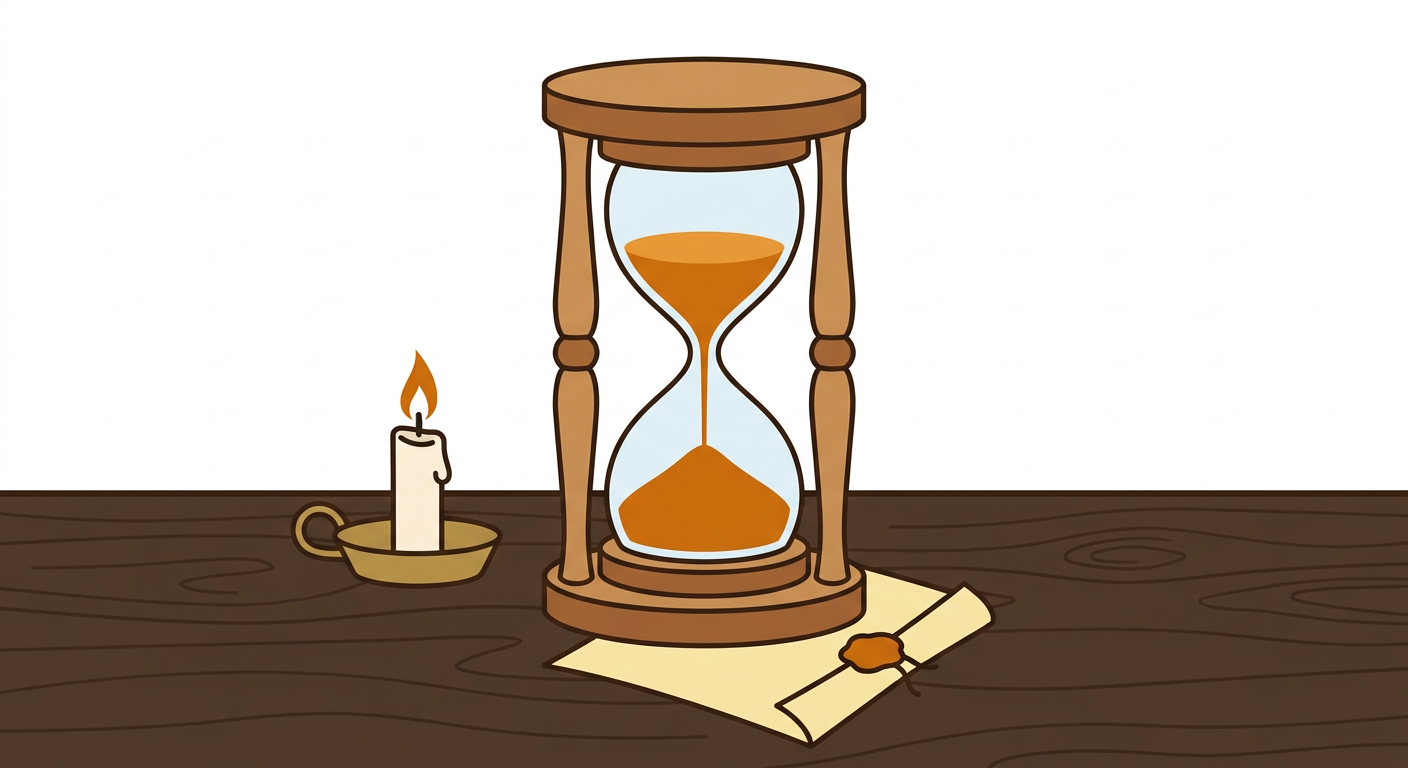
1. Write the dramatic question on the top of the page. One sentence. "Can the party stop the wedding before the bride is murdered?" If you cannot finish that sentence, you do not have a one-shot yet. You have a vibe.
2. Set the ticking clock. In-fiction, not real time. Three rounds before the ritual completes. Sundown before the gate seals. Six hours before the auditors arrive. The clock is what turns "the players make choices" into "the players make choices now."
3. Sketch three scenes. An opening that puts the players in motion within five minutes. A middle obstacle that makes the situation worse. A finale that answers the dramatic question. Leave everything between these blank. Your players will fill it.
4. Steal two real threats and pack a wildcard. One combat encounter from the Monster Manual. One social or skill encounter, fully improvised. Add one wildcard you are willing to throw away if the session is running long. Do not stat anything from scratch.
5. Plan a finale that flips. The dramatic question gets answered, and at the same time something the players assumed was true turns out not to be. The traitor was loyal. The villain was the victim. The win condition was secretly a curse.
If you want a structured prep workflow you can rerun every week, we have a longer guide on 30-minute D&D session prep that drills into the same skeleton for ongoing campaigns. And when a one-shot hinges on a sealed door or a trapped vault, our toolkit of D&D riddles and puzzles has ready-to-run brain teasers with answers you can drop straight in.
Running the table: pacing, props, and the cliffhanger problem
The trap with a one-shot is treating it like a short campaign. It is not. The pacing rules are different.
Push hard from minute one. The opening scene needs to put the party in motion before they have introduced their characters. Do introductions during the first encounter, not before it. Tell each player to say one thing about who they are while their character is doing something. You will save thirty minutes of table time and the players will feel cool.
Lean on props. Print one piece of paper that says "the bride's letter," or "the keeper's last log," or "the duke's will." A single physical handout, even a bad one, is worth twenty descriptions. Put it on the table at the right moment.
End on a real cliffhanger, even if you never plan to revisit this story. A finished one-shot still benefits from a final beat the players keep thinking about on the drive home. We wrote a longer piece on how to end sessions on cliffhangers that covers the five archetypes that work in any system.
What if your one-shot becomes a campaign?
This happens more often than DMs expect. The session lands, the players love it, somebody asks "so what happens after?" and now you have a campaign on your hands. If that is you, our guide to D&D campaign ideas covers how to turn a single premise into one that keeps generating story for a year, not just one night.
The good news is that you have already done the hardest part. You have a setting, a working cast, a tested antagonist, and players who are emotionally invested in something specific. The bad news is that everything you improvised on Friday now has to make sense on Tuesday.
This is the part where a campaign wiki earns its keep. Every NPC the players named, every location they visited, every plot thread that opened during the one-shot. Drop them all in one place where you and the players can search them later. The DMs who skip this step always regret it around session four of the unplanned campaign.
If your one-shot is going to keep running, it is also worth backfilling a Session Zero before session two. Yes, you skipped it for the one-shot. That is fine. But now that the world is real, your players need to know how it is going to be run. Our Session Zero Generator will spit out a full agreement in about ten minutes, including safety tools, schedule, and house rules.
For convention one-shots where you are running for strangers, our Party Connection Generator builds backstory ties between four characters in under a minute. It is the cleanest way to skip the "so how do you all know each other" awkwardness that eats fifteen minutes off the top of every con game.
A note on stealing
Every one-shot above has been stolen, modified, or remixed from somebody. The Six Yesterdays is the bones of every Russian Doll episode. Body-Swap Funeral owes its DNA to Knives Out. The Lich-Line is Murder on the Orient Express with the planar boundary swapped in for the Yugoslav border. Disposing of the Count is the first ten minutes of Weekend at Bernie's, played as cosmic horror.
Steal these. Modify them. Run them next Friday. Tell your players you wrote them.
The DMs I respect most do not invent original premises. They lift from movies, from novels, from other people's campaigns, and they trust their table to make the result feel new. Pointy Hat has a great breakdown of his one-shot structure that influenced how I run mine, if you want a different angle on the same idea:
For more free one-shots, the r/DnDOneShot subreddit is the most reliable community source online. Sly Flourish's blog has been the gold standard for prep philosophy for over a decade. And Wizards of the Coast still publishes A Wild Sheep Chase for free, which is the one-shot most often recommended for first-time DMs.
A final word on the night before
If you are reading this at 9pm and you have to run a one-shot tomorrow, here is what to do. Pick one of the ten ideas above. Write the dramatic question on a sticky note. Set a clock. Steal two encounters. Plan one twist for the finale.
Stop prepping at 10pm. Go to bed.
The one-shot you remember in eight years is not the one with the perfect map. It is the one where the lighthouse asked for tea. The one where the duke was hiding inside the rogue. The one where the children were the only ones telling the truth.
Trust the question. Set the clock. Let the players play. The rest is just decoration.
Questions
Common questions
Free Tools
Helpful for This Topic
Session Zero Checklist Generator
Spin up a Session Zero agreement if your one-shot turns into a campaign. Covers safety tools, schedule, and house rules.
Party Connection Generator
Generate shared backstory ties between four convention or one-shot characters in under a minute.
Session Recap Generator
Capture the moment your one-shot lands. Print a shareable highlight card for the table to keep.
Session Time Manager
Hold the three-hour line. Plan combat duration and finish your one-shot before the energy drops.
Drop the notebook
Try Saga20 for free
Record your session. We'll write the notes and build your wiki.
Get started freeNo card needed