D&D Riddles and Puzzles: 20 Ready-to-Run Brain Teasers (With Answers)
The party reaches the sealed door at the end of the dungeon. There is no lock to pick, no hinge to pry. Just a carved face that opens its stone eyes and asks a question. Everyone leans in. For the next ten minutes nobody is checking their phone.
That is the magic of a good riddle or puzzle. It pulls the players themselves into the game, not just their characters, and it breaks up the rhythm of "roll initiative, repeat." The catch is that a bad one does the opposite: the table stalls, the energy drains, and you end up handing them the answer anyway.
This is my working toolkit. Original riddles with answers you can drop in tonight, a set of dungeon puzzle blueprints you can reskin for any room, and the one rule that keeps any of it from derailing your session.
What makes a good D&D puzzle?
Before the lists, the principle that fixes ninety percent of puzzle problems: a puzzle tests the players, not the characters. The fighter's player does not get less of a vote because their character has an 8 Intelligence. Everyone at the table is allowed to think.
That leads to three rules I never break.
Telegraph the solution. The answer should live in the room. A mural, an inscription, the way the statues are posed. Assume the players will miss your first two clues, so plant a third. The veteran DMs in the r/DMAcademy puzzle discussions say the same thing over and over: the fun is in the solving, not in being stuck.
Let checks buy hints. A puzzle is not a wall that ignores the character sheet entirely. A high Investigation or History roll should earn a nudge, an Insight read on the carved face, a clue the party walked past. The dice still matter; they just speed up thinking instead of replacing it.
Always build a bypass. Never put the only path forward behind a single riddle. If the party cannot crack it, they should be able to spend time, take some damage, or find another way around. A puzzle adds tension to a session. It should never end one. This is the same instinct behind Sly Flourish, whose lazy-prep philosophy holds that a locked door should never be the thing that stops your game.
D&D riddles with answers
Here are ten original riddles, the kind a guardian statue or a talking door can pose. Read them aloud, let the table chew on them, and remember rule two: if they stall, an Intelligence (History) check or a thinking-out-loud NPC can hand over the answer.
Riddle 1.
I am born tall and die short. I weep as I work, and the wind is my enemy. Bring me into the dark and I will betray it.
Answer: a candle. A great opener for a tomb where the only light is the one the party carries.
Riddle 2.
I answer only when spoken to, though I have no mouth. I repeat your words but never my own, and I never start the fight.
Answer: an echo. Works beautifully in a cavern where the answer is literally bouncing back at them.
Riddle 3.
I hold mountains with no stone, rivers with no water, and cities with no people. Fold me wrong and a kingdom disappears.
Answer: a map. Bonus points if the door opens to reveal an actual map they need.
Riddle 4.
I follow you all day and lie down when you rest. I stretch long at dusk and shrink at noon. I am yours, yet you can never hold me.
Answer: your shadow. Pair it with a light source the players have to move around.
Riddle 5.
I have teeth but cannot bite, a body but no life. Turn me once and a wall becomes a door.
Answer: a key. Cruel and fun when the key is sitting in plain sight on the floor.
Riddle 6.
You keep me without holding me. Give me away and you must take me back at once, or you die.
Answer: your breath. Strong in a flooded or airless chamber where breath is already on their minds.
Riddle 7.
The more of me there is, the less you see. Light is my death, and every night I rise without legs.
Answer: darkness. A natural fit for a guardian that wants the room's torches put out.
Riddle 8.
It belongs to you alone, yet strangers use it far more than you do.
Answer: your name. Lovely for a fey or a ghost who demands the party say theirs.
Riddle 9.
I run without legs and roar without a throat. I have a mouth that never eats and a bed I never sleep in.
Answer: a river. Use it at a crossing where the river itself is the next obstacle.
Riddle 10.
The more you take away from me, the bigger I grow.
Answer: a hole. Short, sharp, and perfect for a pit-trap room.
Want a quick visual primer on running these at the table? This breakdown from Ginny Di on puzzles that make players think is one of the best:
D&D puzzle ideas (with blueprints)
Riddles are words. Puzzles are rooms. Here are eight blueprints you can reskin for any dungeon, with a note on how to telegraph each one and how to keep it from grinding the night to a halt.
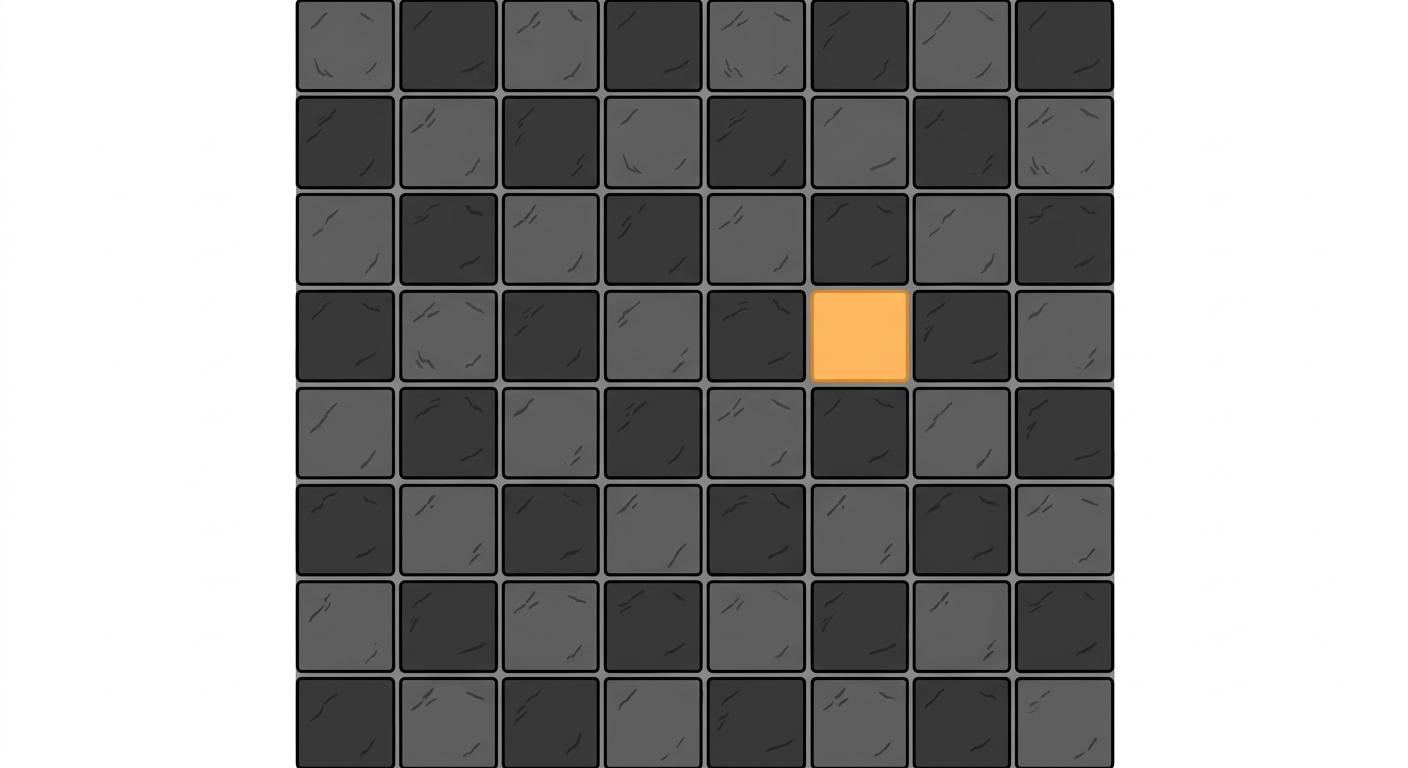
The pressure-plate path. Only certain floor tiles are safe, and the safe ones trace a shape or spell a word shown in a mural on the wall. Telegraph it with that mural. A wrong step fires a dart or rings an alarm, not an instant kill.
The mirror room. A statue's reflection holds an object the real statue lacks, or stands in a different pose. The party has to change the real room until it matches (or deliberately breaks) the reflection. Great for a teamwork moment where one player watches the mirror and calls directions.
The elemental braziers. Four unlit braziers, each marked with a symbol: sun, moon, star, flame. A nearby inscription gives the order to light them. Wrong order snuffs them all and the party starts over, costing time rather than blood.
The weighing scales. A vault opens only when two pans balance at a specific weight. The party solves it with items from their packs, which rewards the player who hoards junk. Put the target weight on the wall as a number of "stones."
The constellation lock. Gems or dials must be arranged to match a star map painted on the ceiling. Make the ceiling visible from the doorway so observant players spot the link early.
The chime sequence. A row of pipes or chimes must be struck in the order of a tune the party heard earlier, from a music box, a humming NPC, or a bard's performance. It rewards players who pay attention to flavor.
The talking door. A carved face poses one of the riddles above. A wrong answer is not fatal; it just costs a round of time or summons a minor guardian to fight while they keep thinking.
The watchful statues. Statues advance across the room whenever no one is looking at them, like a fantasy game of red light, green light. The party must keep eyes on them while crossing. There is no answer to uncover here, just the coordination challenge of keeping every pair of eyes on the statues while the party moves. Pure tension, and it forces the table to work together.
Traps that double as puzzles
The best traps are not just damage. They are problems with a clever way out.
The sinking room. The door seals and water starts rising. Three valves on the wall control the drain, but they have to be turned in the right sequence, spelled out by carvings above each one. The timer is the pressure; the sequence is the puzzle.
The safe-tile corridor. A hallway lined with dart slits fires on anyone who steps wrong. The safe pattern matches a tile design back at the entrance, which the party only notices if they look. Reward the character who checks for traps with the first clue.
The collapsing stair. A long staircase begins to crumble the moment weight lands on it. One step is carved with a rune that matches a symbol in the room above, and standing on it freezes the collapse. Players who sprint blindly take falling damage; players who looked first walk down safely.
The gas-flooded library. Opening the wrong book releases a cloud of poison gas, and the shelves hold hundreds. A ledger at the entrance lists the one tome the late owner "never wanted disturbed," pointing straight at the safe choice. The puzzle is reading before grabbing.
The mirror gauntlet. A beam of searing light crosses the only exit. Polished shields, a movable statue, or even a hand mirror can bend the beam away from the door and onto the crystal that powers it, shutting the whole thing down. It rewards players who take stock of the room instead of bracing for damage.
How to design your own puzzle in five minutes
Once you see the shape, you can build these on the fly.
Start with the answer, then hide it. Decide the action first: press these tiles, light these braziers, say this word. Then plant at least three clues pointing to it, because the table will miss two. Allow more than one solution, so a smart Athletics or Arcana idea works as well as the intended path. And make a wrong attempt cost a resource or some time, never the whole session. If you keep a campaign wiki, drop your puzzles and their answers in there so you are not reinventing them at 11pm before game night.
Keep your puzzles (and their answers) handy
The one thing worse than a puzzle the party cannot solve is a puzzle the DM cannot remember. I have absolutely blanked on my own answer mid-session, scrambling through notes while five people stare at me.
So keep the solution written next to the setup, every time. A puzzle is also a pacing risk: it can swallow a whole session if you let it, which is exactly why our free Session Time Manager exists, to help you budget how long a brain teaser gets before you start handing out hints. Lean on it alongside our guide to 30-minute session prep so a great puzzle never blows up your night.
Building a self-contained adventure? A single strong puzzle is the spine of a memorable one-shot, and the full campaign-running playbook covers how to weave non-combat challenges into a longer story. And if you want a steady supply of fresh material, the DMs over at r/DnDPuzzlesAndTraps and the long-running Steal These Riddles thread share new ones constantly.
Drop one riddle and one puzzle into your next dungeon, keep the answers where you can find them, and watch the table lean in. That ten minutes of everyone arguing over a candle is the part they will still be quoting three sessions later.
Questions
Common questions
Free Tools
Helpful for This Topic
Drop the notebook
Try Saga20 for free
Record your session. We'll write the notes and build your wiki.
Get started freeNo card needed