The Best D&D Session Note Methods in 2026 (One of Them Is Just Hitting Record)
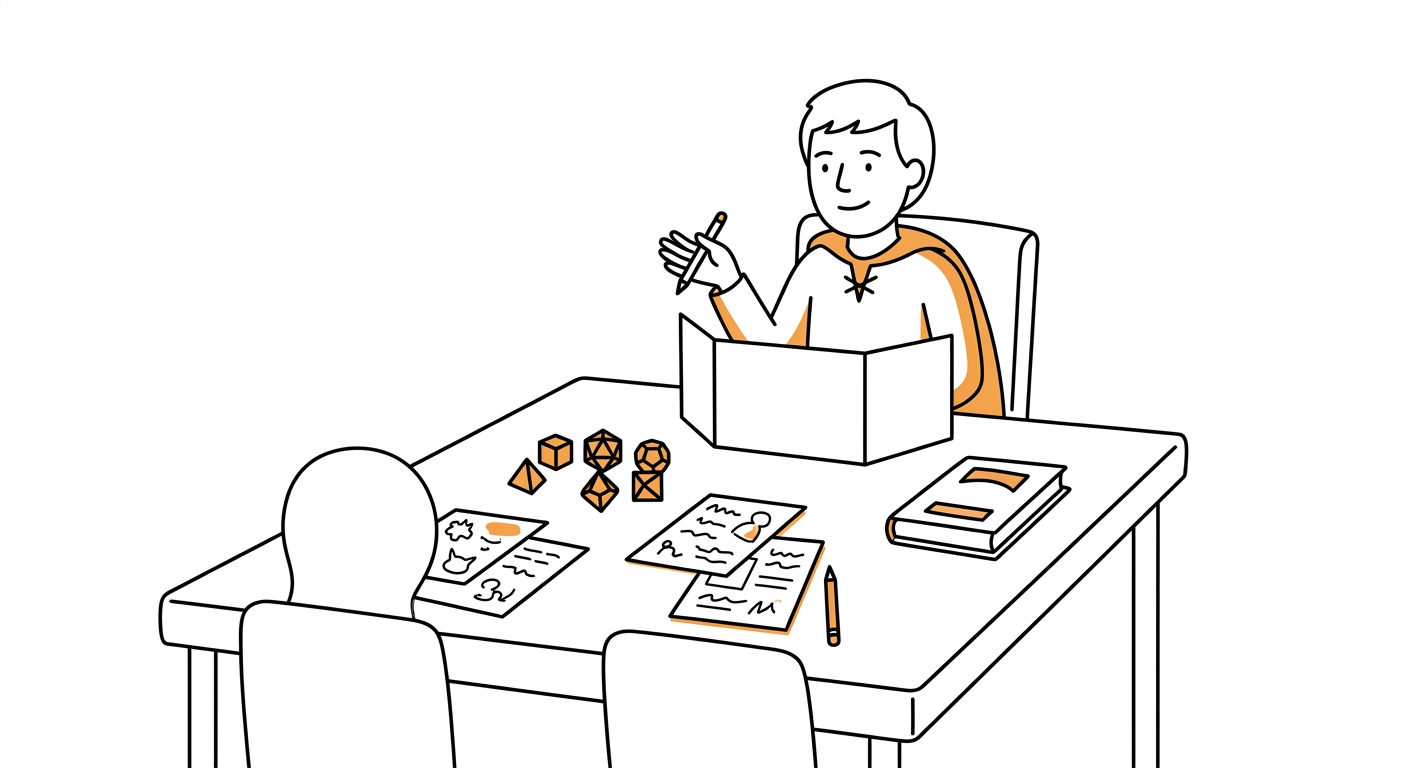
At some point in every campaign, you forget something you should not have forgotten.
Maybe it is the name of that innkeeper from session two, the one your players loved and decided to adopt as a surrogate uncle. Maybe it is which player swore an oath to the thieves guild and which one just said they would think about it. Maybe you cannot remember whether the party destroyed the bridge or just left it damaged, and now they are heading back that way and you have to make something up and hope nobody wrote it down.
The note-taking problem is one of the oldest debates at the gaming table. In 2026, there are more options for solving it than ever. This article covers all the real ones, manual and automated, and tells you what each is actually like to use week over week.
I have been running games for over twenty years. I have tried most of these. Here is what actually worked at my table.
What you actually need from a session note system
Before getting into the options, it is worth agreeing on what we are even trying to accomplish. Your notes need to capture what happened well enough that you can reference them months later. They should not consume more time than they save over the course of a campaign. And they have to be readable when you need them, ideally at a glance.
That last one sounds obvious. It is not. A 6,000-word session journal is technically a record of what happened, but if you are not going to read it before next session, it is not serving you.
Keep that in mind as we go through the options.
The manual methods
A notebook (or index cards)
The oldest system is still going. Keep a dedicated campaign notebook, bring it to every session, write down the things that matter.
What I like about notebooks: there is zero friction. No loading, no syncing, no accounts. You open it and write. For DMs who play at someone's house or at a game store where phones are frowned upon, this is also sometimes the only viable option.
What I do not like: your handwriting is only as readable as it was in the moment, which is often not very readable. Try deciphering notes you wrote while simultaneously running a combat encounter, voicing three NPCs, and pretending to know what the Grappled condition says. The scrawl that made sense at 11pm on a Saturday is going to look like alchemy glyphs by the following Thursday.
Index cards are a nice variation. One card per NPC or location, kept in a recipe box. Easy to shuffle, easy to pull during play. Good for structured DMs who already know how they categorize things. Terrible for capturing improvised moments, because there is no card for "the fishmonger Baldric somehow became a recurring character."
Works well for DMs who prefer analog tools, games without electronics at the table, and shorter campaigns with a smaller cast. Expect 20-40 minutes of actual writing per session if you are disciplined, more if you are trying to reconstruct things from memory two days later.
Google Docs or Notion
This is probably the most common real system for DMs who have left notebooks behind. You keep a campaign document, update it after each session, and share it with your players.
The big advantage over a notebook: it is searchable. When your player asks "what was the deal with the Merchant's Guild again?" you can find the answer in under 10 seconds instead of flipping through 80 pages of handwriting.
Notion specifically has become popular because you can build databases. NPCs as database entries with tags, filters, and linked pages. Locations with their own sub-pages. Quest logs with status columns. For DMs who enjoy the organizational architecture as much as the game itself, Notion is genuinely satisfying to set up.
The honest downside is that someone has to maintain it. If that someone is you, you are adding 45-60 minutes of document work to every session night. If it is a player, you are dependent on them showing up, caring, and actually capturing the right things. That is a lot to ask of someone who is also trying to play the game.
Good fit for DMs who already live in Google Workspace or Notion, groups with a dedicated note-taker in the party, and campaigns where interconnected lore benefits from a database structure. Time cost per session: 45-90 minutes of active writing, or less if a player shares the load.
If you're deciding between Notion and a purpose-built session tool, here's how they compare side by side.
Obsidian with TTRPG templates
Obsidian is a local markdown note-taking app with a plugin ecosystem that has spawned an entire TTRPG subculture. Plugins like TTRPG-World let you create linked wiki-style notes for your campaign. NPCs link to locations, locations link to factions, everything is connected in a graph you can actually visualize.
If you are already an Obsidian user, using it for your campaign is a natural fit. The linked graph view is legitimately useful for seeing how your world connects. The community templates are well-designed.
If you are not already an Obsidian user, the setup cost is real. You are learning a new tool, choosing plugins, deciding on a folder structure, and building templates before you have written a single note. That upfront investment either pays off over a long campaign or it does not, depending on whether you actually keep maintaining it.
Worth knowing: Obsidian does not sync across devices by default without a paid subscription or a third-party solution, which matters if you want to access your notes on your phone during play.
Best for DMs who love building systems and enjoy the craft of organization as a hobby in its own right. Not ideal for DMs who just want somewhere to put their notes without thinking about it. Time cost is comparable to Notion, with additional upfront setup.
A Discord recap channel
For groups that already live in Discord, keeping a #session-recap channel is surprisingly effective. After each session, someone writes a short summary and posts it. The chat history becomes a searchable campaign archive. Players can react, add corrections, and the whole thing stays social.
This works really well when at least one person at the table genuinely enjoys writing recaps. It builds something around the campaign between sessions and gives everyone a shared record without putting all the work on the DM.
The failure mode is the same as every manual system: when the person who usually writes it does not feel like it, it does not happen. One missed session becomes two, and then you have a gap right before the big plot reveal that everyone is trying to remember.
Good for online groups and collaborative tables where players invest in the campaign between sessions. Needs at least one person who genuinely enjoys the writing part.
An honest word on manual note-taking
Here is the thing about all of the manual methods: they work, but they cost time, and that time comes from somewhere. Either from you after the session, from a player during the session, or from the gaps in your campaign record every time someone does not feel like doing it.
Ginny Di made a video about this exact problem that is worth 9 minutes of your time before you decide:

The short version from her: trying to capture notes while running the game is a split-attention problem, and most DMs solve it by just not capturing things. Which is, technically, a solution.
The recording approach
The alternative is to stop treating session notes as something you write and start treating them as something you capture.
The workflow: record the session audio (phone on the table, Discord bot for online play), upload it afterward, let a tool do the summarization. You get structured notes without ever holding a pen during the game. If you want the mechanics of that middle step, our guide on how to transcribe a D&D session walks through every method, from free to fully automatic.
This is what Saga20 does.
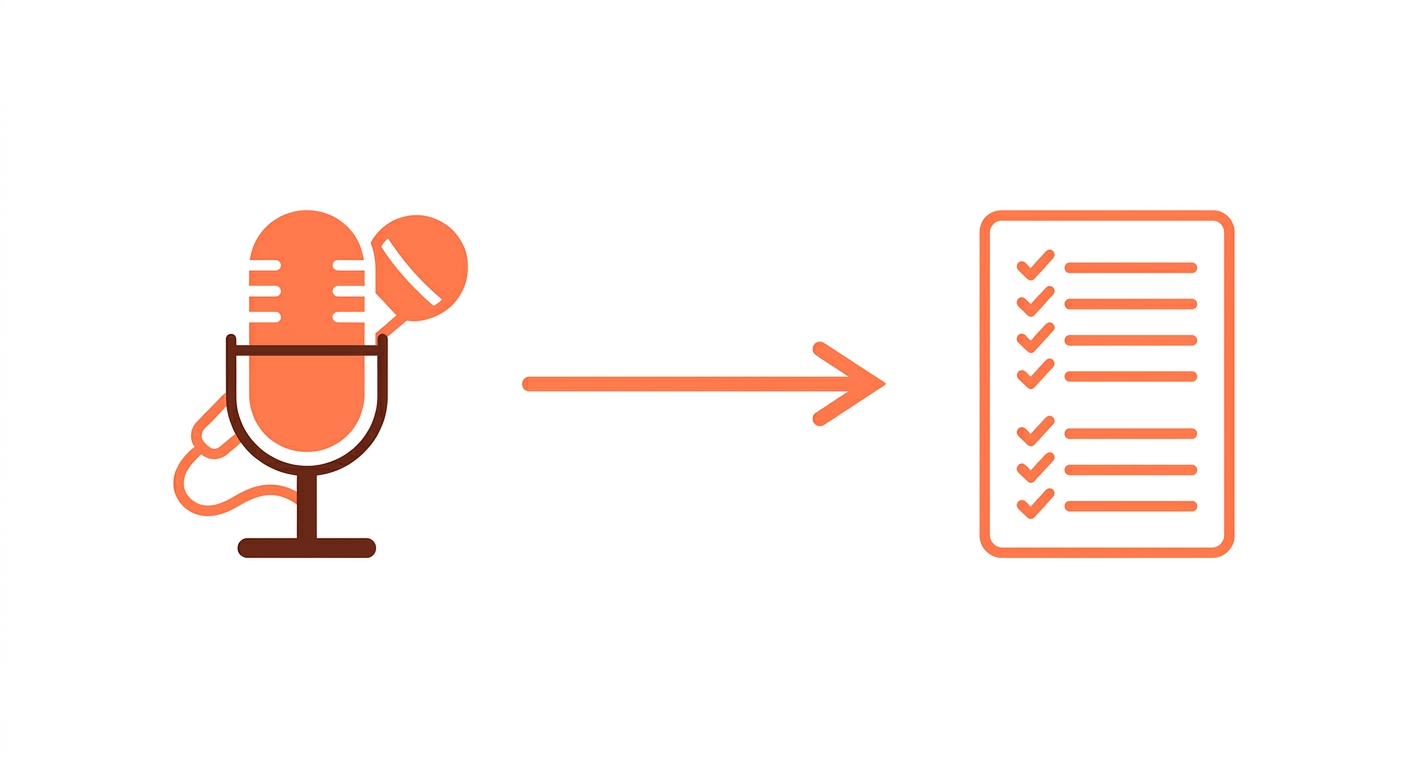
A few things that actually matter about how it works in practice.
Saga20 learns each player's voice and attributes dialogue correctly across sessions. "The Rogue said she would meet them at the docks" is more useful than "someone said they would meet them somewhere." You tag each player's voice once and it handles attribution from there. By session four or five, it is usually just right.
It also remembers your campaign. When you upload session seven, Saga20 already knows who Elara the merchant is from session three. The summary builds on existing context rather than treating every session as a blank slate. This is the part that matters for campaigns that run longer than a couple of months.
And it feeds a wiki. This is the piece I was not expecting to care about but now cannot imagine running without. Every NPC, location, and faction gets its own page that updates automatically after each session. No manual wiki editing. The wiki just exists and stays current.

What the post-session routine actually looks like
Right after the session ends, I upload the audio file. On Discord, the Craig bot has already recorded everything and I just export the file. In person, I stop my phone recording and transfer it.
Then I do nothing. The summary generates while I drive home or make food. For a four-hour session, it usually finishes in under 10 minutes.
When it is ready, I skim it. Check that the main events came through correctly. Correct any speaker attribution errors, which get rarer the longer you have used the tool. Check the wiki entries that updated. That whole review takes maybe five minutes.
The summary is done, the wiki is updated, and my players already have a link to read it.
Compare that to 90 minutes of manual writing at the end of a long session night, and you understand why this changes the math.
What I actually use
I run two campaigns right now.
The longer one is a 30-session Pathfinder campaign with six players. I use Saga20 for everything. My players actually read the session summaries between games, which had never happened when I was posting Notion docs. The wiki has become something they reference during sessions, which I did not see coming.
The shorter one is a three-session one-shot arc for a group of brand new players. For that, I keep a single Google Doc with a few bullet points per session. The setup investment does not make sense for something that ends in a month.
Match the system to the campaign commitment. A notebook is fine for a short arc. For a campaign you plan to run for a year, the time you spend on manual notes will compound, and anything that reduces that friction pays for itself.
The honest case for manual
Manual note-taking is not wrong. There are DMs who genuinely prefer writing their own recaps. The act of writing helps them process the session, notice what the players cared about, and plan for next week. Some DMs find that an automated summary does not capture the narrative weight of what happened, just the events. That is a real criticism.
If writing your notes is part of how you run a good campaign, keep doing it.
The recording approach works best when you want the administrative work off your plate so you can spend your energy on the actual game.
How to choose
A few questions that cut through the noise:
Do you want to be thinking about notes while the session is happening? If you cannot be fully present at the table while also capturing things, you need a system that does not ask you to be. Recording tools handle this by design.
How long is the campaign? For a three-session one-shot, a Google Doc works fine. For a year-long campaign with 40+ sessions, manual notes become a significant recurring time cost. The longer the campaign, the more that compounds.
Does your group already have a working system? If your table has something that functions and your players are bought in, do not change it just because something else looks interesting. The best session note system is one people actually use.
Side-by-side
| Method | Time per week | Searchable | Player access | Setup |
|---|---|---|---|---|
| Notebook | 30-60 min | No | No | None |
| Google Docs | 45-90 min | Yes | Yes | Minimal |
| Notion | 45-90 min | Yes | Yes | Moderate |
| Obsidian | 45-90 min | Yes | Limited | High |
| Discord channel | 20-40 min | Yes | Yes | None |
| Saga20 (recording) | 5-10 min | Yes | Yes | Minimal |
What about running with no notes at all?
Worth mentioning because a lot of DMs do it: winging it entirely. No notes, no recap, just showing up and improvising based on what you remember.
This works better than people expect for the first 8-10 sessions of a campaign, when everyone still remembers the major beats clearly. It stops working when your players start making decisions based on things that happened in session 2 that you cannot precisely remember, and they can.
If this is where you are, the fastest fix is to start recording now, even mid-campaign. You do not need notes from every previous session. You just need to stop the gap from getting wider. Saga20 works from session 1 or session 50.
Further reading
- The Lazy DM's Guide to Session Tracking: the fuller argument for why stopping mid-game note-taking is the right call for most DMs
- Session Notes vs. Audio Recording: a direct comparison of the two main approaches
- How to Keep Track of Your D&D Campaign: the bigger picture on campaign organization across sessions
- The Saga20 world builder page if you want to see what the auto-wiki actually looks like in practice
Or try the free session recap tool to see what an automated summary looks like before committing to anything.
Questions
Common questions
Free Tools
Helpful for This Topic
Session Recap Generator
Create beautiful, shareable cards for your session highlights. Track MVPs, quotes, and critical rolls.
Session Recap Architect
Design and print the perfect session note template for your D&D games. Export to Notion or PDF.
Session Recap Scribe
Paste your rough notes and get a polished session recap your players will actually read.
Drop the notebook
Try Saga20 for free
Record your session. We'll write the notes and build your wiki.
Get started freeNo card needed