D&D NPC Tracker: Free Sheet + What to Update Each Session
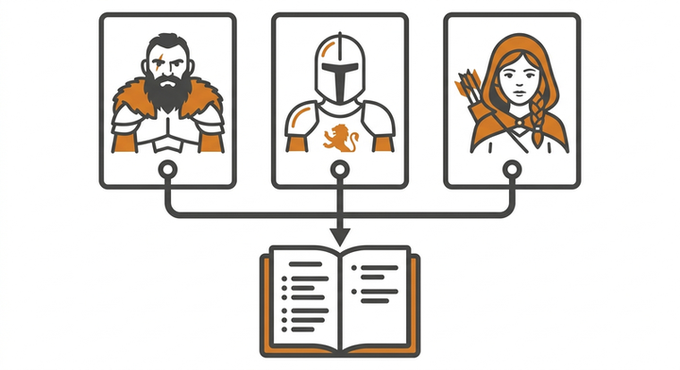
A D&D NPC tracker is a living record of the people your party meets. It should tell you who an NPC is, what they want now, how they feel about the party, what promises are unresolved, and what changed the last time they appeared. The free sheet below works in a notebook, document, spreadsheet, or campaign wiki.
That word "living" matters. Most NPC sheets are excellent on the day you create them and misleading five sessions later. The guard who started as a suspicious contact may now be an ally, a fugitive, or a body at the bottom of the harbor. If the top of the sheet still says "city watch captain," it is preserving the old character instead of helping you run the current one.
Free D&D NPC tracker sheet
Copy this template into your preferred tool. Keep the current-state section short enough to scan while a player is asking the NPC a question.
# NPC name

Pronunciation:
Role:
Current location:
Faction or allegiance:
Current status: Active / Missing / Captured / Dead / Unknown

## Run this NPC at the table
Appearance cue:
Voice or mannerism cue:
Current goal:
What they can offer:
What they want from the party:

## Relationship with the party
Current attitude:
Reason:
Promise, debt, favor, or threat:
Last changed in session:

## Knowledge
Known to the players:
Known to specific characters only:
GM secret:

## Latest meaningful change
Session and date:
What changed:
Why it matters next time:

## Appearance history
- Session:
  Event:
  Change carried forward:

## Connections
- Person, place, faction, item, or quest:
  Relationship:
Do not treat every field as homework. If pronunciation is obvious, leave it blank. If the NPC has no combat role, skip stats. Judge the sheet by how quickly it gives you the right detail during play. Empty lines are harmless.
The official D&D NPC tracker sheet includes useful profile fields such as name, appearance, personality, alignment, and secret. This template adds the part an ongoing campaign needs: current relationships, obligations, and a dated history of changes.
What belongs on a D&D NPC tracker?
An NPC record has two jobs. It helps you perform the character now, and it prevents the campaign from quietly rewriting its own history.
| Field | Why it earns space | Useful example |
|---|---|---|
| Appearance or voice cue | Gets you back into character in seconds | "Counts each coin twice. Speaks without contractions." |
| Current goal | Tells you what the NPC pushes for in the scene | "Get her brother out of the river watch cells." |
| Current location and status | Prevents impossible appearances | "Missing. Last seen below Blackglass Wharf." |
| Party attitude and reason | Makes reactions consistent with play | "Protective after Sella took the blame for her." |
| Promise, debt, favor, or threat | Creates playable consequences | "Owes the party one safe crossing." |
| Known versus secret | Prevents accidental spoilers | "Players know she altered the ledger. Only Brann knows why." |
| Latest meaningful change | Gives you the fastest pre-game refresher | "Session 12: confessed and asked for help." |
| Appearance history | Lets you recover the full arc when needed | Links to sessions 4, 9, and 12 |
The Universal NPC Roleplaying Template makes a strong case for short, practical cues instead of a wall of biography. Keep that discipline. Your tracker should help you run the next scene, not preserve a character novel.
Is a D&D NPC tracker different from a stat block?
Yes. A stat block answers, "What happens if initiative starts?" An NPC tracker answers, "Who is this person today?"
A dragon the party plans to fight needs combat statistics. The dock clerk who falsified a manifest may need no statistics at all, but their lie, motive, fear, and debt to the rogue could shape ten sessions. Giving that clerk a full character sheet adds work without improving the scene.
Use a stat block when tactical choices matter. Use an NPC record when continuity matters. Some major characters need both, but they should remain separate enough that a change in allegiance does not disappear beneath armor class and saving throws.
The practical NPC-creation advice from The DM Lair reaches a similar conclusion: brief motives and memorable traits usually do more at the table than full player-character detail.
What should you update in a D&D NPC tracker after every session?
Do not rewrite the whole sheet. Run a change pass on the handful of NPCs the session moved.
1. Replace stale facts at the top
Update the current goal, location, status, and party attitude. Replace old values rather than stacking contradictory answers.
If Captain Sera fled the city, "Captain of the river watch" may still describe her history, but it no longer describes her situation. Her current role might be "wanted former watch captain." That phrase changes how you prepare her next appearance.
2. Add one meaningful history line
Record the smallest complete statement that will make sense months later:
Session 12: Sera admitted altering the prisoner ledger to protect a refugee family. She asked the party to find her missing brother before the watch finds him.
"Talked to Sera" is too thin. A transcript of the whole scene is too much. Preserve the decision, discovery, or relationship change that carries forward.
3. Name the obligation
Relationships become useful when they contain something playable. "Friendly" says less than "owes Sella a safe crossing" or "expects Brann to keep her confession private."
Track favors, debts, promises, threats, custody, blackmail, and shared secrets. These details tell you what the NPC may ask for and what the party risks by refusing.
4. Separate player knowledge from GM knowledge
Write down who knows the secret. The entire party may know Sera changed the ledger, while only the rogue knows she hid the original beneath a shrine. That difference can create a scene. Losing it can spoil one.
5. Link the source session
The tracker should summarize the current truth, not replace your session history. Link the latest change to the recap or notes that contain the full context. This gives you a quick answer first and a deeper trail when the table pulls on it.
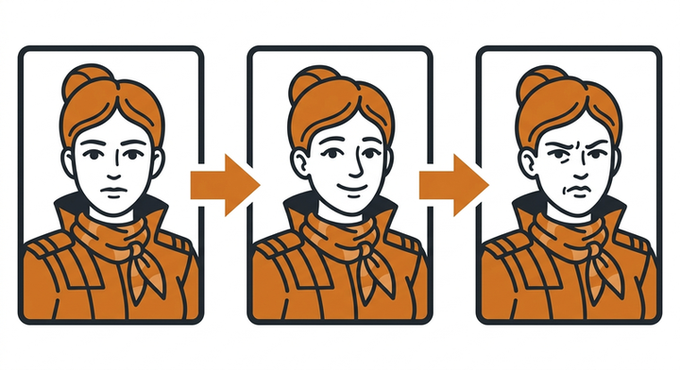
In a recent discussion about tracking NPCs across long campaigns, DMs described the same practical problem: their information exists, but finding an old person or plot can stop play. A current-state field provides the quick answer. Dated history preserves the trail behind it.
A worked example across three sessions
Start with Mara Venn, a river pilot the party meets while looking for passage into a quarantined district.
| Session | What happened | Tracker change |
|---|---|---|
| 3 | Mara takes the party across the river for 20 gp. She refuses to approach the old lighthouse. | Goal: keep her boat and license. Attitude: professional. Fear: the lighthouse bell. |
| 7 | The party saves Mara's son from smugglers. She promises them one crossing without questions. | Attitude: grateful and protective. Add favor owed. Add son and smugglers as connections. |
| 11 | Mara uses the promised crossing, then sees the cleric carrying the smugglers' black key. She leaves before dawn. | Favor resolved. Status: missing. Goal: learn why the cleric has the key. Attitude: frightened and suspicious. |
After session 11, the top of Mara's record should look like this:
# Mara Venn
Role: Licensed river pilot
Current location: Unknown. Left Blackglass Wharf before dawn.
Current status: Missing
Appearance cue: Orange scarf tied twice around her left wrist
Voice cue: Answers questions only after checking the river
Current goal: Discover why the cleric carries the smugglers' black key
Current attitude: Grateful to the party, suspicious of the cleric
Promise or debt: The free crossing was used in session 11
Latest change: Saw the black key and disappeared before dawn
Known to players: Mara is missing
GM secret: She went to the old lighthouse alone
Notice what disappeared. The 20 gp fare from session 3 no longer matters, so it lives in the history rather than the current view. The old favor remains as a resolved event. The lighthouse fear, which looked like color in session 3, now helps explain a decision in session 11.
That is what a D&D NPC tracker should do. It keeps old context available without letting old context crowd out the next playable truth.
Can your tracker pass the 30-second test?
Open the record for an NPC who has not appeared in at least a month. Set a timer for 30 seconds and answer four questions:
- How do I portray this NPC?
- What do they want now?
- How do they feel about the party, and why?
- What changed the last time they appeared?
If you can answer all four, the record works. If you find a three-page biography but cannot identify the current goal, move history down and current state up. If the answer lives across several documents, add links or consolidate the top fields.
This is a demanding test because the middle of a scene is a demanding place to search. The faster you can recover the name and current motive, the easier it is to keep the conversation moving.
Which tracking format is best for your table?
Choose the lightest format you will keep current.
| Format | Best for | Watch for |
|---|---|---|
| Index cards | Small casts and screen-free tables | History becomes difficult once cards fill up |
| Spreadsheet | DMs who want sorting by location, faction, or status | Long scene history and relationships can become cramped |
| Linked campaign wiki | Recurring casts spread across many places and factions | Manual links and page updates add upkeep |
| Session-updated campaign pages | DMs who record games and want the cast to stay current | You still need to review names, secrets, and important changes |
No format wins in every campaign. Index cards are best when six recurring people drive the whole story. A spreadsheet is best when you need to filter forty names by city. A campaign wiki is best when the same people connect to factions, places, quests, and session history.
If NPC tracking is only one part of a larger continuity problem, the five-part D&D campaign manager test checks whether sessions, quests, entity histories, and player knowledge move forward together.
The following video covers several practical ways to track an NPC cast. Use it for setup ideas, then apply the update rules above so the records continue to match the campaign.
Common NPC tracking mistakes
-
Creating a record for every voice in the tavern. Wait until a background character earns a name, a return appearance, useful knowledge, or an obligation.
-
Writing biography instead of current intent. Childhood history may explain the character, but a current goal tells you what they do in tonight's scene.
-
Using a relationship score without a reason. "Party reputation: +2" is hard to roleplay. "Trusts Sella for protecting her son" gives you behavior.
-
Appending updates without changing the summary. A long timeline is useful only if the current fields reflect its latest entry.
-
Mixing secrets with player-safe notes. Mark private knowledge clearly. If players can view the page, keep GM secrets in a separate field or private version.
There is a different fix when your records are accurate but players still ask, "Who was that?" The guide to curing NPC amnesia focuses on the visual, vocal, and behavioral cues that make a character recognizable at the table.
What if you do not want another sheet to maintain?
A manual tracker is enough for many campaigns. Its weak point is the five-minute update that becomes twenty minutes, then gets skipped after a late session.
Saga20's world builder creates connected pages for NPCs, places, factions, and items from your finished sessions. Each page carries dated campaign history, while the Campaign Graph shows how those entities connect. You review the result instead of copying the same event into several records. See a public example campaign before moving anything.
Use the next session your group actually plays. Upload the recording, open the page for the most important NPC, and run the 30-second test. If the page gives you their current situation and the event that changed it, it has earned a place in your prep.
Start with one free session. No credit card is required.
Frequently asked questions
What should be on a D&D NPC tracker?
A useful D&D NPC tracker records the name, role, location, portrayal cue, current goal, party relationship, promises or debts, last appearance, current status, latest meaningful change, and any GM-only secret. Link changes to their source sessions.
Is an NPC tracker different from an NPC stat block?
Yes. A stat block explains how an NPC works in combat. A tracker explains who that person is in the campaign now. Many recurring social characters need a tracker but never need full combat statistics.
Should every D&D NPC get a tracker entry?
No. Create an entry when an NPC is likely to return, knows something important, changes a quest, holds an obligation, or matters to a player character. Keep background characters as one-line notes until the table promotes them.
How do you track NPC relationships in D&D?
Write the current attitude, the reason for it, and the session when it last changed. Specific favors, debts, threats, and promises are easier to run than a vague friendship score.
How do you keep NPC notes updated between sessions?
Update only the NPCs who changed. Replace stale current-state fields, add one dated history line, record new obligations or secrets, and link the session. This change pass should take a few minutes, not become a second recap.
Questions
Common questions
Free Tools
Helpful for This Topic
Drop the notebook
Try Saga20 for free
Record your session. We'll write the notes and build your wiki.
Get started freeNo card needed