D&D Campaign Manager: What It Should Do After Every Session
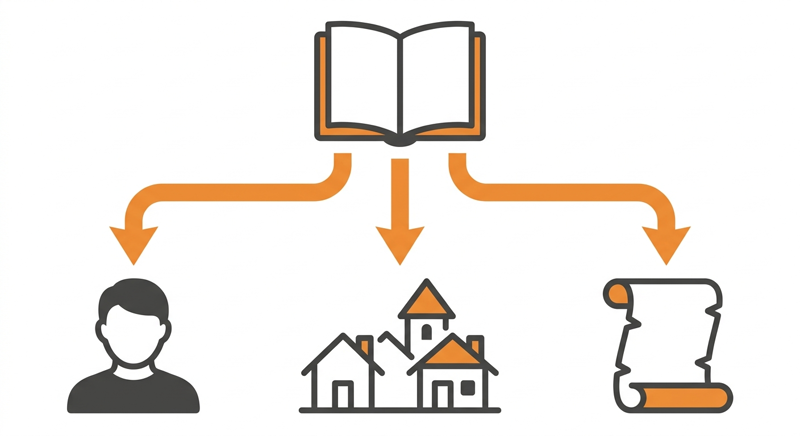
A D&D campaign manager is the place where your table's current reality lives: session history, NPCs, locations, relationships, quests, promises, and loose ends. A useful one does more than store prep. After every game, it carries the changes forward so the game master and players begin next session with the same version of events.
That last sentence is the standard most campaign organization advice misses. The problem is rarely finding somewhere to type. The problem is what happens after the party befriends the suspect, abandons the planned quest, gives a cursed key to the innkeeper, and leaves town under a false name.
Where do those changes go?
DMs keep asking versions of that question. In one recent discussion about keeping track between sessions, the problem was the time spent rereading scattered notes before the next game. An older discussion about managing a large ongoing campaign describes the same problem once characters, missions, lore, and plotlines start moving at once.
Do not judge a campaign manager by its feature list. Give it one finished session and see what survives.
What is a D&D campaign manager?
A D&D campaign manager is a connected record of an ongoing campaign. It should preserve both chronology and current state.
Chronology tells you that the party met Captain Sera in session 4, argued with her in session 7, and saved her in session 11. Current state tells you that she now trusts the party and owes the cleric a favor. You need both. Without current state, you reconstruct the campaign every week. Without history, changes feel arbitrary.
This is also why a campaign manager is broader than a campaign wiki. A wiki gives every person, place, and faction a page. Campaign management connects those pages to sessions, open threads, player knowledge, and the next game.
The same test works for any RPG campaign manager. Do not ask, "Can I put my notes here?" You can put notes almost anywhere. Ask this:
Can this system tell the table what happened, what changed, and what still matters?
If the answer is yes without an hour of cleanup, the system works.
What a campaign manager is not
Several tool categories sit beside campaign management. Each is built for a different moment at the table.
| Tool type | Best for | The question it answers |
|---|---|---|
| Virtual tabletop | Maps, tokens, dice, and combat | What is happening on the battlefield now? |
| Rules reference | Spells, conditions, classes, and rulings | How does this mechanic work? |
| World builder | Places, cultures, history, and pre-game lore | What exists in the setting? |
| Shared document | Flexible writing and lightweight collaboration | Where can we put this information? |
| D&D campaign manager | Connected history and current campaign state | What changed, and what carries into next session? |
A group may use several together. A battle map will not remember an NPC's promise, and a folder of lore will not reflect that the players burned down the building described on page 12.
If your main need is creating places before play, start with a world-building system. If the campaign is already running and the truth keeps changing, use the after-session test below.
The five-part D&D campaign manager test
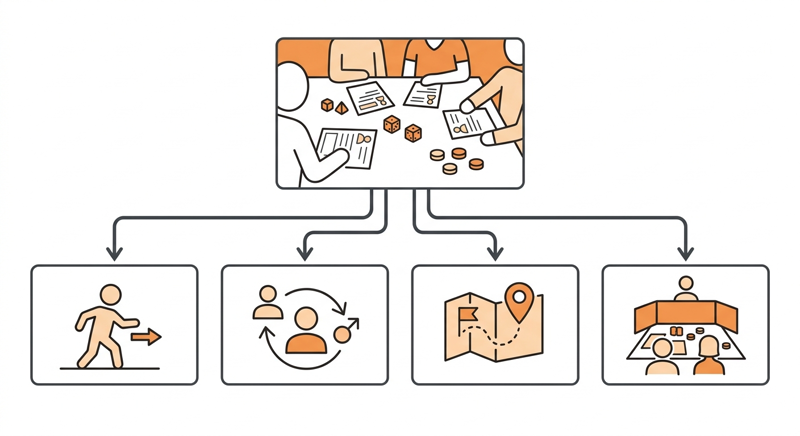
Take the last session your group completed. Do not prepare a clean demo. Use the messy one where the party split up, three NPCs appeared, and the planned encounter never happened.
Now check whether your D&D campaign manager produces these five outputs.
1. A usable session record
Can someone who missed the game understand the important events in five minutes?
The record should capture decisions, discoveries, consequences, and changes in direction. A transcript or list of dice rolls is not enough. It needs to explain why the campaign is now in a different state.
2. The current campaign state
Can you see what is true now without rereading the recap?
The party may be in a new city. A faction may have lost control of a district. The group may have two active leads and one deadline. Put those facts in a compact current-state view.
The answer may be spread across four sessions. A campaign journal helps by keeping active quests, mysteries, consequences, and the next starting point together.
3. Updated histories for people and places
Open the page for the most important NPC from the session. Does it show what just happened?
Do the same for the main location and faction. The session record says the bridge collapsed. The bridge page says when and why. The nearby town page says its eastern road is now cut off.
4. Open threads with owners and stakes
Can you list the questions the campaign has not answered yet?
An open thread is more precise than "plot stuff." It might be:
- The party promised to return the ferryman's stolen bell.
- The magistrate expects an answer before the next full moon.
- Someone inside the river watch altered the prisoner ledger.
- The rogue kept the second key secret from the group.
Each thread needs enough context to become playable again. If it only exists in the GM's memory, it is not being managed.
5. A safe player view
Can players catch up without seeing spoilers?
Players need the shared version of the story: recaps, known NPCs, visited locations, open quests, and their own character history. The GM still needs private plans and hidden motives.
A 2025 community discussion about desired campaign-management features repeatedly returns to this split between shared knowledge and private GM material. It keeps the table from maintaining two conflicting versions of the campaign.
A worked example: the Blackglass Wharf session
Imagine a session with four important events:
- The party reaches Blackglass Wharf.
- Captain Sera Vale admits she falsified the river watch ledger to protect a refugee family.
- The party agrees to recover Ferryman Thom's stolen bell.
- The rogue secretly keeps a brass key found in the watch office.
A plain session note can record all four. A campaign manager has more work to do.
Session history
Session 12 gets a readable recap with the arrival, confession, promise, and secret. Someone who missed the game can follow the sequence.
Current state
The party is at Blackglass Wharf. The stolen bell is the active lead. The river watch investigation is unresolved. The brass key is known only to the rogue and the GM.
Entity histories
- Captain Sera's page records the confession and her reason for changing the ledger.
- Blackglass Wharf records the party's arrival and the compromised watch office.
- Ferryman Thom's page records the party's promise.
- The river watch faction page records evidence of an altered ledger.
- The rogue's character history records possession of the key in the private view.
Relationships
Captain Sera now trusts the party enough to confess. Thom expects their help. The river watch may treat them as investigators, suspects, or both.
Open threads
Who stole the bell? What does the brass key open? Who else knows the ledger was changed? What happens to the refugee family if Sera is exposed?
The test judges how campaign knowledge moves, not the number of places where you can type.
How much upkeep are you accepting?
Every system has an upkeep cost. Count how many minutes of reliable work it requires after a normal session.
Time one update. Include the recap, NPC changes, quest status, relationship notes, and player sharing. Then use this simple estimate:
minutes per update x expected sessions = campaign upkeep
At 10 minutes across 30 sessions, that is 300 minutes, or 5 hours. At 30 minutes, it is 15 hours. These are illustrations, not universal benchmarks, but the calculation exposes the tradeoff.
Then count skipped updates. A setup that needs 40 minutes every week often becomes a snapshot of session 6. A plain system that stays current through session 30 is more useful.
This short video is about keeping campaign creation manageable. The same "start small" principle applies after play: preserve what the table changed before expanding the archive.
Audit your D&D campaign manager in five minutes
Open the system you use today and set a timer.
- Find the last session in which a recurring NPC appeared.
- State that NPC's current goal and relationship with the party.
- Find every unresolved promise from the last three sessions.
- Show a player the facts their character should know.
- Identify the exact scene where the next session begins.
Give yourself one point for each task completed before the timer ends.
Five points: Your setup is doing its job. Do not rebuild it because another system looks prettier.
Three or four points: Keep what works. Fix the missing connection or view.
Zero to two points: You are storing campaign material, but you are still reconstructing the campaign by hand.
This audit uses your actual game. It also stops you from moving years of notes before proving the new setup is faster.
When does a group need a campaign manager?
You probably need one when two or more of these are true:
- The campaign has recurring NPCs across several locations.
- Choices change factions, relationships, or the state of the world.
- Players miss sessions and need a reliable way to catch up.
- The group follows several quests or mysteries at once.
- Character histories matter between major arcs.
- Prep begins with searching old notes instead of planning the next situation.
- The GM is the only person who knows what is happening.
You may not need one for a one-shot, a short linear adventure, or a campaign where everyone is happy with a shared page and a short recap. More structure is not automatically better. The right amount is the least structure that preserves continuity.
Can you start halfway through a campaign? Yes. Do not import everything. Add the current location, active cast, open quests, unresolved promises, and the last two session records. Bring older material in when it becomes relevant.
What should happen after your next session?
Run the five-part test on one real game. You should end with a readable session record, an accurate current state, updated entity histories, clear open threads, and a player-safe view.
Saga20 handles that workflow from a finished session. Record at the table or upload the session afterward, then it builds the recap and updates the connected campaign pages. You can see the shape of those updates in the example campaigns or look more closely at how the session summarizer handles the source recording.
Do not migrate a whole campaign on faith. Try one completed session. If the result gives you a clearer starting point for next week without adding another block of admin, the campaign manager is earning its place at the table.
Frequently asked questions
What is a D&D campaign manager?
A D&D campaign manager is a central place for the current state and history of a campaign. It keeps sessions, characters, NPCs, locations, quests, relationships, and unresolved threads connected so the game master and players can find the right detail before the next session.
What should a D&D campaign manager track?
At minimum, it should track session history, important characters and NPCs, locations, active and resolved quests, relationship changes, player decisions, promises, and consequences. It should also make clear what changed during the latest game.
How is a campaign manager different from a virtual tabletop?
A virtual tabletop runs the game with maps, tokens, dice, and combat tools. A campaign manager preserves what the game changed between sessions. Some groups use both because they solve different jobs.
Do players need access to the campaign manager?
Not always, but shared access helps players catch up and remember people, places, and quests. The game master should still control spoilers and private notes, while players see the parts of the campaign their characters know.
When should I start using a campaign manager?
Start when recurring NPCs, locations, factions, or open quests become difficult to recall. You do not need to rebuild the whole past. Begin with the current campaign state, then add older details only when they matter again.
Questions
Common questions
Free Tools
Helpful for This Topic
Drop the notebook
Try Saga20 for free
Record your session. We'll write the notes and build your wiki.
Get started freeNo card needed