How to Write a D&D Character Backstory Your DM Will Actually Use (2026)

The longest D&D character backstory I have ever been handed at a session zero was 14 pages, single-spaced. The player had named four generations of their character's family, written out a creation myth for their home village, and included a glossary of the regional dialect. They were proud of it. They had been working on it for two weeks.
I read the whole thing. I used about three sentences of it across the next year of play.
That is not the player's fault. They had been told, by every guide and every TikTok and every well-meaning friend, that a "good" D&D backstory is a deep one. That the more lore you write, the more your DM has to work with. Both of those things are wrong.
A good D&D backstory is a usable one. That is the entire test. If your DM can take what you wrote and turn it into a scene at the table within three sessions, your backstory is doing its job. If they have to read 14 pages, mine for one usable hook, and quietly hope you do not notice they cut the other thirteen, you wrote a story for yourself, not for the campaign.
I have been on the DM side of more than 200 backstories at this point. Convention games, long campaigns, one-shots, the lot. Here is the version I wish more players handed in.
One thing first. This guide is about writing the backstory, not choosing the character. If you are still deciding who to play, start with our list of D&D character ideas and come back once you have a concept worth a page.
What your DM is actually reading for
Players think a DM reads a backstory the way you read a novel, paying attention to the prose, savoring the mood, getting attached to the characters.
We do not.
Your DM is reading for hooks. A hook is anything in your story that the campaign world can pull on. A missing sibling. A debt to a temple. A village that burned down. A mentor who is still alive somewhere out there. A magical heirloom that someone else might want.
Every paragraph of your backstory that does not contain a hook is a paragraph the DM is going to skim. Not because we are uncaring. Because we are running a game, and the only parts of your story that get to appear at the table are the parts the campaign can interact with.
So write fewer paragraphs and put hooks in all of them. That is the whole craft.
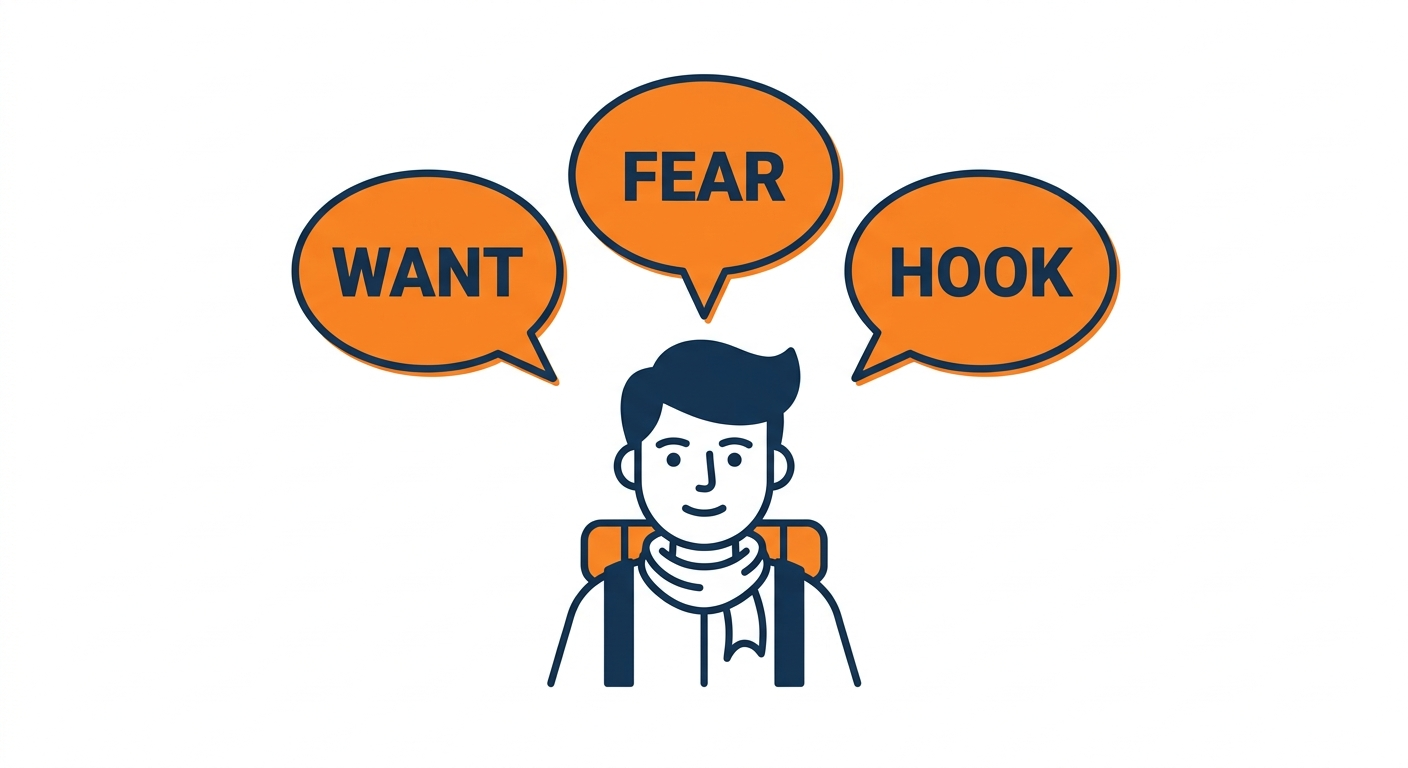
The six-question, one-page framework
Here is the format I now ask every player at my table to use. It is small on purpose. The constraint is the feature.
1. Where are you from, and how did it shape you?
One paragraph on your character's home. Not its history. Just the place, the era, the rhythm of life there. Was it cold and quiet? Loud and crowded? Did you grow up in a temple, a tavern, a shipyard, the back of a wagon?
The point of this question is tone. Your DM needs to know what kind of person walked out of that place. A character who grew up in a logging camp behaves differently than a character who grew up in a cathedral.
2. Who shaped you?
One person, sometimes two. A parent, a mentor, a sibling, a rival, a friend. The relationship that made you who you are. Are they alive? Where are they now? Did they betray you? Are you still trying to impress them?
This is your anchor NPC. The DM will almost certainly use them, because they already exist and already have weight in your character's life. If you want a guaranteed personal scene in your campaign, write a vivid anchor NPC.
3. What do you want?
Not "loot" or "power." Something specific. To find your missing sister. To clear your family name. To prove the order that exiled you was wrong. To never feel poor again. To learn what really happened on the night the lighthouse went dark.
Your DM will use this as your personal arc. A want is the thing the campaign can either give you or take away. A character without a want is a character the DM cannot move emotionally, because there is no lever to pull.
4. What do you fear?
Not "spiders." Something the campaign can confront you with. Becoming your father. Being seen for who you really are. Trusting the wrong person again. The thing you saw in the basement that you have never told anyone about.
This is your dramatic weakness, and it is the second lever the DM uses. Pair it with your want and you have a character with internal conflict, which is the actual ingredient that makes role-playing feel alive.
5. Why did you leave?
Every player character is, by definition, someone who left a normal life behind. The DM needs to know why. Was it your choice? Were you driven out? Did something break, or did something call you?
This becomes the bridge into the campaign. It tells the DM how to introduce you to the party, and what kind of opening scene to put you in.
6. What are you hiding?
One secret. Not from the DM, from the party. A name you go by that is not your real one. A debt you have not paid. A vow you have not kept. A side of yourself you do not let people see.
This is your table tension. Every long-running campaign I have ever run has been pulled forward by the secrets the players sat on. A secret is a slow-burn hook that the DM can detonate at exactly the right moment, usually three sessions before you would have revealed it yourself.
That is the whole framework. Six paragraphs. One page. If you can answer those clearly, your DM has more material to work with than they would get from 14 pages of family history.
Plant three hooks, mark which ones the DM can move
The framework gives you a character. The three hooks turn the character into a prep file for your DM.
A hook is a one-sentence dangling thread. Here are three good ones:
- "My mentor was last seen heading north on a job he never came back from."
- "The temple in my home village still has my real name on a debt ledger."
- "There is a signet ring I lost when I was 16 that I would do anything to get back."
Notice what is in those sentences. A person. A place. A thing. Each of those is a node the DM can drop into the world. Your mentor can become an NPC the party meets in act two. The temple can become a destination. The ring can be recovered, or worse, found around someone else's neck.
After you write your three hooks, do the thing almost no player ever does. Mark which ones the DM can change. Maybe your mentor's name is flexible. Maybe the village's location can move. Maybe the ring could become a different object if it fits the campaign better.
The hooks you lock down stay yours. The hooks you mark "DM can move this" become collaboration. Both kinds are good. But a backstory where every detail is locked is a backstory the DM cannot fit into their world. They will read it, file it away politely, and write around it. That is the version where your backstory never appears at the table.
Ginny Di makes the case in the video above, and I have stolen it for my table. Your character does not need a tragic backstory. The dead parents, the burned village, the murdered mentor, those tropes are fine, but they are not the only way to write a character your DM can work with. A character whose biggest motivation is "I want to open a bakery in a city I have never been to" is just as easy to weave into a campaign as a character with a war crime in their past. Sometimes easier.
Common mistakes that hurt the game
I have read enough backstories now to know the patterns that get them quietly filed away by the DM. Here are the five I see most.
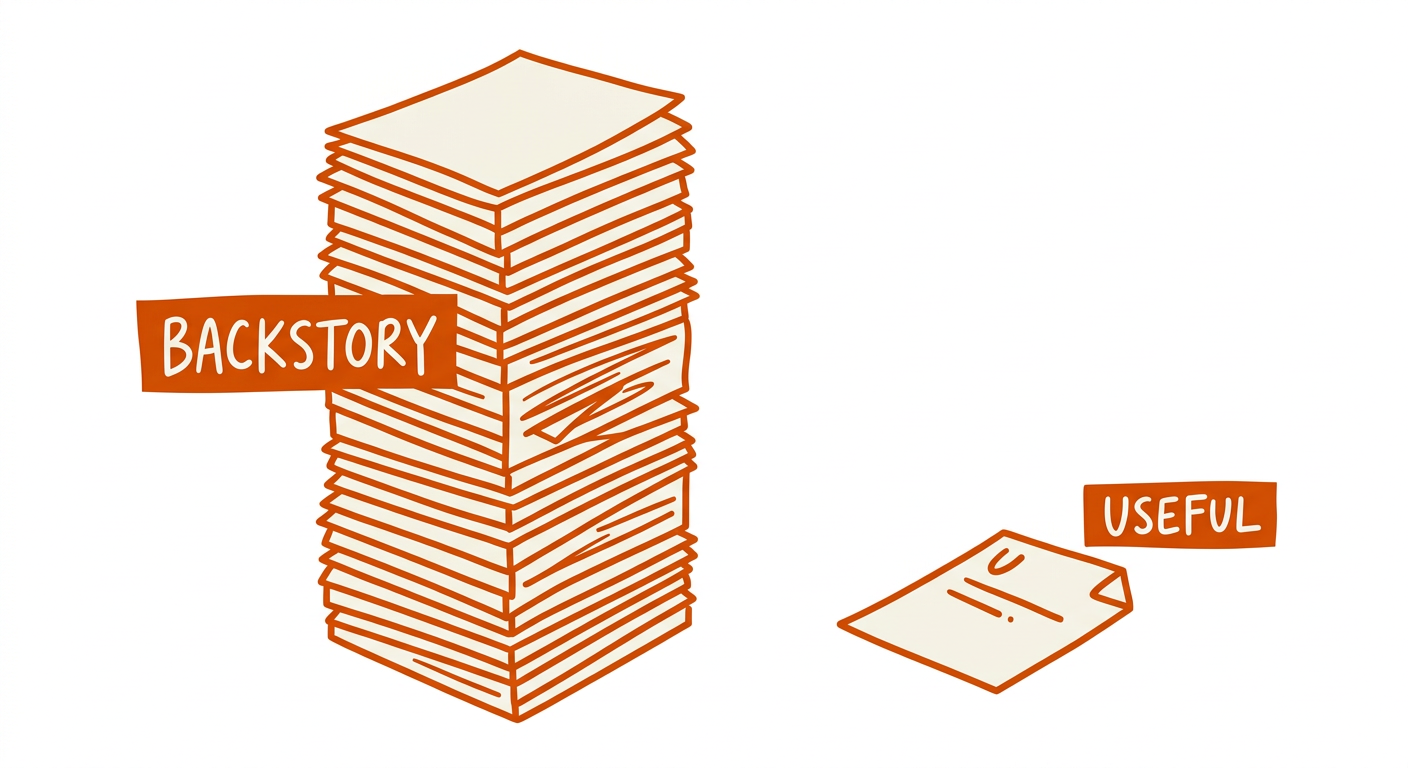
Writing the prequel novel. Your character can have a 200-year-long life if you want, but only the parts that connect to a hook get used. Everything else is for you.
Killing everyone they ever knew. Dead parents, dead siblings, dead mentor, dead childhood friend. This is a closed loop. The DM has no NPCs to bring back. If everyone is dead, nothing can return, which means no callbacks, no surprise reunions, no betrayals. Leave at least one important person alive.
Locking the whole world. "My home village is called X, it has exactly Y population, it is located precisely Z miles from the capital." That is fine if you are running your own setting. In someone else's, it is concrete the DM cannot pour around. Leave the geography soft.
Writing for an audience of one. If the only person who finds your backstory rewarding is you, your character will feel disconnected at the table. A backstory is a service document. It exists to make the campaign better for everyone, not to be a piece of personal fiction.
Forgetting the party. The biggest hook you have is the one between your character and the other players. Did you grow up in the same town as the Cleric? Owe the Rogue money? Know the Wizard's family by reputation? If you write your backstory in a vacuum, you waste the easiest hooks at the table. Pointy Hat's breakdown on what makes a good D&D character hits this point harder than any guide I have read, and it is worth the 22 minutes.
If you want help wiring those party ties up, the Party Connection Generator is a free tool that gives you starter prompts in under a minute. Most groups use it during session zero so the connections feel deliberate rather than retconned later.
How long should it actually be
One page. Single sided. Roughly 400 to 600 words.
That is not because longer is bad. It is because longer does not get used. The DM Lair makes the same point: "the backstory should be short enough to be digested and referenced. One or two pages is the sweet spot for me." Forum threads on r/DMAcademy say something similar every week. Brandon Sanderson, in his own advice to writers building believable backstories, makes the same case from a novelist's angle: the parts of the past that earn their place are the parts that bear weight in the present.
If you cannot get under one page, the problem is almost always that you are writing scenes instead of summaries. "I was at the temple when the soldiers came. I was nine years old. The first thing I heard was the bell." That is a great paragraph in a novel. In a backstory, it should be: "The temple I grew up in fell to soldiers when I was nine. I remember the bell." One sentence, one hook.
What to write down vs. what to keep in your head
Write down everything that connects to a hook. Keep everything else in your head and bring it out at the table when it matters.
The face of your sword instructor. The exact words your mother said before you left. The smell of the bakery in your home village. None of that goes on the page. It goes in your head and comes out as a flavor line during play, which is when it actually lands.
This is the difference between a written backstory and a lived backstory. The written part is for the DM. The lived part is for the table. Your character will feel real to the other players because of the details you drop at minute 47 of a session, not because of the family tree in the appendix of your character sheet.
Send it to your DM the right way
Three things every DM I know wishes more players did:
- Send it a week before session one. Not the night of. We need time to wire your hooks into the world before play starts.
- Mark what is locked and what is flexible. Two passes, two highlighters, takes 30 seconds and saves the DM hours.
- Stop revising after session one. Once play begins, your backstory is canon. Adding a new dead sibling in session 8 because you thought of a cool idea is not allowed.
If your group runs an auto-updating campaign wiki, drop the backstory in there with the locked and flexible sections clearly marked. Most apps that build the wiki for you will then surface your character's hooks every session, so the DM never forgets which threads are dangling. We wrote about why a campaign wiki is now the standard for any campaign running longer than six sessions.
The version your DM remembers
The best backstory I have ever been handed at my table was 380 words.
It was a half-elf cleric. The character was raised in a temple of a god of memory. Her mentor disappeared on a pilgrimage when she was 19, and the order asked her to stop looking. She left. She still wears the holy symbol but she is not sure who she is praying to anymore. She is hiding from the party that she has not had a vision in two years.
That is six paragraphs of answers, three hooks, one secret. I used every single line of it. Her mentor showed up in session 12 as a villain. The order tried to recruit her back in session 19. The vision came back in session 28, and the whole table cried.
Three hundred and eighty words. Twelve months of personal scenes. That is what a backstory the DM can use looks like.
Your next character can do the same thing. Six answers, three hooks, one page, sent a week before session one. The campaign will do the rest.
If you want a deeper read on how all of this connects to the rest of session zero and your first campaign, the step-by-step guide to starting a D&D campaign walks through what to lock in before the first session, and the world building guide covers the other half, what the DM is building on the other side of the screen.
Questions
Common questions
Free Tools
Helpful for This Topic
Point Buy Calculator
Match your stats to your story. Build ability scores with point buy, standard array, or rolled stats, with live modifiers for 2014 and 2024.
Party Connection Generator
Wire your backstory to the rest of the party in under a minute. Generates shared history hooks the DM can pull on.
Session Zero Checklist Generator
Pair your one-page backstory with a printed Session Zero agreement. Covers tone, safety tools, and house rules.
Session Recap Generator
When your backstory hook lands at the table, capture it. Save shareable highlight cards your players keep.
Drop the notebook
Try Saga20 for free
Record your session. We'll write the notes and build your wiki.
Get started freeNo card needed