The 'Previously On...' Problem: How Automated Transcripts Let New Players Binge Your Campaign
The "New Guy" Problem
We have all seen it happen.
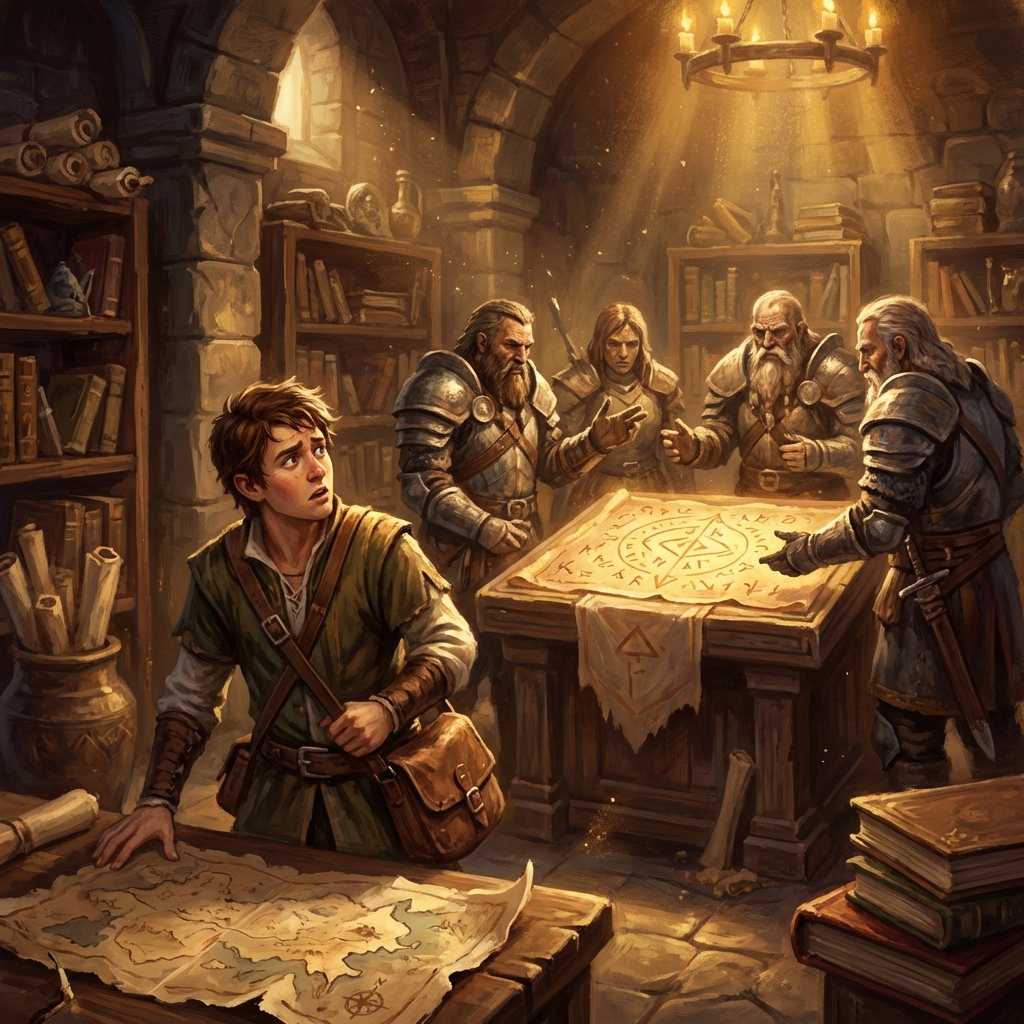
Your campaign has been running for two years. The party is Level 11, fully equipped with legendary items and complex emotional baggage. They have killed a god, adopted three goblins, and uncovered a conspiracy that goes back to the first session. The lore is dense. The inside jokes are impenetrable. The unspoken agreements between the Paladin and the Rogue are clearer than any written contract.
Then, a friend asks to join.
"I would love to play!" they say.
Your stomach drops. You want them to play. You love their energy. But you also know the massive workload that is coming.
How do you explain the geopolitical tension between the Iron City and the Elven Enclave? How do you explain why the Bard scares every horse he sees? How do you catch them up on 50 sessions of history without boring them to tears?
Usually, DMs try two things. Both of them fail miserably.
Failure Mode 1: The "Homework" Assignment
You send them a link to the campaign wiki. You send them a Google Doc that is 40 pages long, filled with names like "Lord Varrick" and "The Treaty of Ghul." You tell them, "Just read this before Tuesday."
They won't read it. And if they do, they won't remember it. It feels like studying for a history exam, not preparing for a game. They will show up confused, scanning the page for names they don't recognize.
Failure Mode 2: The "Stop and Explain"
You decide to just explain things as they come up.
"It will be fine," you tell yourself. "I will just fill them in."
The result? The session grinds to a halt every five minutes.
"Wait, who is Lord Varrick?" "Okay, so remember two years ago when we saved the Miller? Well, Varrick is his cousin who..."
The other players check their phones. The pacing dies. The "New Guy" feels like a burden because every time they ask a question, the fun stops.
There has to be a better way. And thanks to modern tools, there is.
The "Netflix" Solution
Think about how you catch up on a TV show.
Do you read the Wikipedia summary of every episode? No. That is dry and boring. Do you ask a friend to explain three seasons of plot while you try to watch Season 4? No. That is annoying.
You binge it.
You watch the "Previously On..." segments. You get the vibe, the voices, and the big emotional beats. You absorb the story through osmosis, not memorization. You learn who the bad guys are by hearing their theme music, not by reading their biography.
This is the shift we need to make in D&D. We need to move from text-based homework to audio-based immersion.
Why Audio Beats Text for Onboarding
Text is bad at conveying tone.
If I write: "The party negotiated with the dragon," the new player knows the fact. They know the event occurred.
But if they hear the recording?
They hear the fear in the Rogue's voice. They hear the nervous laughter when the Paladin insults the dragon's hoard. They hear the silence right before the initiative roll.
They understand immediately: This table is chaotic. This table takes risks. This table is funny.
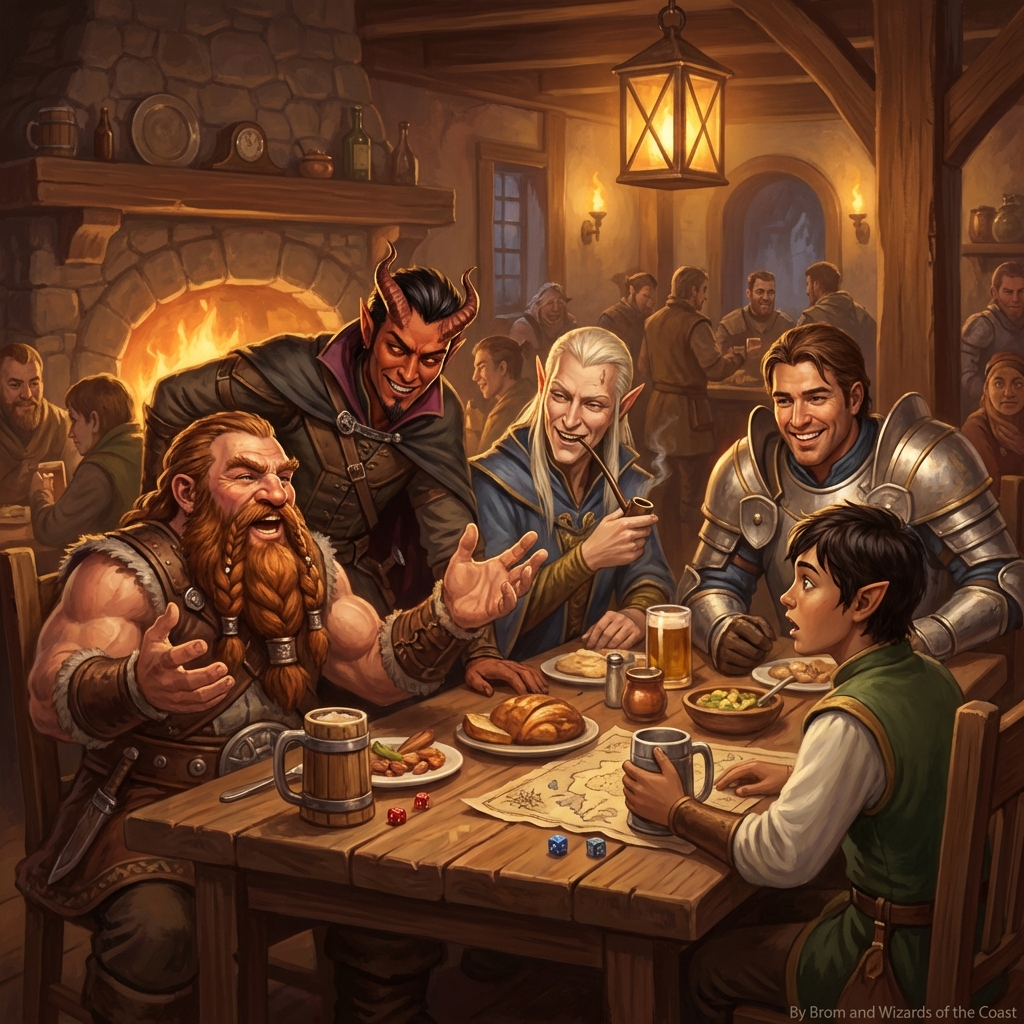
They learn the culture of your group, not just the history. They learn that Steve always rolls 1s when it matters, and that Sarah always tries to adopt the monsters. This is the "tribal knowledge" that wikis never capture.
How to Create an "Onboarding Playlist"
You do not need to make them listen to 200 hours of raw audio. That is just as bad as the 40-page Google Doc. Nobody has time for that.
You need to curate the "Greatest Hits."
Here is the process I use with Saga20 to onboard new players in less than an hour.
1. The "Campaign Continuity" Filter
Saga20 doesn't just record; it identifies speakers. It knows that "Speaker 1" is me (the DM) and "Speaker 2" is the Barbarian.
This means the new player doesn't have to guess who is talking. They see the names. They begin to associate the voice with the character sheet before they even sit at the table. They learn that the deep, gravelly voice belongs to the Dwarf, and the quick, erratic voice belongs to the Sorcerer.
2. The "Key Events" Skim
I tell the new player to log into our Saga20 campaign page. I tell them:
"Do not listen to the whole sessions. Just look at the summaries."
Because the app breaks down the session into Key Events, they can scroll through the timeline like a social media feed.
- Session 1: Met the King. (Click to expand).
- Session 3: Found the Sword of Truth. (Click to expand).
- Session 10: The Wizard died. (Click to expand).
They can scan two years of history in 20 minutes. It gives them the skeleton of the story without the fluff.
3. The "Vibe Check" (Deep Dives)
Then, I give them homework I know they will actually do.
"Pick three moments from the summaries that sound cool. Click the timestamp and listen to just those 5 minutes."
They listen to the boss fight. They listen to the betrayal. They listen to the funniest tavern scene.
Suddenly, they "get" it. They understand the group dynamic. They come to the first session feeling like they have been there the whole time.
The One-Page Catch-Up Checklist
Even with the app doing the heavy lifting, you need a cheat sheet.
Give the new player a single index card (physical or digital) with just this info. If it doesn't fit on the card, cut it.
| Section | What to include |
|---|---|
| The Goal | One sentence. "We are trying to kill the Lich King before the solstice." |
| The Location | Where are we standing right now? "In the sewers of Waterdeep." |
| The Danger | What is trying to kill us right now? "Ratmen and a plague." |
| The Party | One adjective per player. "Grumpy Dwarf, Greedy Rogue, Holy Paladin." |
That is it. Do not list the names of the villain's lieutenants. Do not list the history of the kingdom. Giving them too much information is worse than giving them too little.
The "Session Zero Point Five"
Before they join the main group, run a one-hour mini-session with just them.
I call this "Session 0.5".
Most DMs make the mistake of having the new character "meet" the party in the main session. This is awkward. The new player is nervous, the old players are impatient, and the roleplay is stiff.
Instead, run a flashback.
"Okay, it is two weeks ago. You are in the city. You see the party walking down the street. What do you do?"
Let them interact with the world first. Let them buy equipment. Let them talk to an NPC. Let them get comfortable with their dice and their character sheet without an audience.
Then, narrate how they met the party "off-screen" or ending the mini-session right as they walk into the tavern where the main party is sitting.
This removes the performance anxiety. When they show up on Tuesday night, they have already "played" D&D. They are warmed up.
Managing the First Session (The "Guest Star" Approach)
When they finally sit down for their first game, treat them like a Guest Star in a TV show.
DO NOT: Start with a lore dump
Don't begin the session with a monologue explaining why they are there. Don't recap the last 100 years of Elven history.
DO: Start with Action
Have them enter in the middle of a fight. Or have them burst through a door. "The door flies open. A stranger stands there, panting, holding the map you lost three weeks ago."
This forces immediate interaction. The players have to talk to them. "Who are you?" "Where did you get that map?" "Can you help us kill these goblins?"
DO: Use Campaign Continuity for Recap
Start the session by having Saga20 read the recap of the last session (or have a player read the summary). This catches the new player up on the immediate context (the last 4 hours) which is the only context strictly necessary to play the next 4 hours.
The Buddy System
Assign one of your veteran players to be the "Lore Buddy."
Tell the new player: "If you have a question about the plot, ask Steve. He knows everything."
This takes the pressure off you. You don't have to stop DMing to explain who the Baron is. Steve can whisper it to them.
It also makes Steve feel important. He gets to show off his knowledge. He becomes the mentor. This strengthens the bond between the players and integrates the new person faster than you ever could.
Conclusion
New players are the lifeblood of the hobby. They bring new energy and new ideas. But the "Barrier to Entry" on a long-running campaign can be intimidating.
Stop throwing textbooks at them. Stop asking them to study.
Give them the tape. Let them binge the highlights. Let them hear the laughter and the crits.
By the time they roll their first initiative, they won't feel like a student. They will feel like a fan who finally got invited to the set.
And that is how you turn a stranger into a party member.
Enjoying the story?
Start recording your own D&D sessions today and never forget a moment.
Try for Free