How to End Your D&D Session So Players Can't Stop Thinking About It
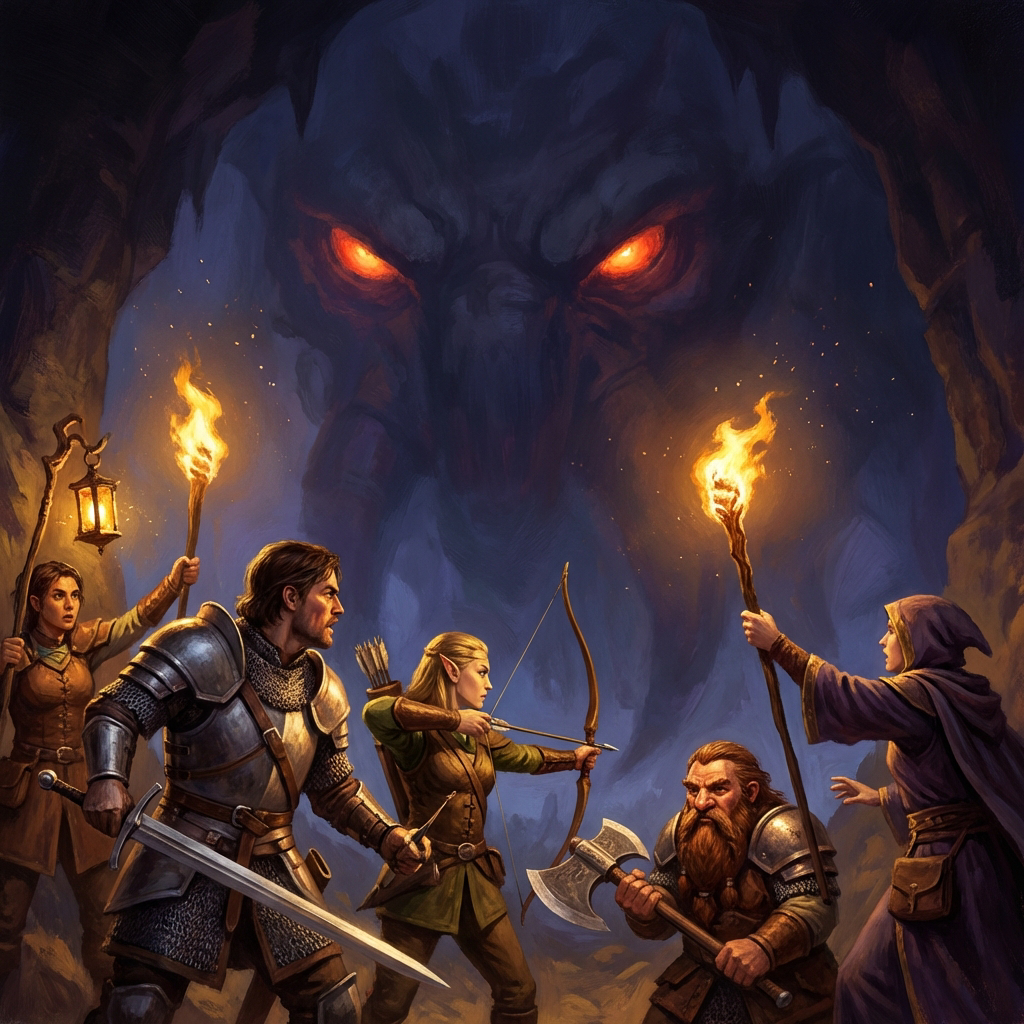
The Worst Sound in D&D
It is not the clatter of a natural 1. It is not the DM saying "Are you sure?" It is this:
"Okay guys, it is getting late. I guess... we will pick this up next week?"
The session fizzles. Players start packing up their dice mid-sentence. Someone checks their phone. The Wizard is already putting on their coat. You never actually ended the scene. You just... stopped.
And here is the brutal consequence: by Wednesday, nobody remembers what happened. By Friday, they have forgotten why they cared. By the time game night rolls around again, the momentum is gone. You spend the first 20 minutes of the next session doing CPR on a story that was alive and breathing seven days ago.
This is the #1 silent killer of D&D campaigns. Not scheduling conflicts. Not player drama. Not even the dreaded rules argument. It is the slow bleed of forgettable endings.
The good news? Fixing this is easier than you think. And once you learn the trick, your players will be texting the group chat theories all week long.
Why Endings Matter More Than Beginnings
TV writers know this instinctively. Think about the shows that got you hooked. Breaking Bad. Game of Thrones (the early seasons). Stranger Things. They did not hook you with the opening scene. They hooked you with the last 30 seconds of each episode.
The final image. The reveal. The door opening. The scream.
Your brain does this thing called the Zeigarnik Effect: incomplete tasks occupy your mind more than completed ones. When a story resolves neatly, your brain files it away and moves on. But when a story is interrupted at a moment of tension? Your brain keeps chewing on it. It replays the scene. It speculates. It runs simulations.
This is why your players remember the session where you stopped mid-combat (because it was getting late and the dragon had just breathed fire) way better than the session where you wrapped up the quest cleanly and everyone shook hands with the King.
Incomplete stories are stickier than finished ones.
Your job as a DM is not to resolve every thread by 10 PM. Your job is to rip the thread at exactly the right moment.
The 5 Types of D&D Cliffhangers
Not every session needs a jaw-dropping twist. Sometimes the best ending is subtle. Here are five cliffhanger frameworks you can rotate through so your endings never feel repetitive.
1. The Revelation ("You See What's Inside")
End the session the moment the players discover something, but before they can react to it.
"You pry open the sarcophagus. Inside, you don't find the ancient king. You find... the body of the tavern keeper from Oakhaven. The one who gave you the quest. And he has been dead for weeks."
"And that is where we stop."
The players will lose their minds. They cannot react. They cannot interrogate. They cannot investigate. All they can do is think about it until next Tuesday.
2. The Threshold ("You Open the Door")
End right as the party crosses into a new environment, but before they understand what they are looking at.
"You push through the vines, and the jungle canopy opens up. Spread before you, in a valley that should not exist, is an entire city. Towers of white stone, intact and gleaming. And from every window, every balcony... someone is watching you."
Done. Pack up.
They don't know if the city is friendly or hostile. They don't know if those are people or statues. The uncertainty is the hook.
3. The Dilemma ("Choose, But Not Tonight")
Present a choice with real consequences and then end the session before they pick.
"The dragon lowers its head. 'I will spare your village,' it rumbles. 'But only if you bring me the Paladin's holy sword. The one she swore her oath upon.' It looks at the Paladin. 'What say you, little knight?'"
Stop. Let them argue about it all week in the group chat. By next session, they will have written 400 messages debating it. You just got a week of free engagement.
4. The Betrayal ("Something is Wrong")
End on a detail that recontextualizes everything.
"The Baron shakes your hand, warmly. 'Thank you for saving my daughter,' he says. As you turn to leave, the Rogue lingers. She glances at the Baron's desk. And there, half-hidden under a ledger, is the symbol of the cult you have been hunting for six sessions."
Session over.
The Rogue knows. Nobody else does. The player knows. Nobody else does. That tension carries through the entire week.
5. The Callback ("Wait, I Know That Voice")
Reintroduce something from the distant past, right at the final moment.
"You set up camp on the ridge. The fire crackles. And then, from the darkness beyond the treeline, you hear a voice you have not heard in months. 'I told you I would find you, Doran.'"
This is the most satisfying cliffhanger for long-running campaigns because it rewards players who have been paying attention. It validates the story. It says: everything is connected.
The 30-Minute Rule
Here is the practical framework. I call it the 30-Minute Rule, and it changed how I run every single session.
At the 30-minute mark before your scheduled end time, stop whatever you are doing and ask yourself one question:
"Can I reach a cliffhanger from here?"
If yes, start steering. Speed up the pace. Cut the shopping scene short. Skip the random encounter. Drive toward the moment.
If no, you need to manufacture one. This sounds hard, but it isn't. Here is a cheat sheet:
| Time Left | What To Do | Example |
|---|---|---|
| 30 min | Start wrapping the current scene. | "The shopkeeper hands you the last item. You step outside and..." |
| 20 min | Introduce the hook. | "...you notice the sky has turned an unnatural shade of green." |
| 10 min | Escalate the tension. | "The ground trembles. Birds scatter. The bell tower starts ringing on its own." |
| 2 min | Deliver the final line. | "And standing in the town square, where the fountain used to be, is a 40-foot portal. Something is coming through." |
| 0 min | Stop. Smile. Say nothing else. | Pack up your dice. |
The key discipline is do not answer questions after the cliffhanger. Players will pepper you: "Wait, what kind of portal? What color? Can I roll Arcana?" No. The session is over. You are done. Smile and say, "Guess you will find out next week."
This is the DM equivalent of a mic drop.
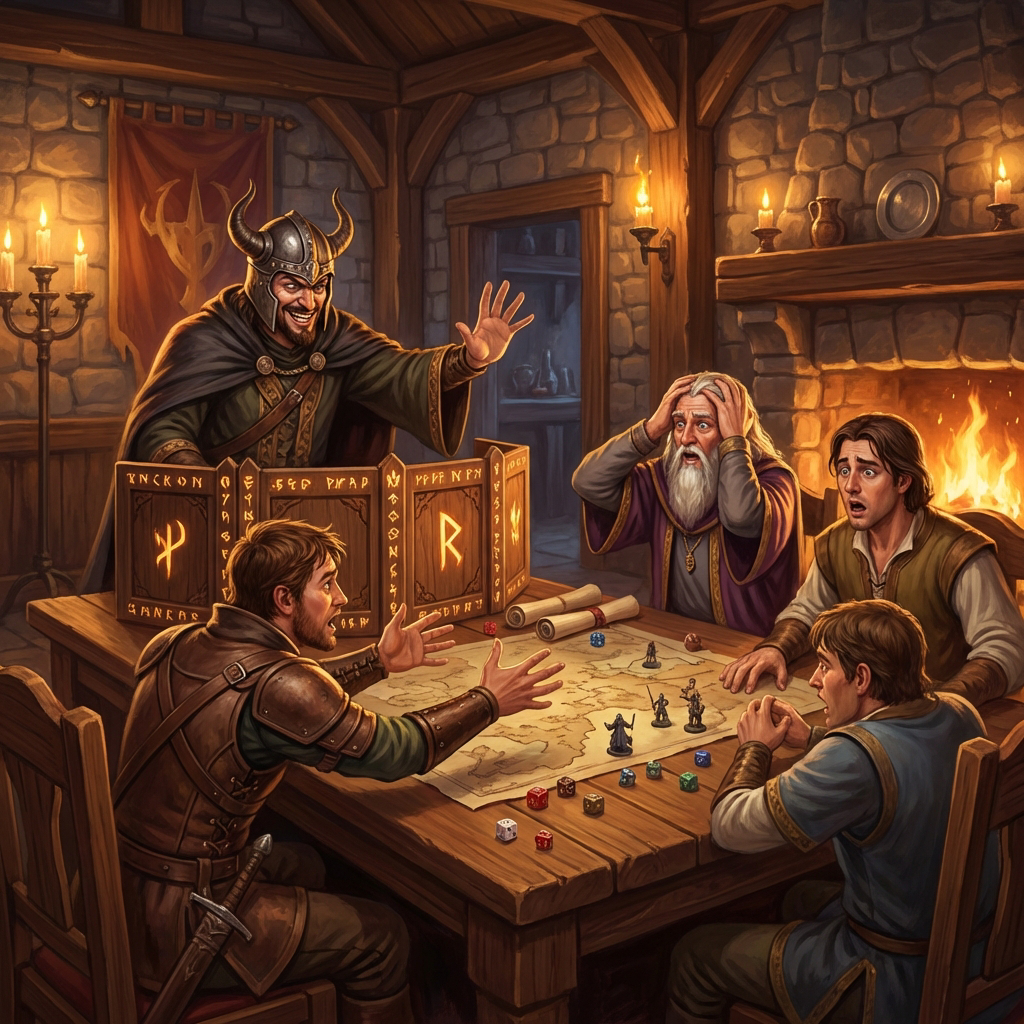
The "Two Sentences" Prep Trick
You don't need to plan the whole session around the ending. You just need to write down two sentences before each game:
- The "If All Goes Well" Ending: "If the players follow the main quest, the session ends when they open the Tomb Door."
- The "Emergency" Ending: "If things go sideways, a messenger arrives with a letter sealed in black wax. 'Your patron is dead.'"
That second sentence is your escape hatch. It works regardless of where the party physically is. A mysterious letter. A sudden earthquake. A familiar voice in the crowd. A distant explosion. These "portable cliffhangers" can be dropped anywhere, anytime, and they always work.
Write them on a sticky note. Keep it behind your screen. If you feel the clock ticking, deploy it.
The Emergency Cliffhanger Bank
Build a list of generic cliffhangers you can grab in a panic. Here are 10 to get you started:
- A player's weapon starts glowing for no reason.
- A dead NPC's name appears, freshly carved into a tree.
- The tavern keeper whispers: "They know you are here. Run."
- The party's campfire turns blue.
- Someone is following them. They catch a glimpse. It looks like one of them.
- A sealed letter arrives, addressed to a character by their real name (in a world where they use an alias).
- The stars in the sky rearrange into a symbol. One player recognizes it.
- An NPC they saved three sessions ago is found unconscious, clutching a map.
- The next room in the dungeon contains a perfect replica of the party's own campsite.
- The castle they were heading toward is gone. Not destroyed. Just... gone.
Print this list. Tape it inside your DM screen. You will thank me.
What Happens After the Mic Drop
Ending well is only half the battle. The cliffhanger creates the tension. But if nobody remembers the details by next week, that tension evaporates.
This is the gap that I used to fill manually. I would stay up after the game, scribbling down the exact wording of the cliffhanger, the NPC names that came up, the specific choices the players were facing. If I forgot? The cliffhanger was wasted. I would open the next session with a vague "So... you were in a dungeon..." and watch the energy die.
The "Cliffhanger Capture" Problem
Think about what makes a cliffhanger work. It is not just what happened. It is how it felt. The exact pause before the reveal. The player's gasp. The specific description you improvised in the moment.
You cannot capture that in handwritten notes. You were too busy delivering the moment to simultaneously transcribe it. It is like trying to take a photo and be in the photo at the same time.
How Saga20 Solves This
When you record your sessions with Saga20, you never lose the cliffhanger.
The app captures the session and generates an automatic summary. The Key Events section picks up the major plot beats. Those final minutes where you described the portal ripping open in the town square? Captured. The exact phrasing you used for the tavern keeper's warning? Captured. The fact that it was specifically the Rogue who noticed the cult symbol? Captured and attributed to the right speaker, thanks to Campaign Continuity.
Here is why this matters for cliffhangers specifically:
- The "Previously On..." comes for free. Next session, you or a player reads the summary out loud. The cliffhanger words are right there, exactly as you said them. No paraphrasing. No "Wait, what was it again?"
- Absent players feel the tension. If someone missed the session, they get the summary emailed automatically when they follow the campaign. They read about the portal. They text the group: "WHAT IS GOING ON." The cliffhanger hits them too, even though they were not at the table.
- Your future self has context. Three months from now, when you want to call back to this moment, you can search for it. The app knows. It remembers. You don't have to rely on a vague memory of "something about a portal."
The cliffhanger is only as good as the payoff. And the payoff requires you to remember the setup.
Common Mistakes (And How to Avoid Them)
Mistake 1: The Fake Cliffhanger
"A stranger approaches! ...And that is where we end."
If the stranger has no connection to anything, it is not a cliffhanger. It is a commercial break. Players see through this instantly. A good cliffhanger ties to something established. The cult symbol works because they have been hunting the cult for six sessions. A random stranger does not.
Fix: Always connect the cliffhanger to an existing thread. Unresolved mysteries are better hooks than new mysteries.
Mistake 2: The Resolution Addiction
Some DMs feel physically uncomfortable leaving a scene unresolved. They add "just one more round" or "let me just finish this encounter." Before they know it, it is midnight and the session ends with the party walking into a tavern. No tension. No hook. Just... walking.
Fix: Practice the discomfort. Ending mid-scene is a skill. The first few times will feel wrong. That feeling is exactly what makes it work.
Mistake 3: The Overstuffed Ending
"The portal opens! And also the dragon attacks! And also your patron is dead! And also the moon explodes!"
Too many reveals dilute each other. Players can only hold one unresolved bombshell in their head. Pick the strongest one and save the rest.
Fix: One cliffhanger per session. One. That is it.
The Session Ending Checklist
Tape this to your screen. Use it every session.
| Step | Action | When |
|---|---|---|
| 1 | Check the clock. Is it 30 minutes before end time? | T-30 min |
| 2 | Pick your cliffhanger type (Revelation, Threshold, Dilemma, Betrayal, or Callback). | T-25 min |
| 3 | Start steering. Cut filler scenes. Accelerate pacing. | T-20 min |
| 4 | Deliver the final image or line. Use a dramatic pause. | T-5 min |
| 5 | Say "And that is where we stop." Do NOT elaborate. | T-0 min |
| 6 | Upload the recording to Saga20 and let the summary capture the moment. | Post-game |
The Payoff
When you nail a cliffhanger, something magical happens.
Your group chat lights up. The Barbarian's player, who normally only responds with thumbs-up emojis, sends a paragraph of theories. The Wizard's player starts looking up lore. The Rogue's player texts you privately: "Can I do something about the cult symbol before next session?"
They are thinking about your game when they are not playing it.
That is the holy grail of being a Dungeon Master. Not the perfectly balanced combat encounter. Not the flawlessly voiced NPC. It is the simple, powerful act of stopping at the right moment, looking your players in the eye, and saying:
"Guess you will find out next week."
Then pack up your dice. You have earned it.
Master the Start of Your Session
Now that you know how to end a session, learn how to prepare for the next one without burnout:
- The 30-Minute Session Prep Guide: A system for DMs who hate homework.
- Session Recap Scribe: Use your cliffhanger to generate the perfect recap.
Enjoying the story?
Start recording your own D&D sessions today and never forget a moment.
Try for Free