The Cure for NPC Amnesia: How to Make Your Players Remember Your Villains
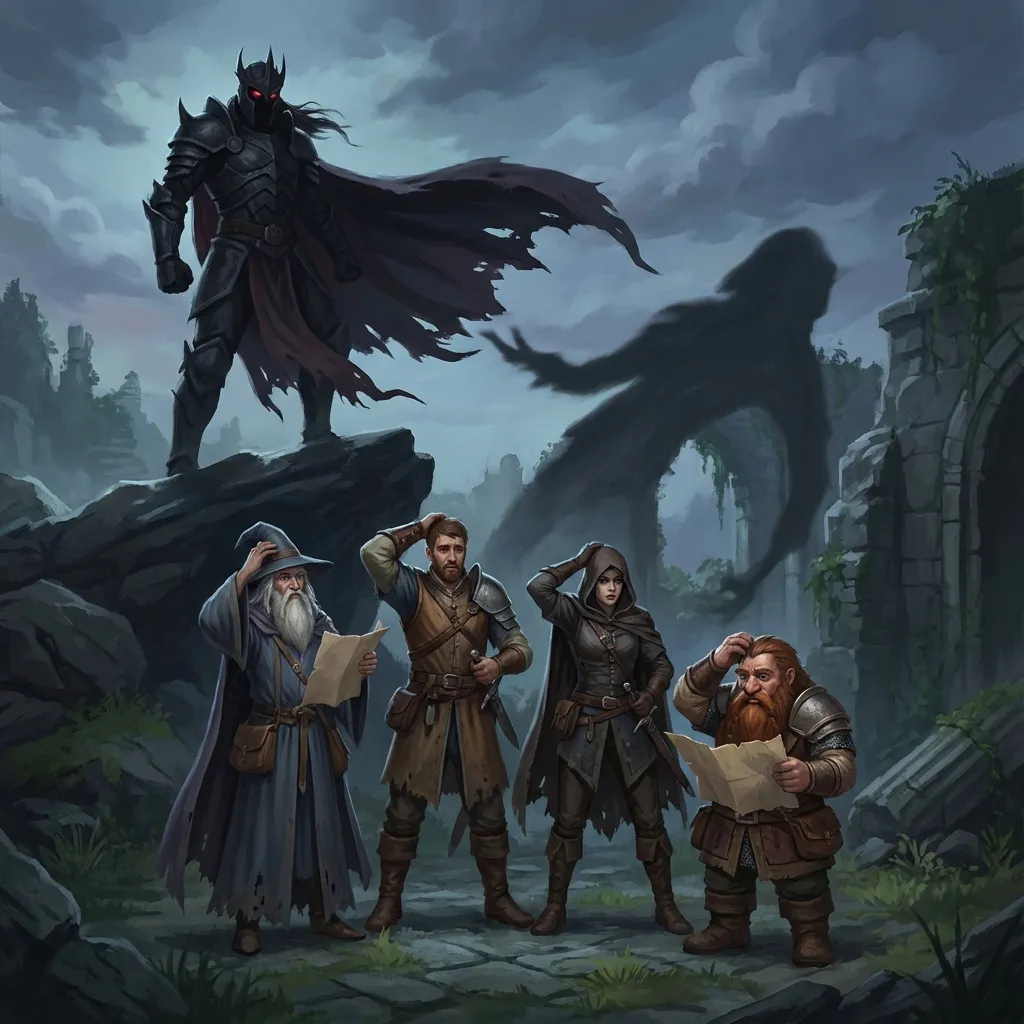
The "Who Is That?" Heartbreak
We have all been there. You have spent weeks prepping the grand return of Lord Valthor. You have practiced his raspy baritone in the shower. You have written a monologue that reveals the tragic backstory of the kingdom’s corruption. You have even 3D printed a custom miniature for him.
You lean forward, dim the lights, and deliver the line you've been rehearsing for a month:
"We meet again, heroes. I trust you haven't forgotten the debt you owe me."
Silence falls over the table. The tension is palpable. The players look at each other, eyes wide.
Then, your Rogue looks up from their character sheet, frowns, and asks:
"Wait, is this the guy who sold us the horses in Phandalin? or was he the one who scammed us on the potions?"
It hurts. It physically hurts. It deflates the entire encounter like a punctured balloon. But here is the hard truth that every Dungeon Master needs to accept: It is not their fault.
Your players have jobs, families, and bills. They do not spend their commute thinking about Lord Valthor’s political machinations or the subtle clues you dropped three sessions ago. They show up to roll dice, slay dragons, and hang out with friends. If you want them to remember your cast of characters, you cannot rely on their memory alone. You are fighting against the entropy of real life.
To win that fight, you need to use cognitive hooks, psychological tricks, and (if you want to make your life easier) a little bit of smart automation.
The Cognitive Load Problem (Why We Forget)
Before we fix the problem, we have to understand it. In a typical D&D session, a player is managing a massive amount of information:
- Mechanics: "How does Sneak Attack work again? Do I have Advantage?"
- Tactics: "If I move there, will the Ogre hit me?"
- Social Dynamics: "Is it my turn to order pizza? Am I talking too much?"
- Narrative: "What is the King's name? Why are we in this dungeon?"
The human brain can only hold so many "open tabs" at once. When the tactical and mechanical load gets high (like in combat), the narrative details are the first things to get dumped from short-term memory.
If Lord Valthor is just "A generic bad guy in black armor," he gets filed under "Generic Enemy #43." To make him stick, we have to bypass the logical brain and hook into the sensory brain.
The Laziest Way to Distinct NPCs: "The Rule of Three Tags"
As a proponent of the "Lazy DM" style, I hate doing extra work that doesn't yield results at the table. Writing 5,000 words of backstory for an NPC is useless if the players only remember "he had a funny hat."
Instead, use the "Rule of Three Tags".
Whenever you introduce a recurring NPC, give them three distinct, sensory tags. Do not worry about their motivation, their alignment, or their mother's maiden name yet. Focus entirely on what the players will perceive in the first 10 seconds.
- A Visual Quirk: Something that breaks the norm. A scar, a monocle, a missing finger, a constant coin-flip.
- A Vocal Tic: A stutter, a distinct accent, a catchphrase, or a specific volume (always whispering or always shouting).
- An Activity: What are they doing when the players arrive? Sharpening a knife? Eating a messy piece of fruit? Petting a cat?
Examples in Action
| NPC Archetype | Visual Quirk | Vocal Tic | Activity |
|---|---|---|---|
| The Informant | Wears thick, smoked goggles indoors. | Speaks incredibly fast, no pauses. | Constantly checking the exits. |
| The Shopkeeper | One arm is made of polished bronze. | Ends every sentence with "Yeah?" | Polishing a glass until it squeaks. |
| The Villain | Milky left eye, weeping scar. | Long, uncomfortable pauses. | Peeling a green apple with a dagger. |
When Valthor shows up, don't say "Lord Valthor enters." Say "You hear the scrape of a whetstone. A man with a milky left eye steps out, slowly peeling a green apple with a dagger."
This triggers memory instantly because it paints a picture. The players might not remember his name is Valthor, but they will shout, "Oh no! It's Apple Guy!"
The Voice is the Key (And How to Keep It)
Voices are the strongest anchor for memory. If you do a gravelly Batman voice for Valthor, players will remember the voice even if they forget the name. It taps into the auditory processing part of the brain, which is often less cluttered than the verbal/textual part during a game.
The problem? Consistency.
Two months later, when Valthor returns for his big monologue, it is terrifyingly easy to forget what he sounded like. You open your mouth, and instead of the menacing Batman growl, out comes a high-pitched chaotic goblin voice because that was the last NPC you played.
Now the players are confused. "I thought he was scary? Why does he sound like Skeletor on helium?" The immersion creates a vacuum sealing effect, and the fear evaporates.
The "Physical Anchor" Technique
If you are a voice actor, great. If you are like the rest of us, use physical anchors to lock in a voice:
- The Nose Pinch: For nasally goblins or bureaucrats.
- The Jaw Jut: For orcs or tough guards (gives you an underbite lisp).
- The Posture: For a regal queen, sit up straight and look down your nose. For a beggar, slouch and look up.
Write this anchor down on your prep sheet: "Valthor = Batman Voice + Chin Down + Chest Out."
I used to keep a spreadsheet for this: "Valthor = Batman + British Accent." It worked okay, but it was just another tab to manage, and "British Accent" is vague. Which British accent? Cockney? Posh?
This is where I finally let technology handle the heavy lifting.
Automating Your "Campaign Memory"
We built Campaign Continuity into Saga20 because I was tired of forgetting my own NPCs.
When you record a session with the app, it doesn't just transcribe the words; it listens to how they are said. It creates a digital footprint of your campaign's audio history.
1. The Pre-Game Refresh
Before the game, I don't have to scramble through six different notebooks to find Valthor's page. I simply search for him in the app.
I can see exactly what he said last time. But more importantly, I can hear a clip of him speaking from his last appearance.
It’s like having a dedicated scribe who not only writes down what happened but also taps you on the shoulder and says, "Hey, remember, you did a slow, breathy whisper for this guy. Don't ruin it."
2. Automatic Speaker Recognition
During the game, the system uses voice embeddings to track who is speaking. If I use my "Valthor Voice" in Session 3, and then use it again in Session 10, the app recognizes that audio profile. It labels the speaker as "Lord Valthor" automatically in the transcript and summary.
This means you don't have to stop the flow of the game to embrace the "admin" role. You just play. The app sorts out who said what later.
3. The Player Loop
For the players, it's even better. If they follow the campaign on Saga20, they get the session summary emailed to them automatically.
They don't need to ask "Who is Valthor?" because the summary highlights his name. Clicking it takes them to his profile, showing his bio ("The Apple Guy") and a list of every session he has appeared in. It outsources the "remembering" to the app, so they can focus on the "playing."
Value Add: The "Visual Roster" Handout
If you want a low-tech solution to use alongside the app (or if you just love physical props), try the Visual Roster.
The moment an NPC becomes recurring, they earn a card.
- Grab a pack of 3x5 index cards.
- Find a generic fantasy portrait (Pinterest/ArtStation are your friends here). Print it small and glue it on.
- Write their name in BIG letters with a Sharpie.
- Write one sentence of context: "Sold us the horses (Not Valthor)."
Keep these cards in a stack. When the players enter an inn, or the villain steps out of the shadows, physically place the card on the table.
Touch it when the NPC speaks.
It sounds toddler-level simple, but reinforcing the visual alongside the auditory (your voice) and the narrative (the plot) triples the retention rate. It gives the players something to stare at other than their character sheet.
When Valthor leaves the scene, physically take the card away. It signals "End of Scene" and helps clear the cognitive load.
The "Broken Recap" Ritual
Finally, stop starting your sessions by asking, "So... who remembers what happened last time?"
This is a recipe for disaster. Usually, one player (the note-taker) will read a dry list of facts: "We went to town. We bought rope. We killed a rat."
It's boring, and it misses the emotion.
Instead, try this:
- Read the Saga20 Summary: Before the session, read the "Key Events" bullet points from the app's summary of the last session. It's concise and hits the plot beats.
- The "Previously On..." Monologue: You, the DM, should deliver a 30-second, high-energy recap. Treat it like the start of a TV show episode.
- "Last week, arrows flew in the dark! Doran narrowly escaped the goblin ambush, but lost the map. Now, standing before the Gates of Moria, you hear a familiar sharpening sound from the shadows..."
You set the energy. You remind them of the stakes, not just the timeline.
Conclusion
Your players want to engage with your world. They want to hate your villains and love your shopkeepers. They are not forgetting because they don't care; they are forgetting because the modern world is loud and distracting.
Give them strong sensory hooks. Use the Rule of Three Tags. Anchor your voices. And if you can, use tools like Saga20 to keep that history accessible and organized, so you never have to guess what "The Apple Guy" sounded like three months ago.
Don't let Valthor be forgotten. He has worked too hard on that monologue.
Ready to stop forgetting your own voices? Sign up for Saga20 and let the app handle your campaign continuity.
Enjoying the story?
Start recording your own D&D sessions today and never forget a moment.
Try for Free