The Art of Campaign Continuity: How to Keep Your Story Straight Without Burnout
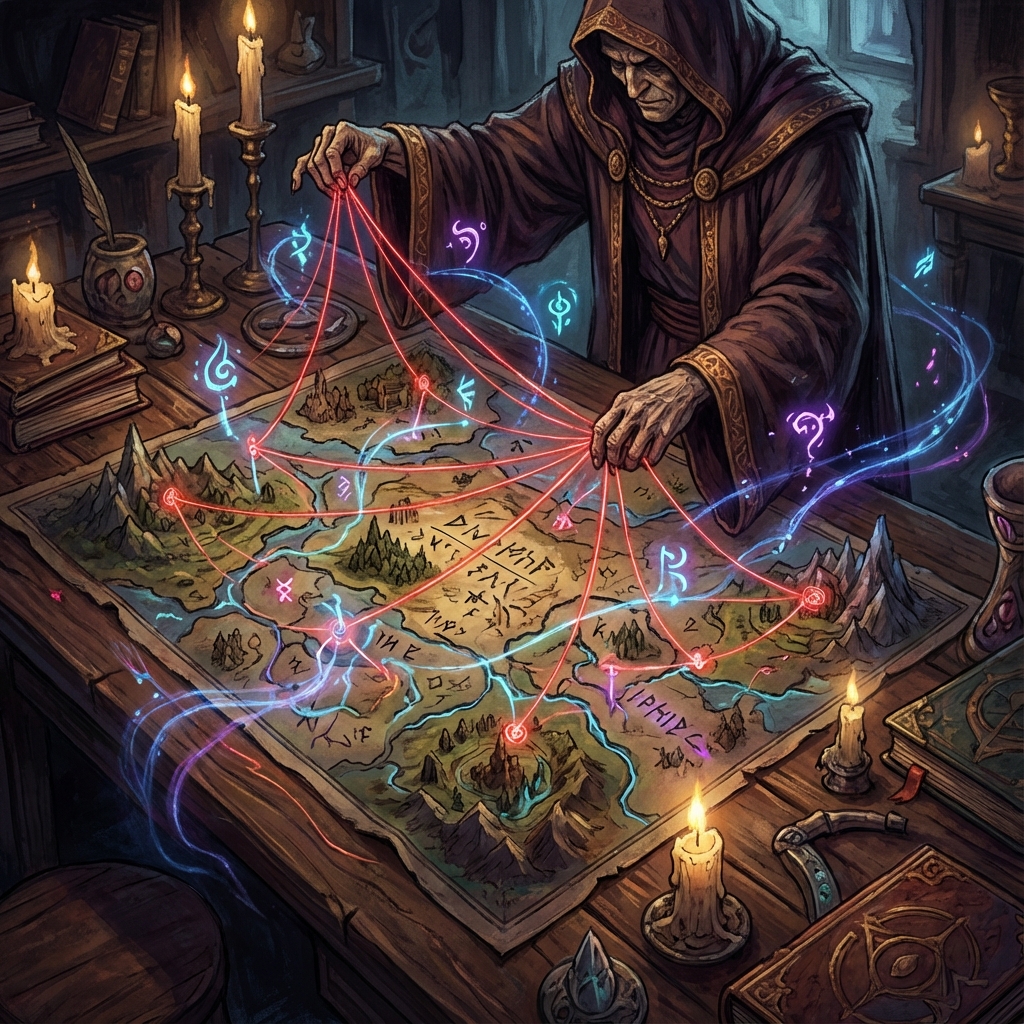
The "Wait, Who Is That?" Moment
We've all been there. You're four sessions into a deeply immersive political intrigue arc. The party finally corners the corrupt magistrate, and he sneers, "You'll never understand the plans of Lord... uh..."
You check your notes. "Lord... scribbles..."
You panic. You flip back three pages. Nothing. You check your phone note app. You check the Discord chat.
The tension in the room evaporates. The immersive bubble pops. Your players start stacking dice. Finally, "Lord... Blackwood?" you guess.
"I thought it was Lord Whitewood?" the barbarian asks.
"Right. Whitewood."
The moment is gone.
This is the failure of Campaign Continuity. It's not just about getting facts right; it's about maintaining the illusion of a living, breathing world. When the world "forgets" itself, it stops feeling real.
But here's the secret: You don't need a doctorate in library sciences to fix this. You just need to be a little smarter, and honestly, a little lazier about how you track your world.
The Philosophy of the "Lazy" Continuity
Real continuity isn't about recording every single detail. It's about recording the right details that trigger your memory later.
As Mike Shea (The Lazy Dungeon Master) often preaches, we prep to play, not to write a novel. The goal is to maximize the impact on the table while minimizing the homework.
1. The "Secrets and Clues" Method
Instead of writing a rigid plot, write down 10 "Secrets or Clues" that the players might discover next session.
- "The King is actually a doppelganger."
- "The ancient sword hums when near dragonblood."
- "The tavern keeper is an ex-adventurer who knows the location of the lost shrine."
You don't decide where they find them. Maybe they find the clue in a book, or hear it from a beggar, or see it in a dream. This keeps your game flexible, but ensures that the important lore gets dropped no matter which direction the chaotic party runs.
2. Outsource Your Memory (The Player Recap)
This is the oldest trick in the book, but so many DMs forget it. Start every session by asking a player to recap the last one.
"Steve, remind us what happened when you guys blew up the bridge?"
This does two things:
- It saves you work.
- It tells you what the players actually care about.
If Steve mentions the bridge explosion but forgets the mysterious hooded figure, guess what? The hooded figure probably isn't that important to the "continuity" of the players' emotional experience. You can safely let them fade into the background.
The Saga20 Advantage
Manual notes are great, but let's be honest: we are in the future. Why are we still frantically scribbling in notebooks like it's 1982?
Saga20 was built specifically to solve the "NPC Amnesia" problem using Campaign Continuity features.
Automated "Voice Fingerprints"
You know how you do a specific gravelly voice for the dwarf blacksmith, but three weeks later you forget and he sounds like a high-elf?
Saga20 listens. After your first session, you spend 30 seconds tagging "Speaker 1" as "Doran the Dwarf."
From that point on, the system recognizes Doran's voice automatically. When you read the summary, it doesn't just say "The blacksmith offered a discount." It attributes it to the specific character voice, helping you remember the tone and personality you used.
The Living "World Context"
Notes get buried. A wiki takes too long to update.
Saga20 uses a World Context page. This is a "living document" that the AI references when writing summaries. You can dump raw info here:
- "The capital city is built on a giant turtle."
- "Goblins in this setting are friendly merchants, not monsters."
The app reads this context before summarizing your session. So if a player says, "I attack the goblin," the summary notes it as a moral conflict (attacking a merchant) rather than just "combat started," because it understands your world's truths.
The 5-Minute Post-Game Ritual
If you take nothing else away from this post, adopt this simple checklist. Do it immediately after the session ends, before the adrenaline fades.
The "Save Your Sanity" Checklist:
| Action | Why it helps | time |
|---|---|---|
| 1. Update the "Date" | Write down the in-game date/time the session ended. | Prevents "Wait, is it night time?" arguments next week. |
| 2. List 3 NPCs | Write down the names of the 3 most important NPCs the party interacted with. | You will forget the shopkeeper's name by next Tuesday. |
| 3. Tag the "Cliffhanger" | Write one sentence about exactly where everyone is standing. | "In the hallway, weapons drawn, facing the door." |
| 4. Upload the Audio | Drag your recording into Saga20. | Let the app churn out the detailed summary while you sleep. |
| 5. Send the Link | Follow the campaign in the app to get the email notification. | Your players get the summary in their inbox automatically. |
Continuity allows for Chaos
The more solid your foundation, the more you can improvise.
When you trust that your tools (whether a notebook or Saga20) have caught the details, you stop worrying about "breaking" the story and start playing in it.
So put down the pen, hit record, and let the messy, beautiful chaos of D&D unfold. We'll remember the details for you.
Enjoying the story?
Start recording your own D&D sessions today and never forget a moment.
Try for Free