The 30-Minute D&D Session Prep: A System for DMs Who Hate Homework
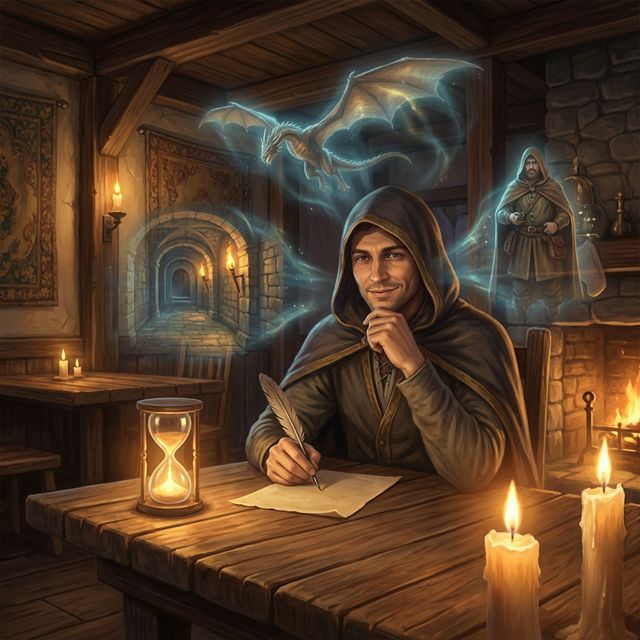
The Overprepper's Confession
I used to be a six-hour prepper.
Every Saturday morning, I would sit down with a blank notebook, three sourcebooks, a Pinterest board of "DM inspiration," and a dangerous amount of coffee. I would write branching dialogue trees for NPCs. I would draw maps with hidden symbols. I would calculate the exact Challenge Rating of every single encounter, complete with backup wave mechanics in case the fight was too easy.
By 3pm, I had a session plan that could rival a PhD thesis.
By 9pm, the Rogue had skipped the entire dungeon by seducing the door, the Wizard had Dimension Door'd past the puzzle I spent two hours balancing, and the party was haggling with a random fishmonger I had to invent on the spot.
Six hours of prep. Thirty seconds of use.
Sound familiar? If you have been DMing for more than a month, you know this pain. It is the cruel math of session preparation: the more strictly you plan, the more your players will ignore.
I am not saying preparation is useless. I am saying most DMs are preparing the wrong things. They are writing novels when they should be sketching outlines. They are building complex movie sets when they should simply be packing a toolbox.
Here is the system I switched to. It takes exactly 30 minutes. It has made my sessions better, not worse.
The Problem With "Maximal Prep"
Before we build the system, let us talk about why over-preparing actively hurts your game. It is counter-intuitive, but doing too much work is often worse than doing too little.
1. The Sunk Cost Trap
Imagine you spent 90 minutes writing a dramatic monologue for the bandit leader. You practiced the voice. You wrote down the perfect pauses.
When the session starts, the Paladin casts Command and says "Surrender."
Logically, the bandit should surrender. The spell worked. But you, the DM, have a problem. You spent 90 minutes on that monologue. You do not want to waste it. So you find a reason why the spell fails. You fudge the saving throw. You say he has "legendary resistance" even though he is a Level 3 bandit.
You just railroaded your players.
The encounter became about protecting your prep instead of honoring their choices. Over-preparation creates attachment. Attachment creates rigidity. And rigidity kills the magic of tabletop roleplaying games.
2. The Burnout Spiral
This is the silent killer of campaigns.
- Week 1: You prep for four hours and the session is amazing.
- Week 2: You prep for four hours because you feel you "have to" maintain the standard.
- Week 3: You are tired. You prep for two hours. It feels rushed and incomplete.
- Week 4: You skip the session entirely because you didn't have time to prep "properly."
This cycle has killed more campaigns than Tiamat. DMs raise an unrealistic bar for themselves, and when they inevitably cannot reach it, they quit. The goal of this system is sustainability. We want you running games for years, not burning out in months.
3. The Illusion of Control
A D&D session is a collaboration between four to six creative people. You control about 30% of what happens. The players control the rest. Prepping as if you control 100% is like writing a detailed movie script for an improv comedy show. You are fighting the format itself.
The 30-Minute System: Prep Toolboxes, Not Scripts
The core philosophy is stolen directly from Mike Shea's "Lazy Dungeon Master" framework, combined with my own table experience over 20 years of running games. The idea is simple:
Prep ingredients. Don't prep the meal.
You are not writing the script of your session. You are stocking the pantry so you can cook whatever the players order.
Here is the exact checklist I walk through every week. I set a 30-minute timer. When it goes off, I stop. No exceptions.
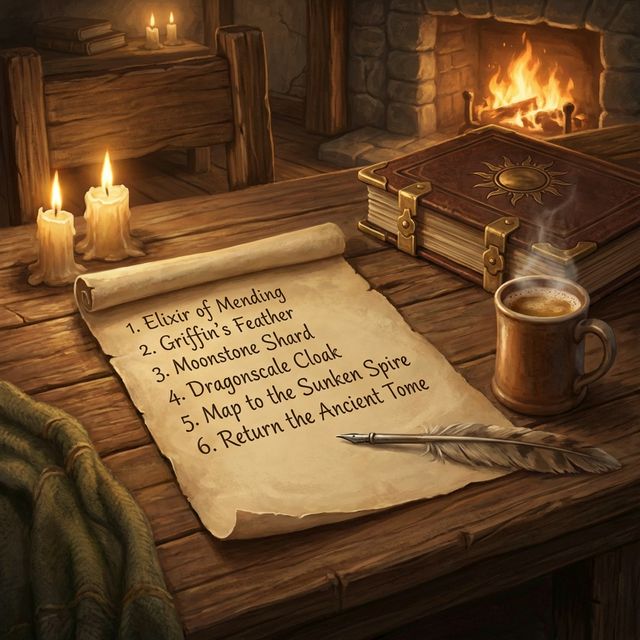
Step 1: Review the Last Session (5 Minutes)
This is the most important step, and the one most DMs skip entirely. You cannot prep forward if you don't know where you are standing.
Open your notes from last session. Ask yourself:
- Physical Location: Where did we end? ("Standing at the entrance to the goblin caves.")
- Hanging Decisions: What did the players promise to do? ("The Warlock promised the hag she would return with the moonstone.")
- Player Interest: What threads did the players seem excited about? ("They kept asking about the missing blacksmith.")
If you use Saga20, this step takes about 90 seconds. You open the last session's summary, scan the Key Events, and you are immediately re-grounded. You don't have to decode your own handwriting or guess what "IMPORTANT: the thing with the guy!!" means in your notebook.
The app also captures what your players actually said, not what you thought was important. Sometimes the detail that sparks the best prep idea is a throwaway comment you would have missed in your own notes.
Step 2: Write the Strong Opening (5 Minutes)
Most DMs think the opening of a session is "So... where did we leave off?"
That is not an opening. That is an apology.
Write one to three sentences that drop the players directly into the action. You want them to feel the tension from the very first word. Do not summarize the previous session yourself; jump straight into the sensory details of the now.
Bad opening: "Okay, so you guys are at the entrance to the dungeon. What do you do?"
Good opening: "The torchlight catches something on the cavern wall. Scratch marks. Deep ones. Going down. And from somewhere below, you hear breathing. Slow. Rhythmic. Something massive is asleep."
This is the single highest-value piece of prep you can do. A strong opening sets the energy for the entire session. Nail this and you can wing the rest because the players are already hooked.
Step 3: List Secrets and Clues (5 Minutes)
This technique is the backbone of the "Lazy Dungeon Master" method, and for good reason. It is absurdly flexible.
Write down 10 pieces of information the players might discover during the session. These are not "plot points" that must happen. They are loose facts floating in the world, waiting to be found.
Example List for a Goblin Cave Session:
- The goblin caves were once a dwarven mine. Runes on the wall prove it.
- The goblin chief is actually terrified of his own tribe. He would betray them for safety.
- A dead adventurer in the cave carries a letter addressed to the missing blacksmith.
- The hag's contract with the Warlock has a loophole involving moonlight.
- The merchant in town is smuggling weapons to the goblins.
- One of the goblin guards is a polymorphed wizard.
- The sleeping creature below is not hostile. It is a guardian bound by an oath.
- There are escape tunnels in the caves that lead to the river.
- The King's advisor has been feeding information to the enemy for months.
- The "cursed gem" they found last session is actually a sending stone. Someone is listening.
The brilliance of this list is that you do not decide how they discover these.
Maybe the letter is on the dead adventurer. Or maybe the Rogue hears it from a gossiping guard. Or maybe the Wizard finds it through Detect Magic.
If the players skip the dead adventurer room, the clue isn't lost. You just move the letter to the goblin chief's pocket. The fact is portable. The delivery is improvised. This keeps you flexible while ensuring the story moves forward no matter what the players choose to do.
Step 4: Sketch 2 to 3 Encounters (10 Minutes)
Notice I said "sketch," not "build." You are not calculating exact CR. You are not balancing action economy. You are writing a cocktail napkin description.
For each encounter, answer exactly three questions:
- What is the situation? (Not "what happens," but "what exists.")
- What makes it interesting? (A twist, a dilemma, or a terrain feature.)
- What monsters or NPCs are involved? (Name and approximate challenge.)
Example Encounter Sketch:
- Situation: The goblin throne room. The chief sits on a pile of stolen furniture.
- Interesting: The chief is chained to the throne by his own tribe. He wants to escape. Combat is optional.
- Monsters: 8 Goblins (CR 1/4 each), 1 Goblin Boss (CR 1), 1 Bugbear bodyguard (CR 1).
That is it. Three sentences. You now have enough to run a 45-minute encounter. The specifics will emerge from the players' choices at the table. If they attack, you have the stats. If they talk, you have the motivation.
Compare this to the "old way" where you would script out the chief's dialogue and plan three phases of combat. If the players sneak past him, that work is wasted. With the sketch, you wasted nothing.
Step 5: Grab 5 Names (5 Minutes)
Improvisation kills DMs in one specific way: names.
You can improvise a personality. You can improvise a quest. You can improvise a whole dungeon layout. But when a player asks, "What is the shopkeeper's name?" and you stammer "Uh... Greg... ory... Gregorius... the... Bold?"
It shatters the illusion.
Keep a list of pre-rolled names on a sticky note behind your DM screen. Cross them off as you use them. Assign genders, races, or roles only when you need them in the moment.
| # | Name | Used For |
|---|---|---|
| 1 | Thalyn | (cross off when used) |
| 2 | Mira Ashford | |
| 3 | Orik Stonehand | |
| 4 | Vethari | |
| 5 | Dunwin Greaves |
This takes two minutes to prepare and saves you from the "Greg the Bold" incident at least three times per session.
What You Should NOT Prep
Just as important as knowing what to prepare is knowing what to skip. These are the common time sinks that yield almost zero value at the table.
Stop prepping these immediately:
- Boxed text longer than 3 sentences. Nobody listens past the third sentence. Keep descriptions punchy. Focus on smells, sounds, and lighting.
- Branching dialogue trees. Your players will say something you never predicted within 10 seconds. Write NPC motivations ("She wants gold"), not NPC scripts.
- Detailed maps for every room. Sketch the important rooms. Theater of the mind the rest. Your players will spend 80% of the session in 20% of the rooms.
- Exact loot tables. Decide the "vibe" of the loot (magical weapon, useful scroll, gold) and pick the specific item at the table when the moment feels right.
The "Last Session" Cheat Code
Here is a trick that most prep guides never mention: your best prep material is your last session.
The players literally told you what they want to do next.
If the Rogue spent 20 minutes asking about the smuggling ring, guess what you should prep? The smuggling ring. If the Barbarian keeps mentioning finding her lost sister, guess which NPC should show up soon?
Stop guessing what your players will enjoy. They are broadcasting it to you every single week.
This is another area where recording your sessions pays dividends. When I review my Saga20 summaries, I look specifically for the sections where the players asked questions or made plans. That is the signal. That is what they care about. My prep for next week starts there.
The app also tracks which characters were involved in which scenes through Campaign Continuity, so if I want to bring back an NPC the players reacted strongly to, I can find exactly who they were and what they said without flipping through a notebook.
The Emergency Prep Kit
Sometimes life happens.
You have zero minutes to prep. You are driving home from work late. The players are at the door. You are holding a bag of chips and a prayer.
For these emergencies, keep this in your DM binder at all times.
The "Zero Prep" Survival Kit:
- One random encounter table (a simple d6 table with 6 generic situations like "Ambush," "Traveler in Need," or "Ruins").
- One NPC with a problem that requires the party's help immediately.
- One location with an interesting feature (a collapsed bridge, a haunted well, a tavern brawl in progress).
- Your name list (always keep this fresh).
With just these four things, you can run a solid 3-hour session that feels completely intentional. Nobody will know you prepped in the parking lot.
The Weekly Prep Checklist
Tape this behind your screen or save it in your phone. Use it every week.
| Step | Time | Action |
|---|---|---|
| 1 | 5 min | Review last session (read your Saga20 summary or notes). |
| 2 | 5 min | Write a strong opening scene (1 to 3 vivid sentences). |
| 3 | 5 min | List 10 secrets or clues the players might discover. |
| 4 | 10 min | Sketch 2 to 3 encounter situations (not scripts). |
| 5 | 5 min | Grab 5 NPC names and cross them off as you use them. |
| Total | 30 min | Done. Stop. Go live your life. |
Why Less Prep Means Better Sessions
There is a counter-intuitive truth that takes years to accept.
The less rigidly you prepare, the more alive your world feels.
When you walk into a session with a toolbox instead of a script, you naturally respond to your players instead of redirecting them. The world feels reactive. It feels like a living place where choices matter.
Your players will never praise you for the hours you spent balancing an encounter behind the scenes. But they will remember the session where everything felt spontaneous. They will remember when it seemed like you could handle anything they threw at you. They will remember when the world bent around their decisions.
That is not magic. That is good prep. The kind that takes 30 minutes and a system.
Set the timer. Fill in the checklist. Then close the notebook, pour yourself a drink, and wait for the chaos.
You are ready.
Make Your Prep Even Easier
Prepping is only half the battle. To make your sessions truly effortless, check out these free tools and guides:
-
The Session Zero Generator: Start your campaign on the right foot with a perfect Session Zero agreement.
-
Session Recap Scribe: Turn your raw notes into beautiful summaries in seconds.
-
Stop Taking Notes: Why audio recording is better than scribbling.
Enjoying the story?
Start recording your own D&D sessions today and never forget a moment.
Try for Free